
Dirndl Apron Bow: What It Means & How to Tie It
Of all the small details on a dirndl, none carries more meaning — or causes more confusion for first-time wearers — than the dirndl apron bow. It looks like a simple decorative touch, but the position of that bow is actually a quiet, centuries-old signal about the wearer’s relationship status. Tie it in the wrong spot at Oktoberfest 2026, and you might unintentionally announce something you didn’t mean to.
This guide covers exactly what the dirndl apron bow means in each position, where the tradition comes from, how to tie it properly step by step, and the most common mistakes people make with it.
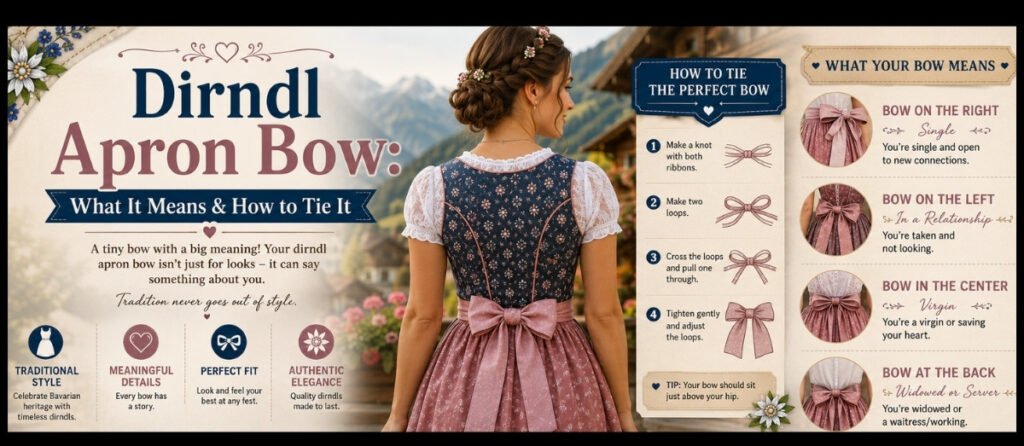
What Is the Dirndl Apron Bow?
The apron, or Schürze, is the third and outermost piece of a traditional dirndl, worn over the skirt and tied at the front, back, or side with a fabric sash that finishes in a bow. While the apron itself is largely practical and decorative — adding color, texture, and contrast to the bodice and skirt beneath it — the bow has taken on a specific cultural meaning over time, particularly in Bavaria, where it’s become something of an open secret at every festival and wedding.
It’s worth noting upfront: this meaning is a folk tradition and social custom, not a formal rule enforced anywhere. Plenty of women simply tie their bow wherever it looks best with their outfit. But knowing what each position traditionally signals means you can choose deliberately, whether you want to send the signal or deliberately avoid it.
Dirndl Apron Bow Meaning by Position
Bow Tied on the Left
A dirndl apron bow tied on the left side is the traditional signal that the wearer is single and open to being approached. This is the position you’ll see most often on younger, unmarried women at Oktoberfest, especially those attending with friends rather than a partner.
Bow Tied on the Right
A bow tied on the right traditionally signals that the wearer is taken — married, engaged, or in a relationship. If you’re attending Oktoberfest 2026 with a partner and want to signal that clearly through your outfit, tying the bow on the right is the traditional way to do it.
Bow Tied at the Front Center
A bow tied in the center front is traditionally associated with young girls or unmarried women who haven’t yet reached the age where the left/right signal typically applies. It’s also a common practical choice for anyone who simply wants a neutral, symmetrical look without making a relationship statement either way — many modern wearers choose this position purely for the aesthetics.
Bow Tied at the Back
A bow tied at the back has traditionally signaled either a widow or, in some regional customs, a server or member of the festival staff — since a back-tied bow is also simply more practical for someone working through a shift and moving constantly between tables. Today, plenty of wearers tie it at the back purely for comfort or style, without any of the traditional connotations applying.
Where This Tradition Actually Comes From
The apron bow “code” isn’t an official rule handed down by any authority — it developed informally over generations as a lighthearted, practical way for young women to communicate availability at village dances and festivals, long before Oktoberfest became the global event it is today. Like a lot of folk customs, it’s part genuine social signal and part good-natured festival game — locals in Bavaria are generally well aware of it, and pointing it out (or teasing a friend about which side they tied it on) is part of the fun of the tradition. It’s tied closely to the broader history of the dirndl itself, which evolved from practical 19th-century Alpine workwear into the celebrated festival garment worn today — you can read more about that evolution in our guide to traditional dirndl styles.
How to Tie a Dirndl Apron Bow: Step-by-Step
Tying a clean, secure dirndl apron bow is easier than it looks once you know the sequence. Here’s the simplest reliable method:
- Position the apron over your skirt so the waistband sits evenly at your natural waistline, matching the top of the dirndl skirt itself.
- Wrap the ties around to the front (or side, depending on your chosen position) and cross them once, the same way you’d start tying a shoelace.
- Form the first loop with one tie, then wrap the second tie around it and pull it through to create a simple bow — avoid pulling too tight, since a bow that’s cinched too hard will look flat rather than full.
- Adjust the loops evenly so both sides of the bow are roughly the same size, then fluff the fabric slightly to give it volume rather than letting it lie flat against the apron.
- Let the tails hang naturally rather than tucking them in — a slightly loose, natural finish looks more traditional than an overly tight, symmetrical one.
- Check the position one more time in a mirror before you head out, since the bow can shift slightly once you sit down or move around.
If your apron fabric is heavier — velvet or a thicker cotton, for example — you may need a slightly looser first cross to keep the bow from looking bulky. Lighter linen or cotton aprons hold a neater, crisper bow with less effort.
Common Apron Bow Mistakes to Avoid
- Tying it too tight. A cinched, flat bow looks accidental rather than intentional. Loosen the loops slightly for a fuller, more traditional shape.
- Tying it in a rush right before you leave. The bow shifts as you move, sit, and dance, so it’s worth a quick re-tie once you’ve settled into a tent or event.
- Ignoring the color coordination. The apron is one of the most visible parts of the outfit, and a bow tied in a clashing color pulls focus away from the rest of the dirndl. Match or complement the apron to your bodice and blouse rather than treating it as an afterthought.
- Not knowing the meaning before you tie it. If you’re wearing your dirndl with a partner and want to signal that clearly, double-check you’ve tied it on the correct side — it’s a small detail, but it’s the one most likely to get noticed and asked about.
Choosing an Apron That Complements Your Dirndl
The right apron does more than complete the color story of your outfit — the fabric weight and length also affect how easily the bow holds its shape through a long day. A well-made apron is cut from a fabric that coordinates with, rather than exactly matches, the bodice, since a slightly different shade or texture in the apron creates visual depth instead of a flat, one-note outfit. You’ll find a wide range of apron colors, prints, and fabrics — from lightweight cotton to richer embroidered styles — across our authentic dirndl dress collection, each designed to pair with a specific bodice and blouse combination.
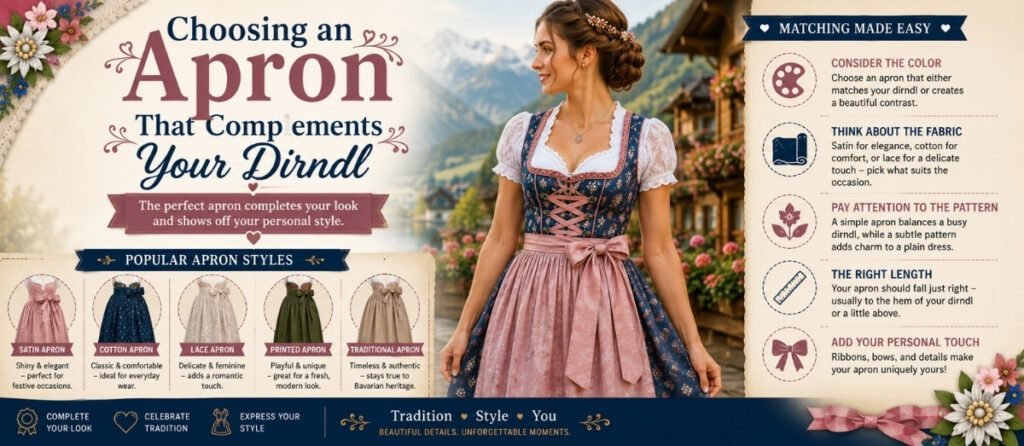
If you’re building your full outfit from scratch rather than just replacing an apron, our guide on how to style a dirndl covers how the apron, blouse, jewelry, and shoes all work together as one coordinated look, rather than separate purchases.
Does the Apron Bow Meaning Actually Matter at Oktoberfest 2026?
For most visitors, the honest answer is: only as much as you want it to. Plenty of people tie their bow purely based on which side looks best with their particular dirndl silhouette, with no intention of sending any signal at all. But because the tradition is so widely known — especially among Bavarian locals and repeat Oktoberfest visitors — it’s worth tying yours deliberately if you do want to communicate something, or simply so you’re in on the joke if someone asks you about it in the tent.
Oktoberfest itself dates back to 1810, when it began as a celebration of a royal Bavarian wedding, and has since grown into the world’s largest folk festival, drawing millions of attendees to Munich every year. Small cultural details like the apron bow are part of what makes the festival feel distinct from an ordinary beer garden outing — you can read more about the festival’s history and modern scale on its Wikipedia page.
Frequently Asked Questions
What does it mean if the dirndl apron bow is tied on the left?
A bow tied on the left traditionally signals that the wearer is single.
What does it mean if the dirndl apron bow is tied on the right?
A bow tied on the right traditionally signals that the wearer is married, engaged, or in a relationship.
What does a bow tied in the front center of a dirndl mean?
A center-front bow is traditionally associated with young girls or unmarried women, and is also a common neutral choice for anyone who doesn’t want to signal a relationship status either way.
What does a bow tied at the back of a dirndl mean?
A back-tied bow traditionally signals a widow or, in some regional customs, festival staff or serving personnel, though many modern wearers choose it simply for comfort or style.
Is the dirndl apron bow meaning an official rule?
No, it’s a folk tradition and social custom rather than a formal rule, though it’s widely recognized in Bavaria and among frequent Oktoberfest attendees.
How do I tie a dirndl apron bow so it doesn’t come undone?
Cross the ties once before looping them into a bow, keep the tension moderate rather than pulling too tight, and check the position again after sitting down, since movement can loosen or shift it.
Does the apron color need to match the dirndl bodice exactly?
No — a complementary shade or contrasting print often looks better than an exact match, adding visual depth to the outfit rather than a flat, single-tone look.
Do I have to follow the apron bow tradition at Oktoberfest 2026?
Not at all. Many wearers simply tie the bow wherever it looks best with their outfit, without intending any relationship signal.
Final Thoughts
The dirndl apron bow is a small detail with an outsized amount of tradition packed into it — a simple sash tie that’s been quietly communicating relationship status at Bavarian festivals for generations. Whether you decide to tie yours deliberately by the traditional meaning or purely for how it looks with your outfit, it’s worth knowing the custom before Oktoberfest 2026, if only so you’re ready with an answer the first time someone in the tent asks which side you chose. For sizing, apron styles, and full dirndl sets, our FAQ page has the details you need before you order.