Oktoberfest · Bavarian Style Guide · 2026
Oktoberfest Germany Outfit: The Ultimate Style Guide
What to wear, what to avoid, and how to put together an authentic Oktoberfest outfit that looks genuinely Bavarian — not like a last-minute costume.
Oktoberfest is the biggest folk festival on earth. Held every year in Munich, Germany, it draws over six million visitors across sixteen days of beer, music, food, and — most visibly — some of the most striking traditional dress you’ll see anywhere in the world. If you’re going, what you wear matters more than you might think.
The right Oktoberfest Germany outfit isn’t about looking like you raided a fancy dress shop. It’s about showing up in something that respects a living tradition — and frankly, looking incredible while doing it. This guide covers everything: what men and women should wear, how to choose between authentic and costume-grade options, how to style each piece correctly, what to budget, and where to buy the real thing.
Read this once before you book anything, and you’ll arrive in Munich looking like you belong there.
Why Your Oktoberfest Outfit Actually Matters
Let’s be honest about something first. Most people outside Germany don’t realize that Oktoberfest dress has real cultural weight. For Bavarians — and for the millions of Germans, Austrians, and Alpine visitors who attend every year — Tracht (traditional folk costume) is not a theme party outfit. It’s something worn with genuine pride, passed down through families, and chosen with care.
When you walk into one of Munich’s famous tents — the Hofbräu, the Augustiner, the Schottenhamel — you’ll immediately see the difference between visitors who made the effort and those who grabbed a costume set at the last minute. The locals are wearing genuine leather, natural linen, real embroidery. The difference is visible from across the tent.
That said, Oktoberfest is genuinely welcoming to visitors who make the effort. You don’t need to be Bavarian to dress well here. You just need to choose authenticity over convenience — and this guide will show you exactly how.
Oktoberfest is one of the few events left in the world where dressing traditionally is not ironic, not vintage, and not nostalgic. It is simply the right thing to wear — and everyone knows it.
The Oktoberfest Germany Outfit for Women: The Dirndl
For women, the dirndl is the Oktoberfest outfit. Full stop. It is the most recognizable piece of Bavarian traditional dress in the world, and when worn correctly, it is one of the most flattering and elegant festival outfits imaginable. But there is a world of difference between an authentic dirndl and a cheap imitation.
What Is a Dirndl?
A dirndl is a three-piece traditional Bavarian dress consisting of a structured bodice (Mieder), a full gathered skirt (Rock), and an apron (Schürze). Worn underneath is a dirndl blouse (Dirndlbluse) — typically in white or cream, with lace trim or embroidery at the neckline. Together these four pieces create the complete, classic Oktoberfest look for women.
The Bodice (Mieder)
Structured and fitted, usually fastened at the front with hooks or a zipper. Should fit snugly — it’s designed to be supportive. Made from wool, linen, cotton, or velvet in quality versions.
The Skirt (Rock)
Full and gathered, falling anywhere from mid-thigh to the floor depending on style. Mini is modern and festival-friendly. Midi is most traditional. Maxi suits formal occasions.
The Apron (Schürze)
Tied at the waist over the skirt. Bow placement carries meaning — left means single, right means taken. Silk aprons signal formality. Cotton aprons are everyday casual.
The Blouse (Dirndlbluse)
Worn beneath the bodice. Classic white or cream with puffed sleeves and lace trim. The neckline should be visible above the bodice — this is a key detail of the overall look.
Choosing the Right Dirndl Length for Oktoberfest
For Oktoberfest specifically, the mini or midi dirndl is the most practical choice. You’ll be standing, sitting on benches, dancing, and navigating crowded tents all day. A floor-length maxi dirndl, while beautiful, can be impractical in that environment. Most women at Oktoberfest wear either a mini (above the knee) or a midi (below the knee), and both look completely appropriate.
The color and fabric choices are wide open — Oktoberfest sees everything from classic blue-and-white to deep burgundy velvet to floral cotton prints. What matters more than color is quality of construction. A natural fabric dirndl with real embroidery will always look better than a synthetic one, regardless of color.
Browse our full collection of authentic dirndl dresses — sourced from certified Bavarian and Austrian makers, in every length, color, and fabric for Oktoberfest 2026.
The Secret Language of the Apron Bow
This is the detail that impresses locals most. In Bavarian tradition, the position of your apron bow carries a specific meaning that everyone at Oktoberfest knows:
🎀 The Dirndl Bow Code
- Bow on the left: Single and available — the traditional signal of an unmarried woman.
- Bow on the right: In a relationship or married — the classic “taken” signal.
- Bow at the center front: Traditional for young girls or brides on their wedding day.
- Bow at the back: Historically associated with servers or widows — rarely worn this way intentionally today.
Most visitors don’t know this — but most Bavarians do. Wearing your bow correctly (or intentionally playing with the tradition) is one of the small details that shows you’ve done your homework.
The Oktoberfest Germany Outfit for Men: Lederhosen Done Right
For men, the Oktoberfest outfit is built around lederhosen — traditional leather shorts or breeches that have been worn in Alpine Germany for centuries. Like dirndls, there is an enormous range in quality, and the difference between a genuine pair and a costume version is immediately obvious to anyone who knows what they’re looking at.
Which Style of Lederhosen for Oktoberfest?
For Oktoberfest, Kurze Lederhosen — short leather shorts falling roughly mid-thigh — are the most common and appropriate choice. They’re practical for a warm beer tent, pair perfectly with knee socks or Loferl calf warmers, and are the style most associated with Munich’s festival culture.
If you want something slightly more formal or versatile, Kniebundhosen (knee-length breeches) are an excellent choice. They work for both Oktoberfest and other formal Bavarian occasions, and they tend to look particularly sharp when paired with a full Trachten jacket.
For premium authentic lederhosen — genuine deer or goat leather, real embroidery, proper brass hardware — Premium Lederhosen is one of the most trusted specialist retailers available, with a wide selection of traditional Bavarian styles for every budget and occasion.
What to Wear With Lederhosen at Oktoberfest
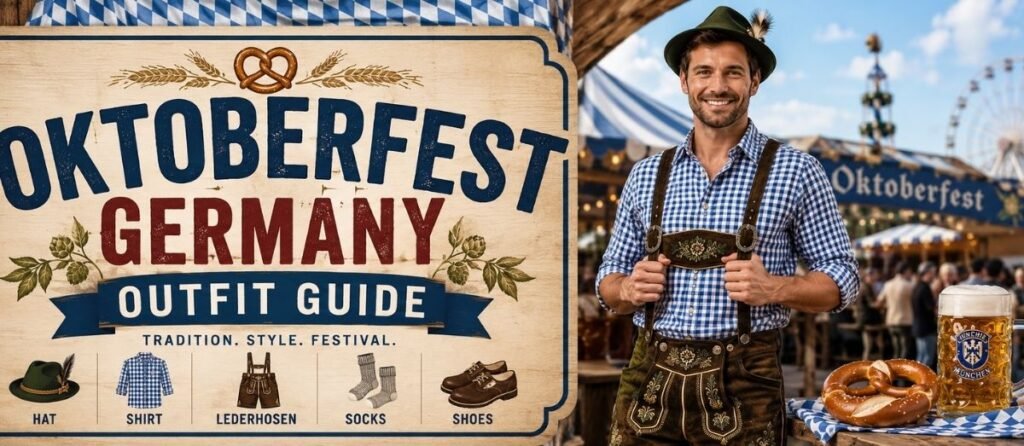
- The Trachtenhemd (Shirt) A checked linen or cotton shirt in classic Bavarian colors — blue-white, red-white, or green-white. This is the backbone of the men’s Oktoberfest look. The collar should sit visibly above the bib of the lederhosen. Avoid synthetic blends — you’ll be wearing this all day in a warm tent.
- Loferl or Kniestrümpfe (Socks) Traditional Loferl (separate calf warmers) or full knee-length Kniestrümpfe socks in grey, cream, or green wool. These are non-negotiable for the complete look — bare legs with lederhosen is a tourist tell that stands out immediately.
- Haferlschuhe (Shoes) The classic Bavarian low-heeled leather shoe with a distinctive side seam. Brown or dark tan. Comfortable enough for a full day of standing and dancing, traditional enough to complete the outfit properly. Polish them before you go.
- Trachtenjacke (Optional Jacket) For cooler evenings or more formal tents, a grey or green wool Trachten jacket elevates the whole look significantly. Decorative bone buttons, contrast piping, and a structured cut make it unmistakably Bavarian.
- Trachtenhut (Optional Hat) A felt or wool hat with a Gamsbart (chamois beard) or feather decoration. Not essential for Oktoberfest but impressive when worn correctly. Green, grey, or dark navy are the most traditional color choices.
Authentic vs. Costume: The Most Important Decision You’ll Make
This is the section that will save you money in the long run, even though authentic gear costs more upfront. The market for Oktoberfest Germany outfits is flooded with cheap costume versions — polyester dirndls with printed (not embroidered) patterns, synthetic lederhosen with plastic buckles and foam padding. They look fine in product photos. In person, at Oktoberfest, they look exactly like what they are.
| Feature | Authentic Tracht | Costume Version |
|---|---|---|
| Fabric | Wool, linen, cotton, silk, genuine leather | Polyester, faux leather, synthetic blends |
| Embroidery | Raised, three-dimensional, hand or quality machine stitched | Flat printed pattern, iron-on motifs |
| Hardware | Brass, bone, or horn buttons and buckles | Plastic or chrome costume hardware |
| Fit | Tailored, structured, improves with wear | Generic sizing, shapeless, degrades quickly |
| Durability | Lasts years to decades with proper care | Often falls apart within one or two wears |
| Comfort (all day) | Breathes well, molds to body, stays comfortable | Hot, stiff, uncomfortable in a crowded tent |
| Price range | €80–€400+ depending on maker and style | €15–€50 online or in tourist shops |
The math is simple. A genuine dirndl or lederhosen set in the €120–€200 range will last you ten Oktoberfests. A €25 costume will last you one — if you’re lucky. Spread over even three years of use, authentic Tracht is cheaper, more comfortable, and infinitely better-looking.
Oktoberfest Outfit Styling Tips: The Details That Make the Difference
Once you have the right pieces, styling them correctly is what separates a polished Bavarian look from one that just looks assembled. These are the details that Bavarians notice — and that make photos from the festival look genuinely stunning rather than tourist-y.
For Women
Hair up or half-up is the most traditional choice for Oktoberfest. Classic braids, a chignon, or a half-up style with loose waves all work beautifully. A small floral hairpiece or Trachten headband adds the finishing touch without being overdone. Avoid very modern styles — slick buns or elaborate updos — that feel disconnected from the traditional aesthetic.
For footwear, Haferlschuhe or Mary Jane-style leather shoes are the classic choice. Ballet flats in neutral tones work well too. Avoid stilettos — not only are they impractical on cobblestones and in crowded tents, but they clash with the proportions of the dirndl silhouette. Ankle boots in tan or brown leather are a popular modern alternative that still looks the part.
Jewelry should be silver over gold, keeping regional tradition in mind. Simple pieces — a pearl or garnet necklace, small stud earrings, a Charivari-style brooch — are all appropriate. Keep it modest. The dirndl itself is the statement.
For Men
The biggest mistake men make is wearing the shirt untucked or leaving it hanging loose outside the lederhosen bib. The shirt should be tucked in neatly, with the collar visible and the front placket lying flat. If the lederhosen have suspenders (Hosenträger), wear them — they’re not optional decoration, they’re structural.
Keep your socks pulled up. Loferl should sit firmly on the calf, and Kniestrümpfe should reach just below the knee without bunching. It sounds like a small thing, but saggy socks are the single most common detail that undermines an otherwise good outfit.
For men who want to go the extra mile, a Charivari — the decorative chain or badge worn on the lederhosen or jacket — is a traditional and meaningful accessory. Often featuring coins, small antlers, crystals, or regional symbols, it’s the Bavarian equivalent of a pocket square: subtle, traditional, and impressive when done right.
Budget Guide: How Much Should You Spend?
Budget is a real consideration for most people planning an Oktoberfest Germany outfit, especially if this is your first time. Here’s an honest breakdown of what to expect at different price points.
€80–€120: Entry-level authentic — natural fabric, basic construction. Good for a first dirndl or casual Oktoberfest use.
€120–€250: Mid-range quality — better embroidery, more structured bodice, more fabric options. The sweet spot for most buyers.
€250–€500+: Premium authentic — hand embroidery, luxury fabrics (velvet, silk), regional maker craftsmanship. An heirloom piece.
€80–€150: Entry-level genuine leather — cowhide or split leather, basic embroidery. Solid and authentic for casual Oktoberfest wear.
€150–€300: Mid-range quality — full-grain leather, better embroidery and hardware. Will last a decade with proper care.
€300–€600+: Premium — hand-stitched deer or chamois leather, regional Bavarian craftsmanship. The kind of lederhosen that become family heirlooms.
What NOT to Wear at Oktoberfest
This section is worth reading carefully because it saves you from the most common mistakes that visitors make — and that stand out immediately in the tents.
Don’t wear a full Halloween-style costume. Oktoberfest themed costumes with novelty prints, joke slogans, or foam accessories are frowned upon in the traditional tents. They belong at a themed bar night, not Munich’s Theresienwiese.
Don’t mix costume pieces with authentic ones. A genuine dirndl bodice over a cheap polyester skirt, or real lederhosen with a printed novelty shirt, creates a jarring mismatch that looks worse than either option done consistently.
Don’t wear regular clothes and claim it’s “casual.” Jeans and a flannel shirt are perfectly fine in Munich generally — but inside the festival tents, especially the more traditional ones, making zero effort to dress in Tracht is a missed opportunity and mildly out of place.
Don’t wear stilettos. Cobblestones, wooden benches, grass fairgrounds, and six million fellow festival-goers. It doesn’t end well.
Where to Buy Your Oktoberfest Germany Outfit
You have several good options depending on how much time you have and whether you’re shopping before you travel or once you arrive in Munich.
🛍️ Best Places to Buy Authentic Oktoberfest Outfits
- DirndlsOnline.com: Our full collection of authentic Bavarian outfits ships worldwide with fast delivery — order well before the festival to ensure your size is available. Natural fabrics, real embroidery, certified Bavarian construction throughout.
- Premium Lederhosen: For men’s lederhosen specifically, premiumlederhosen.com carries an excellent range of genuine leather styles from trusted Bavarian makers — a reliable choice for quality menswear Tracht.
- Angermaier Munich: The most famous specialist Tracht store in Munich — multiple locations in the city center. Excellent for trying on pieces in person before you buy, with knowledgeable staff who speak English.
- Lodenfrey Munich: A Munich institution and one of the oldest Tracht retailers in Bavaria. Premium range across both men’s and women’s Tracht, with a reputation for exceptional quality.
- Airport and city center pop-ups: Several reputable Tracht retailers open temporary stores near Munich’s main train station and airport in the weeks before Oktoberfest. Quality varies — stick to shops with authentic natural fabric pieces and avoid anything suspiciously cheap.
Our advice: order online at least three to four weeks before you travel. Festival season depletes popular sizes fast — especially mid-range women’s dirndls in sizes 38–44 and men’s lederhosen in medium and large. Don’t leave it to the week before.
If you’re also interested in a deeper dive on women’s Tracht beyond Oktoberfest, our guide to buying authentic dirndl online covers everything from fabric selection to sizing charts in detail.
Frequently Asked Questions
Do I have to wear traditional dress at Oktoberfest?
There’s no strict dress code at Oktoberfest — you won’t be turned away for wearing regular clothes. But the overwhelming majority of people inside the traditional tents wear Tracht, and making the effort to dress authentically is both respectful and far more enjoyable. You’ll feel part of the experience rather than like a spectator.
What is the most popular Oktoberfest outfit for women?
A midi-length dirndl in a classic color — navy, forest green, burgundy, or traditional floral cotton — with a white blouse, contrasting apron, and flat leather shoes. This is the most universally appropriate and flattering choice for the festival environment.
Can I rent an Oktoberfest outfit in Munich?
Yes — several shops in Munich offer dirndl and lederhosen rentals, particularly around the festival period. Rental quality varies significantly. If you plan to attend Oktoberfest more than once in the next few years, buying is almost always better value and gives you a genuine piece rather than a frequently-worn rental.
What colors are most traditional for Oktoberfest?
For dirndls: blue-white (Bavarian national colors), forest green, burgundy, and natural linen tones are the most traditional. For lederhosen: tan, mid-brown, and dark brown leather are classic. Shirts in blue-white or red-white check are the most popular men’s choice. There are no strict rules — but these colors feel most authentically Bavarian.
When should I buy my Oktoberfest outfit?
Ideally at least four to six weeks before the festival. Popular sizes sell out quickly as Oktoberfest approaches, and if you’re ordering online and need alterations or exchanges, you need lead time. Don’t leave it to the week before — you’ll either pay more or end up with limited options.
Final Thoughts
The Oktoberfest Germany outfit is one of those rare things in modern life — a dress code that actually makes people look better, feel more connected to where they are, and participate in something genuinely meaningful. When you show up in an authentic dirndl or genuine lederhosen, you’re not just dressing for a party. You’re honoring a tradition that has been alive in the Alpine world for centuries.
The effort is worth it. The quality lasts. And once you’ve worn real Tracht at Oktoberfest — feeling the weight of genuine leather, the breathability of linen in a warm tent, the pride of knowing you look exactly right — you’ll never want to go back to a costume version again.
Choose authentic. Dress well. Prost.
Ready to Build Your Oktoberfest Outfit?
Shop our full collection of authentic dirndls and Bavarian Tracht — natural fabrics, genuine construction, worldwide shipping. Don’t leave it too late.
Shop DirndlsOnline.com →