
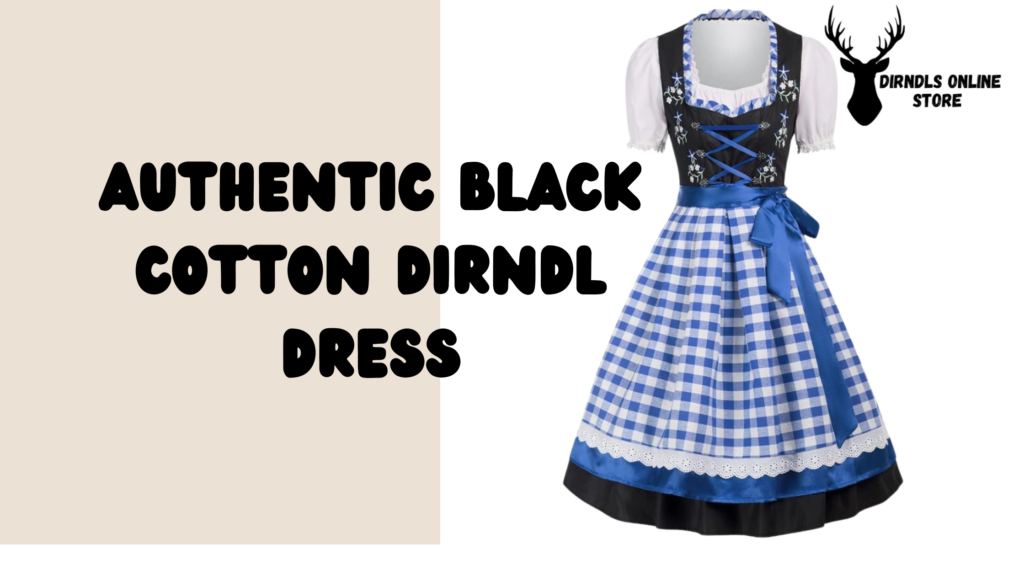
Authentic Black Cotton Dirndl Dress — Complete Guide 2026
The authentic black cotton dirndl dress is the most versatile and enduringly popular choice in Bavarian Trachten fashion. Where coloured velvet dirndls make a bold statement, black cotton offers something equally powerful — a timeless, sophisticated elegance that flatters every complexion, works across a wider range of occasions, and remains as fashionable at its hundredth Oktoberfest as it was at its first. This complete 2026 guide covers everything from the cultural history of black in Bavarian dress to fabric quality, construction details, styling options, sizing and care — giving you everything you need to choose, wear and maintain an authentic black cotton dirndl with confidence.
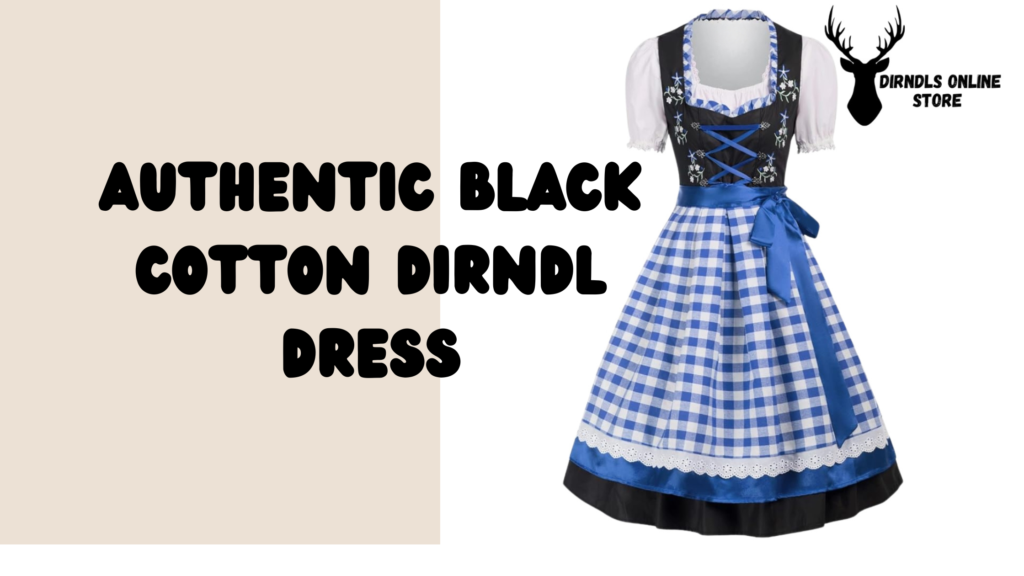
Black in Bavarian Trachten — a genuine tradition
It is a common misconception that black is a modern or non-traditional colour for dirndl dresses. In fact, black has deep roots in Alpine folk costume. Historically, black fabric — whether wool, cotton or silk — was worn for formal occasions, mourning periods and Sunday best in rural Bavarian communities. The colour’s association with solemnity and respect gave black Trachten garments a special status that distinguished them from the more colourful everyday working dress.
Over the 20th century, as the dirndl dress evolved from regional working attire into a celebrated cultural garment, black became the most universally adopted colour in the modern Trachten palette. This is partly because black works beautifully with every apron colour, blouse style and accessory choice — making it the most flexible foundation for expressing personal style within the traditional dirndl structure. It is also simply the most flattering — black creates a defined silhouette that enhances the dirndl’s structured bodice and full skirt to their greatest effect.
Why cotton is the ideal fabric for a black dirndl
The fabric choice is what separates a genuinely wearable black dirndl from one that looks good on a hanger but feels wrong after an hour. Cotton is the most traditional and practical fabric for dirndl dresses, and particularly for the Oktoberfest context. Here is why cotton stands above synthetic alternatives:
Breathability and comfort
Oktoberfest beer tents are warm, crowded and lively. You will be standing, sitting, dancing and celebrating for hours at a time, often in close proximity to thousands of other people. Cotton is a natural fibre that breathes — it absorbs moisture away from the skin and allows air to circulate, keeping you comfortable even in these demanding conditions. Synthetic fabrics such as polyester do not breathe in the same way and will leave you feeling hot and uncomfortable long before the day is over.
Colour depth and appearance
High-quality black cotton has a rich, matte depth that reads as genuinely elegant. The fabric takes dye evenly and holds it well, maintaining a true, deep black rather than the slightly blue or grey cast that some synthetic fabrics produce. In direct sunlight, well-woven cotton black has a subtle sheen that catches the light attractively without becoming reflective. This quality is important for a black dirndl because the colour’s impact depends entirely on its depth and evenness — a poorly dyed or low-quality black fabric will look faded and cheap almost immediately.
Structure and drape
Different weights of cotton behave very differently in construction. A good black cotton dirndl uses a heavier woven cotton or cotton-blend for the bodice — providing the structure needed to hold the dirndl’s silhouette without excessive boning — and a lighter, more fluid cotton or cotton-lining for the skirt, allowing it to gather and flow with the characteristic dirndl fullness. The combination of these two fabric weights within a single garment is one of the hallmarks of genuine dirndl construction rather than costume production.
Durability and washability
Cotton is a robust natural fibre that responds well to washing and wear. A well-made black cotton dirndl can be cleaned at home, maintains its shape across many wears and improves slightly with washing as the fabric softens while retaining its structure. This makes it a genuinely practical investment for anyone planning to attend multiple Oktoberfest events or other Bavarian celebrations over the years.
Construction details of a quality black cotton dirndl
Understanding what to look for in the construction of a black cotton dirndl is the single most important step in making a good purchase decision. These are the details that separate authentic Trachten from costume imitations.
The bodice
The bodice is the architectural centrepiece of the dirndl and the element that requires the most skilled construction. A quality black cotton bodice should be fully lined — typically in white or a neutral colour — with internal boning or interfacing that gives it structure and shape. The boning should be firm enough to hold the bodice upright when worn, but flexible enough to allow comfortable breathing and movement throughout the day.
The front closure of the bodice is a significant quality indicator. Authentic dirndl bodices close with hook-and-eye systems — robust, discreet and very secure. Lace-up fronts are also traditional and have the advantage of adjustability, which is useful for accommodating different proportions. Decorative buttons are a design element but should not be the structural closure — if buttons are the only thing holding the bodice closed, the construction is not authentic.
Black cotton bodices are frequently decorated with embroidery in contrasting colours — white, red, green or gold thread worked in traditional Alpine motifs such as edelweiss flowers, oak leaves and geometric folk patterns. This embroidery is a key indicator of quality and authenticity. Machine embroidery can produce excellent results; hand-finishing at visible points (neckline edges, button loops) is a sign of premium production.
The skirt
The full, gathered skirt is what gives the dirndl its distinctive silhouette. A well-made black cotton dirndl skirt has generous gathering at the waistband — pulling out the fabric and counting the gathers is one of the quickest ways to assess quality at a glance. A flat or lightly gathered skirt will never achieve the authentic dirndl silhouette regardless of how well the bodice is made.
The skirt should be fully lined to prevent the outer fabric from clinging uncomfortably and to help the skirt hold its shape and volume. The lining is usually in white or a light neutral cotton. Check that the hem is finished neatly — a hand-rolled hem or careful machine hem indicates quality construction; a raw or overlocked hem suggests the dress was produced quickly.
Skirt length options for the black cotton dirndl:
- Mini (above the knee) — modern and contemporary. The all-black palette at this length has a sleek, almost cocktail-dress quality. Best for younger wearers and daytime visits to Oktoberfest.
- Midi (just below the knee) — the classic Oktoberfest length and the most universally flattering. The proportions of the midi dirndl are ideal for showing off the bodice embroidery and the apron bow detail simultaneously.
- Maxi (ankle length) — the most formal and traditionally rooted option. A black cotton maxi dirndl worn with a beautifully embroidered apron is genuinely striking and appropriate for formal Bavarian events and weddings.
The apron
The black dirndl’s greatest styling advantage is its compatibility with almost any apron colour. Where coloured dirndls constrain your apron options significantly, the black bodice and skirt create a neutral foundation that any contrasting apron can work against. This gives the black cotton dirndl exceptional versatility — the same dress can look completely different depending on the apron you choose.
Strongest apron pairings for the authentic black cotton dirndl:
- White cotton or organza — the most traditional and high-contrast combination. Clean, crisp and instantly recognisable as authentic Bavarian Trachten.
- Red satin or silk — deeply traditional, referencing the Bavarian folk colour palette of black and red that appears in regional heraldry and folk art. Bold and striking.
- Deep green — the forest green of the Bavarian Alps against black creates a rich, nature-inspired combination with strong roots in traditional Alpine costume.
- Burgundy or wine — sophisticated and warm, particularly beautiful with gold embroidery on the bodice.
- Royal blue — vibrant and eye-catching, referencing the Bavarian state colours of blue and white (with the white provided by the blouse).
- Pink or rose — a playful, feminine contrast against the black that works particularly well with a pink velvet or silk apron for evening occasions.
- Gold or champagne — the most formal combination, lending the dress an almost regal quality for weddings and evening events.
The apron bow tradition applies regardless of colour: tied left means single, tied right means taken, tied at the back means widowed. This custom is widely enjoyed at Oktoberfest and will almost certainly generate conversation.
How to style your Authentic black cotton dirndl dress
The blouse
The white dirndl blouse worn beneath a black bodice creates one of the most visually striking combinations in Trachten fashion — the contrast between the deep black of the bodice and the white of the blouse at the neckline and sleeves is crisp, clean and timelessly elegant. Always choose a blouse designed specifically for dirndl wearing rather than a standard shirt, as the proportions, neckline shape and sleeve structure are all designed to work with the bodice architecture.
For a black cotton dirndl, blouse options include:
- Classic white cotton with puff sleeves — the most traditional choice, maximising the black-and-white contrast and creating an authentic Bavarian look.
- White with lace neckline and cuffs — adds a layer of softness and femininity that balances the severity of the black.
- White with embroidered collar — a more decorative option that adds interest at the neckline without competing with the bodice.
- Off-white or cream — a softer alternative that reduces the stark contrast slightly, creating a warmer and more vintage-influenced aesthetic.
Footwear
The black dirndl’s versatility extends to footwear. Almost any shoe in the traditional Trachten palette works with a black dress:
- Traditional Haferlschuhe in tan or dark brown leather with knee-high wool socks — the most authentically Bavarian option and the most practical for a full day at Oktoberfest.
- Ankle boots in black or dark brown leather — particularly effective with the midi length, creating a clean line from knee to foot.
- Low-heeled leather pumps in black, nude or dark brown — classic and comfortable for formal occasions and weddings.
- Mary Janes or ballet flats — a comfortable and charming option for younger wearers or those prioritising comfort above all else.
As always at Oktoberfest, comfort should take priority over style. The festival involves hours of walking on uneven ground and standing in crowded spaces — break in any new footwear before the event and always carry blister plasters.
Jewellery and accessories
The black cotton dirndl works with almost any jewellery style, giving you significant creative freedom. Traditional Trachten jewellery choices include:
- Edelweiss pendant necklace — the quintessential Trachten jewellery choice, available in silver or gold.
- Red coral bead necklace — deeply traditional, the warm red of coral against the black dress creates a striking visual effect rooted in Alpine folk tradition.
- Pearl earrings and necklace — classic and elegant, pearls against black are one of fashion’s most enduring combinations.
- Charivari brooch — a traditional Bavarian decorative piece pinned to the bodice, often featuring small charms, coins or natural materials.
For a bag, a small black or tan Trachtentasche — a traditional Bavarian clutch or drawstring bag — is the most authentic choice. A small crossbody in neutral leather is practical and unobtrusive.
Hair and makeup
A black dirndl pairs beautifully with almost every hair style and colour. For Oktoberfest, traditional Bavarian hairstyles — braided updos, milkmaid braids, crown braids — are the most authentic choice and keep hair practical and controlled throughout a long festival day. Adding small white flowers, edelweiss pins or red ribbon details to the braid creates a charming reference to the black-and-white or black-and-red aesthetic of the dress.
For makeup, the black dirndl is one of the few garments that genuinely suits a bold red lip — the classic black-and-red folk combination translates perfectly to the face. Alternatively, a nude or rosy pink lip with well-defined eyes creates a more understated look that lets the dress speak for itself.
Sizing your authentic black cotton dirndl
Correct sizing is essential for the dirndl’s structured silhouette. Too large and the bodice loses its shape; too small and it will be uncomfortable within the hour. Dirndl sizing follows German conventions which differ from UK, US and most European sizing systems.
Take these three measurements accurately before ordering:
- Bust — around the fullest part of your chest, tape parallel to the floor
- Waist — at the narrowest point of your natural waist
- Hips — around the fullest point of your hips, approximately 20 cm below the waist
For cotton dirndls, sizing to your measurements is generally accurate — cotton is more forgiving than velvet and adapts slightly to the body with wear. If you fall exactly between two sizes, we recommend sizing up for comfort, particularly if you intend to wear a thicker blouse underneath in cooler autumn weather.
Our full dirndl size guide includes measurement tables with German-to-UK and German-to-US conversions. We also offer a full range of plus-size black cotton dirndl dresses in sizes up to 24, with the same authentic construction and quality embroidery detailing as our standard range.
When to wear the black cotton dirndl
The authentic black cotton dirndl is the most occasion-versatile dirndl in any collection. Its combination of cultural authenticity, visual impact and practical comfort makes it appropriate for:
- Oktoberfest 2026 (19 September – 4 October, Munich) — the black dirndl is one of the most popular choices at the festival precisely because it works so well in the tent environment and pairs with any apron colour.
- Bavarian and Austrian weddings — particularly as a wedding guest outfit. A black maxi cotton dirndl with a sophisticated apron and quality accessories is formal, culturally appropriate and genuinely elegant.
- Folk festivals and Volksfeste — any regional German or Austrian folk festival throughout the year is an appropriate and enjoyable occasion for authentic Trachten.
- Christmas markets — the combination of black cotton with a red or gold apron is particularly suited to the festive atmosphere of December markets.
- Cultural evenings and themed events — the black dirndl is the most accessible entry point for anyone wearing Trachten for the first time at a themed celebration or cultural event.
How to care for your black cotton dirndl
Cotton dirndls are significantly easier to care for than velvet alternatives, making them the practical choice for regular wear. Follow these guidelines to keep your black cotton dirndl looking its best across many seasons.
Washing
Always check the care label inside your specific garment before washing. Most high-quality black cotton dirndls can be machine washed on a gentle or delicate cycle in cold water. Cold water is essential for black fabrics — warm or hot water accelerates colour fading and can cause the bodice interfacing to distort. Use a detergent formulated for dark fabrics, which helps maintain the depth of the black dye over multiple washes.
Wash the dress inside out — this reduces abrasion on the outer face of the fabric and significantly slows colour fade. Wash with similar dark colours only and avoid washing with anything that might transfer colour onto the black fabric.
Drying
Air drying is always preferable for cotton dirndls. Machine tumble drying generates heat that can cause cotton to shrink and can distort the boning in the bodice. Hang the dress on a proper hanger immediately after washing to allow the skirt to hang out any creases as it dries. Dry away from direct sunlight — UV exposure fades black fabric faster than almost any other colour.
Ironing
Cotton dirndls can be ironed, which is one of their advantages over velvet alternatives. Use a medium to hot iron setting appropriate for cotton. Iron the blouse and skirt on the inside to avoid leaving shine marks on the outer surface. The bodice should be ironed very carefully — work around the boning rather than directly over it, and use a pressing cloth between the iron and any embroidery to protect the thread.
Storage
Store your black cotton dirndl hanging on a padded hanger in a breathable garment bag. Avoid folding and storing in a drawer — the bodice boning can take a set if stored folded for extended periods. Keep in a cool, dry location away from direct light. If storing between Oktoberfest seasons (typically from October to July), ensure the dress is freshly washed and completely dry before bagging to prevent any residual moisture causing mildew in storage.
Where to buy an authentic black cotton dirndl
Finding a genuinely authentic black cotton dirndl requires looking beyond generic marketplace listings. The most common mistake buyers make is purchasing a polyester costume labelled as a dirndl — these look superficially similar in product photographs but feel completely wrong in person and fall apart quickly with wear.
Signs of a quality authentic black cotton dirndl include clear fabric composition information (100% cotton or cotton blend, not polyester), a detailed size guide with body measurements, photography that shows embroidery and construction details clearly, and honest care instructions that acknowledge the dress requires proper handling rather than just “machine washable”.
At Dirndls Online, every dress in our collection is made with genuine construction — structured, boned bodices, lined skirts, quality cotton fabric and complete sets including blouse, bodice, skirt and apron. We ship free worldwide to the UK, USA, Germany, Austria, the Netherlands, Switzerland and Australia, with sizes from 2 to 24.
Browse our full Oktoberfest dirndl collection, our cotton dirndl range, midi dirndl dresses and plus-size dirndl dresses to find your perfect style.
Frequently asked questions about the black cotton dirndl
Is black an authentic Bavarian dirndl colour?
Yes — black has been part of Bavarian Trachten tradition since the 19th century, when it was worn for formal occasions and celebrations. It is one of the most widely worn and culturally accepted dirndl colours at Oktoberfest and across all Bavarian and Austrian folk events.
What apron colour works best with a black dirndl?
The black dirndl is uniquely versatile in this regard — it works with almost any apron colour. The most popular and traditionally rooted combinations are white (crisp and classic), red (bold and authentically Bavarian) and deep green (rich and nature-inspired). Gold or champagne is the most formal option for weddings and evening events.
How do I keep my black dirndl from fading?
Wash in cold water only, always inside out, using a detergent formulated for dark fabrics. Air dry away from direct sunlight. Avoid tumble drying. Store away from light. These precautions will significantly extend the depth and richness of the black dye across many seasons of use.
Can I wear a black dirndl to a Bavarian wedding?
Yes — a black dirndl is entirely appropriate as a wedding guest outfit at a Bavarian or Austrian wedding, particularly in a midi or maxi length with a formal apron in gold, champagne or burgundy. Black Trachten has long been associated with formal occasions in the Alpine tradition and is considered respectful and culturally appropriate for weddings.
What is the difference between a cotton and velvet black dirndl?
Cotton is lighter, more breathable, easier to care for and more suitable for warmer conditions. It is the better choice for daytime Oktoberfest visits and anyone prioritising comfort and practicality. Velvet is heavier, warmer and more formally luxurious — better for cool evenings, winter events and occasions where visual impact is the priority. Both are authentic dirndl fabrics with genuine traditional roots.
The black cotton dirndl — a wardrobe investment worth making
The authentic black cotton dirndl dress is the most practical, versatile and enduringly stylish choice in the entire dirndl range. Its combination of genuine cultural authenticity, universal flattery, styling flexibility and practical wearability makes it the single smartest dirndl purchase for anyone attending Oktoberfest or any Bavarian celebration. Well made and well cared for, a quality black cotton dirndl will serve you faithfully across many years and many festivals.
Shop our full collection of authentic Oktoberfest dirndl dresses and cotton dirndl dresses at Dirndls Online — free worldwide shipping, sizes 2 to 24, authentic construction guaranteed.