Velvet Dirndl Dress Blue — Complete Style Guide 2026
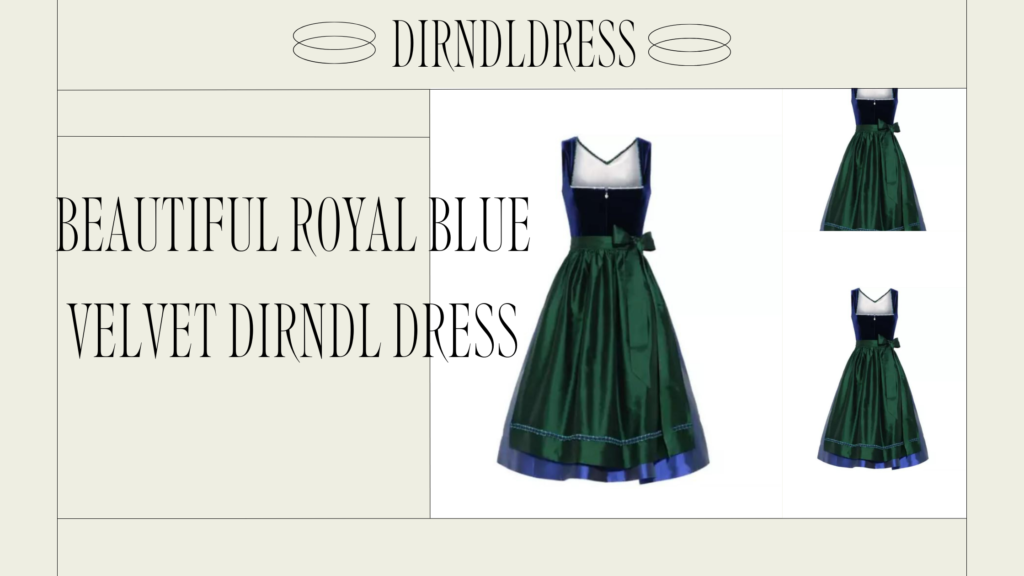
The velvet dirndl dress blue is one of the most striking pieces in Bavarian Trachten fashion. Combining the centuries-old structure of the authentic dirndl with the rich depth of blue velvet, this dress commands attention at Oktoberfest, weddings, folk festivals and winter celebrations. Blue has been a cornerstone of traditional Alpine dress for centuries — from the deep indigo of Bavarian house paint to the cornflower blue of embroidered folk costumes — and in velvet, it becomes something truly extraordinary. This complete 2026 guide covers everything you need to know about choosing, styling, sizing and caring for a blue velvet dirndl dress.
The history of blue in Bavarian Trachten
Blue has deep roots in Bavarian and Alpine folk tradition. The colour appears throughout the historical record of German and Austrian regional dress — in the stitched bodices of 19th-century peasant women, in the embroidered waistcoats of Alpine farmers, and in the ceramic tiles and painted shutters that still characterise Bavarian farmhouses today. This is not a coincidence. In the pre-synthetic era, blue dyes — derived from woad and later indigo — were among the most stable and long-lasting available, making blue garments both practically durable and visually distinctive.
In the context of the modern dirndl dress, blue occupies a unique position. It is traditional enough to carry authentic cultural weight, versatile enough to work across a wide range of shades and tones, and visually striking enough to stand out in the crowded environment of the Oktoberfest beer tents. When combined with velvet — itself a fabric with centuries of European history — the blue dirndl becomes a genuinely special garment.
Why velvet elevates the blue dirndl
Velvet is not just a fabric — it is an experience. The dense, cut pile of quality dress velvet absorbs and reflects light simultaneously, creating a depth of colour that no printed or woven fabric can replicate. In blue tones, this quality is particularly striking. The interplay of light and shadow across velvet’s surface means that the same garment can appear as two or three distinct shades depending on the angle of light and movement of the wearer.
From a construction standpoint, velvet offers significant advantages for dirndl-making. Its natural weight provides structure to the bodice without the need for excessive boning, and its drape in the skirt creates the full, fluid silhouette that is the hallmark of a well-made velvet dirndl dress. Velvet also has excellent thermal properties — warm enough to be comfortable in the cool September and October evenings at Oktoberfest, but not so heavy as to be oppressive inside the crowded tents.
The combination of blue and velvet creates something greater than the sum of its parts. Royal blue velvet has an almost regal quality — it is the colour of European nobility, of stained glass windows in Bavarian churches, of the Bavarian state flag’s blue-and-white diamond pattern. Wearing a blue velvet dirndl connects you to this visual heritage while making a thoroughly modern style statement.
Shades of blue: choosing the right tone for you
Not all blue velvet dirndls are the same. The shade of blue you choose dramatically affects the overall look and feel of the dress, and the occasions for which it is most suitable. Here is a breakdown of the main blue tones available and what each works best for:
Navy blue
Deep, dark and timelessly elegant, navy blue is the most formally aligned shade in the blue dirndl palette. It sits comfortably alongside traditional Bavarian deep greens and burgundies and reads as sophisticated rather than flashy. Navy velvet has a particularly rich depth that rewards close inspection — the pile appears almost black at certain angles, then reveals its true deep blue in brighter light. Navy is an excellent choice for evening events, formal occasions, Bavarian weddings and for those who prefer a refined, understated look at Oktoberfest.
Apron pairings for navy: white satin (striking contrast), silver-grey organza (elegant and complementary), ivory lace (soft and traditional), or deep burgundy (rich and jewel-toned).
Royal blue
Vivid, bold and unmistakably confident, royal blue is the most visually impactful shade for Oktoberfest. It is bright enough to stand out in a crowded beer tent while remaining within the tradition of authentic Bavarian colours. Royal blue velvet catches the light intensely, making every movement of the dress visually dynamic. This is the shade for those who want to be noticed and remembered.
Apron pairings for royal blue: white (the most classic contrast), gold or champagne satin (luxurious and festival-appropriate), black (high contrast and sophisticated), or red (bold and traditional in Bavarian folk colour combinations).
Cobalt and sapphire blue
Sitting between royal blue and navy, cobalt and sapphire shades offer a balance of vibrancy and depth. These tones have strong associations with Bavarian decorative arts — cobalt appears in traditional blue-and-white pottery from the region — giving them genuine cultural resonance. In velvet, these mid-tones are particularly beautiful as they show the directional play of the pile very clearly.
Powder blue and duck egg
Lighter, softer blue tones create a completely different aesthetic — romantic, feminine and more suited to daytime events, spring festivals or less formal occasions. Powder blue velvet has a delicate, almost vintage quality that pairs beautifully with ivory lace blouses and white or pale gold aprons. This shade is the most accessible for those new to wearing bold traditional colours.
Choosing your shade based on skin tone
Blue is a universally flattering colour family, but specific tones work better with different complexions. Cool-toned skin (with blue or pink undertones) is enhanced by royal blue, cobalt and icy powder blue. Warm-toned skin (with yellow or golden undertones) looks stunning with navy, sapphire and deeper jewel blues. Neutral skin tones have the greatest flexibility and can carry any shade in the blue family effectively.
Construction details of a quality blue velvet dirndl
Knowing what to look for in a quality blue velvet dirndl ensures you invest in something that looks and feels genuinely authentic rather than a mass-produced alternative.
The bodice
A quality velvet dirndl bodice should be cut with the pile running in a consistent direction across all panels — any inconsistency will be immediately visible as patches of lighter and darker colour. The bodice should have internal structure — either boning, interfacing or a combination of both — that holds the shape of the garment without relying on the wearer’s body alone. The front closure should be secure and functional: hook-and-eye systems are traditional and very reliable, while lace-up fronts offer a degree of adjustability that is useful across the length of a festival day.
Blue velvet bodices are often decorated with silver or gold embroidery thread, which catches the light beautifully against the velvet pile. Edelweiss motifs, alpine flowers and geometric folk patterns are all traditional choices. Some designs incorporate contrasting ribbon trim or piping along the neckline in white, silver or a complementary colour.
The skirt
The skirt of a blue velvet dirndl should have generous gathering at the waistband to achieve the characteristic full, fluid silhouette. A flat, under-gathered skirt looks wrong on a dirndl — the volume of the skirt is essential to the silhouette’s authenticity. The skirt should be fully lined in a complementary fabric to prevent velvet irritation against the skin and to help the skirt hold its shape and volume over a full day of wear.
Length options for the blue velvet dirndl:
- Mini (above knee) — contemporary and striking. The velvet at this length has a rich evening-wear quality. Best for daytime Oktoberfest sessions.
- Midi (just below knee) — the classic Oktoberfest length, balancing tradition, practicality and elegance. The most versatile choice for a full festival day.
- Maxi (ankle length) — the most formal and dramatic option. Blue velvet at full length creates an extraordinary visual effect — the weight and drape of the fabric become fully apparent only at this length.
The apron
Choosing the right apron is one of the most important styling decisions for a blue velvet dirndl. The apron must contrast with the skirt — this is a fundamental principle of authentic dirndl construction. For a blue velvet dress, strong apron choices include white satin or organza (the most classic and high-contrast option), black satin (sophisticated and very striking against royal or navy blue), silver-grey silk or organza (elegant and complementary to blue tones), and ivory or cream lace (soft and romantic, particularly effective with lighter blue shades).
As with all dirndls, the way you tie the apron bow carries meaning: left side means single, right side means taken, centre front is traditionally worn by young girls, and centre back indicates widowhood. This tradition is widely observed and enjoyed at Oktoberfest.
How to style your blue velvet dirndl dress
The blouse
The dirndl blouse is always visible — at the neckline, the sleeves and sometimes the back — so its quality and style significantly affect the overall look. For a blue velvet dirndl, a white cotton blouse with puff sleeves and lace detailing at the neckline is the most traditional choice and creates a beautiful contrast with the deep velvet colour. For formal occasions, a fine white silk or chiffon blouse adds sophistication. For a more understated look, a plain white cotton blouse without lace keeps the focus on the blue velvet.
Avoid blouses with coloured patterns or bold embroidery — the blue velvet is already making a strong visual statement and the blouse should support rather than compete with it. Off-white or pale cream works well with navy and deep cobalt but can look slightly dingy against brighter royal blue tones.
Footwear
The right footwear for a blue velvet dirndl depends on the shade and formality of your chosen dress. For navy and deeper blues, ankle boots in dark brown or black leather are a classic choice that bridges traditional and contemporary aesthetics. For royal and brighter blues, traditional Haferlschuhe in tan or dark leather worn with knee-high wool socks creates the most authentically Bavarian look. For a more formal or evening occasion, low-heeled leather pumps in nude, black or metallic silver are elegant and appropriate.
As with all Oktoberfest footwear decisions, comfort must be the primary consideration. You will spend hours walking on cobblestones and standing in the beer tents — even the most beautiful shoe becomes a liability if it is not comfortable. Break in any new footwear before the festival and always carry a small pack of blister plasters.
Jewellery and accessories
Blue velvet is a rich, statement fabric — your jewellery should complement rather than compete with it. Silver jewellery works particularly well with blue tones, reinforcing the cool undertones of the fabric. A simple silver necklace with an edelweiss or heart pendant is a traditional Trachten choice. Pearl jewellery — earrings and a simple strand — adds a classic elegance that works beautifully with velvet. For royal or cobalt blue, gold jewellery creates a warmer, more opulent contrast.
Traditional accessories include a Trachtentasche — a small fabric or leather clutch — in a complementary colour, and a light wool shawl or embroidered cardigan for cooler evenings. Avoid heavy or chunky jewellery that will visually overwhelm the bodice details.
Hair and makeup
Traditional Oktoberfest hairstyles complement the blue velvet dirndl beautifully. A braided updo — crown braid, milkmaid braid or woven chignon — keeps hair controlled during a long festival day and references the folk-craft tradition of the dress itself. Flowers or small edelweiss hair clips woven into the braid add a charming detail. Loose waves with a decorative hairpin or comb are a softer, equally valid option.
For makeup with a blue velvet dirndl, warm nude tones on the lips and eyes allow the dress to take centre stage. A classic red lip creates a bold, traditional contrast that references the Bavarian folk colour palette of blue and red. Avoid heavy blue eye makeup — it competes with the dress rather than complementing it.
Sizing your blue velvet dirndl correctly
Getting the right size is essential for a dirndl — the structured bodice in particular requires accurate measurements to achieve the authentic silhouette. Dirndl sizing follows German conventions and differs from standard UK, US and European clothing sizes.
Take these three measurements before ordering:
- Bust — measure around the fullest part of your chest, keeping the tape parallel to the floor
- Waist — measure around the narrowest point of your natural waist, typically 2–3 cm above the navel
- Hips — measure around the fullest part of your hips, approximately 20 cm below the natural waist
For velvet dirndls specifically, we recommend sizing up if you fall between sizes. Velvet is less forgiving than cotton or linen — a slightly larger size will be significantly more comfortable over a full day and the structured bodice will still give you an authentic silhouette. Our complete dirndl size guide includes German-to-UK and German-to-US conversion tables with full measurement guidance.
We also carry a full range of plus-size blue velvet dirndl dresses in sizes up to 24, with the same authentic construction and quality detailing as our standard range.
When to wear a blue velvet dirndl dress
The blue velvet dirndl is more versatile than its Oktoberfest association might suggest. Here are the occasions where it makes its strongest impression:
- Oktoberfest 2026 (19 September – 4 October, Munich) — the quintessential occasion. The velvet fabric is perfectly suited to the cool autumn temperatures and the blue colour stands out beautifully in the beer tents.
- Bavarian and Austrian weddings — navy or cobalt blue velvet is a sophisticated and memorable wedding guest outfit. A maxi-length blue velvet dirndl has a genuinely formal presence.
- Christmas markets — Germany and Austria’s Christmas markets in November and December are one of the best settings for velvet Trachten. The fabric is warm, festive and perfectly seasonal.
- Folk festivals (Volksfeste) — regional German and Austrian folk festivals throughout the year are ideal occasions for authentic Trachten including velvet dirndls.
- Cultural events and themed celebrations — Bavarian-themed evenings, cultural dinners and themed parties all benefit from the authenticity and visual impact of a blue velvet dirndl.
How to care for a blue velvet dirndl
Velvet requires more careful maintenance than cotton or linen, but the care routine is straightforward once understood. Treating your blue velvet dirndl correctly will ensure it looks beautiful for many Oktoberfest seasons to come.
Washing
Always check the care label inside your specific garment. Most velvet dirndls should be dry cleaned to preserve the pile and prevent the fabric from crushing or felting. If hand washing is indicated on the care label, use cold water with a very gentle detergent formulated for delicate fabrics. Never machine wash velvet unless the care label specifically indicates it is safe to do so — even a delicate cycle can damage the pile permanently.
Drying and pressing
After hand washing, never wring or twist the fabric. Press out excess water gently by rolling the garment in a clean dry towel, then lay it flat on a fresh towel to air dry away from direct heat or sunlight. Never iron velvet directly — the heat and pressure will permanently crush the pile. To remove wrinkles, hold a clothes steamer several centimetres away from the fabric surface and work in the direction of the pile, using a soft brush to lift the pile as you go.
Storage
Store your blue velvet dirndl hanging in a breathable garment bag — not a plastic cover, which traps moisture and can cause the velvet to develop a musty smell. Use a hanger that supports the shoulders properly to avoid stretching. If you need to fold the dress for travel or long-term storage, place acid-free tissue paper between the folds to prevent pile marks at the creases. Keep away from direct sunlight, which can fade the blue dye over time.
Dealing with crushed velvet
Velvet pile can become crushed after prolonged sitting or contact with rough surfaces. To restore crushed pile, hold the affected area over a steamer (or carefully over a pot of gently boiling water) until the steam penetrates the fabric. While the fabric is still warm and slightly damp, use a soft-bristled brush to work the pile back in its natural direction. This process can completely restore the appearance of mildly crushed velvet.
Where to buy an authentic blue velvet dirndl dress
Finding a genuinely authentic blue velvet dirndl requires knowing what to look for. Avoid generic marketplace listings with no fabric information, no sizing charts and no detail photography — these almost always turn out to be synthetic costume items that disappoint immediately in person.
Signs of a quality authentic velvet dirndl include: detailed fabric composition information (genuine velvet, lined skirt, boned or interfaced bodice), a complete size guide with measurements rather than just S/M/L/XL labels, clear photography showing the pile direction and embroidery detail, and honest information about care requirements.
At Dirndls Online, our blue velvet dirndl collection features authentic construction throughout — structured bodices, lined skirts, genuine velvet fabric and complete sets including blouse, bodice, skirt and apron. We offer free worldwide shipping to the UK, USA, Germany, Austria, the Netherlands, Switzerland and Australia, with sizes from 2 to 24.
Explore our full velvet dirndl dress collection, our Oktoberfest dirndl range and our plus-size dirndl dresses for the full selection.
Frequently asked questions about the blue velvet dirndl
Is blue a traditional Bavarian dirndl colour?
Yes — blue is one of the most traditionally authentic colours in Bavarian dress. It appears throughout the historical record of Alpine folk costume and is closely associated with the Bavarian state identity (the blue-and-white diamond flag). Blue dirndls are entirely appropriate at Oktoberfest and all other Bavarian cultural events.
What shade of blue works best for Oktoberfest?
Royal blue and cobalt blue are the most visually striking in the crowded, dimly lit beer tents and are the most popular choices at Oktoberfest. Navy is more formal and sophisticated, better suited to evening events and weddings. Lighter powder blue shades are best for daytime visits and less formal occasions.
What apron goes best with a blue velvet dirndl?
The most effective combination is white satin or organza for maximum contrast, or black satin for a sophisticated, high-impact look. Silver-grey organza or ivory lace are beautiful alternatives for a more subtle effect. The apron should always contrast clearly with the skirt — avoid aprons in the same blue tone as the dress.
Can I wear a blue velvet dirndl to a German wedding?
Absolutely — a navy or deep cobalt blue velvet dirndl in a midi or maxi length is a sophisticated and entirely appropriate wedding guest outfit at a Bavarian or Austrian wedding. Trachten is widely worn at traditional German and Austrian weddings, and velvet elevates the dirndl to genuine occasion wear.
The blue velvet dirndl — a statement of culture and style
The velvet dirndl dress blue is a garment that rewards investment. Properly made and properly cared for, it will look beautiful across many years and many occasions — from the first beer tent of Oktoberfest 2026 to Bavarian weddings, Christmas markets and folk festivals for years to come. It is simultaneously one of the most traditionally rooted garments in European folk fashion and one of the most visually spectacular pieces of occasion wear available today.
Shop our full collection of authentic velvet dirndl dresses and Oktoberfest dirndl dresses at Dirndls Online — free worldwide shipping, sizes 2 to 24, authentic construction guaranteed.