How to Measure Yourself for a Perfect Dirndl Fit
Why Getting Your Dirndl Measurements Right Matters in 2026
Buying a dirndl online can feel a little intimidating, especially if you have never worn one before. Unlike a t-shirt or a pair of jeans, a dirndl is a structured, fitted garment. The bodice should sit close to your body, the waist needs to define your shape, and the skirt length changes how the whole outfit looks. If the size is off, even a beautifully made dirndl can feel wrong.
The good news is that measuring yourself correctly takes less than five minutes, and it is the single best thing you can do to guarantee a great fit before you order. In 2026, more shoppers are buying dirndls online than ever before, from first-time Oktoberfest visitors to guests attending Bavarian weddings and festivals across the USA, UK, Canada and Australia. Because you cannot try the dress on in person, your measurements are the most important tool you have.
This guide walks you through exactly how to measure yourself for the perfect dirndl fit, explains what each measurement means for how the dress will look on you, and shares common mistakes to avoid. By the end, you will know precisely what size to order with confidence.
What You Need Before You Start
You do not need any special equipment. Just gather:
- A soft fabric or vinyl tape measure (not a stiff metal one)
- A well-fitted bra or the undergarments you plan to wear with your dirndl
- A mirror, or a friend to help
- A notepad to write down your numbers
Measure directly against your skin or over thin, close-fitting clothing. Measuring over a bulky sweater will throw off your numbers and can lead to ordering the wrong size.
The Three Core Dirndl Measurements
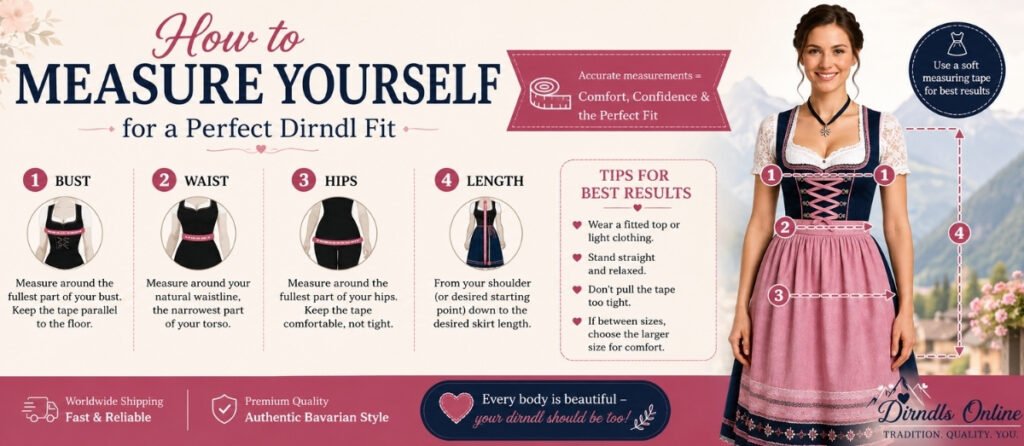
1. Bust Measurement
The bust measurement determines how the bodice will fit across your chest, which is the most fitted part of a dirndl.
How to measure:
- Wrap the tape measure around the fullest part of your bust.
- Keep the tape level and parallel to the floor, not angled up or down at your back.
- Breathe normally and keep the tape snug but not tight.
- Record the number in inches or centimeters.
A dirndl bodice is meant to fit closely and offer light support and shaping, similar to a well-fitted corset top. If your bust measurement falls between two sizes, most style pages on our dirndl dresses collection recommend sizing up for comfort, especially if you plan to eat a full Oktoberfest meal in it.
2. Waist Measurement
The waist is where a dirndl is cinched in, so accuracy here has a big impact on the overall silhouette.
How to measure:
- Find your natural waistline, which is usually the narrowest part of your torso, just above your belly button.
- Wrap the tape measure around this point.
- Keep it snug, but leave enough room to slide one finger underneath.
- Do not suck in your stomach. Stand naturally.
A properly measured waist gives you the classic hourglass shape that a dirndl is designed to create. Many of our women’s dirndl styles use adjustable lacing or hidden zippers at the waist, which gives you a little flexibility if you fall between two sizes.
3. Hip Measurement
The hip measurement matters for how the skirt drapes and how much movement you have while walking or dancing.
How to measure:
- Stand with your feet together.
- Wrap the tape around the widest part of your hips and bottom, usually about 7 to 9 inches below your natural waist.
- Keep the tape level all the way around.
Because dirndl skirts are typically full and gathered, hip measurements have more flexibility than bust or waist, but they still matter for choosing between fitted and A-line silhouettes.
Dirndl Length: Mini, Midi and Maxi Explained
Length is a style choice as much as a sizing one, and it changes the entire look of the outfit.
| Length | Typical Hem | Best For |
|---|---|---|
| Mini | Above the knee | Casual festivals, warm weather, younger guests |
| Midi | Mid-calf | Most versatile, classic Oktoberfest look |
| Maxi | Ankle length | Formal weddings, traditional Bavarian events |
How to measure your ideal length:
- Measure from your natural waist straight down to where you want the hem to fall.
- Compare that number to the product page measurements, since hem length varies by size and by style.
If you are unsure which length suits your event, our mini dirndl, midi dirndl and maxi dirndl collections each list exact hem lengths by size, so you can match your measurement directly.
How to Read a Dirndl Size Chart
A dirndl size chart typically lists bust, waist and sometimes hip ranges side by side with a corresponding size label. Here is a simplified example of how these charts are usually structured:
| Size | Bust (in) | Waist (in) |
|---|---|---|
| XS | 31–32 | 24–25 |
| S | 33–34 | 26–27 |
| M | 35–36 | 28–29 |
| L | 37–39 | 30–32 |
| XL | 40–42 | 33–35 |
Always check the exact chart on the product page you are ordering from, since sizing can vary slightly between styles and manufacturers. If your bust and waist measurements point to two different sizes, choose the size that matches your bust, since the waist area is often adjustable with lacing.
Common Dirndl Sizing Mistakes to Avoid
Mistake 1: Measuring over bulky clothing. This adds extra inches that are not really part of your body, leading to a dress that is too loose.
Mistake 2: Pulling the tape too tight. A tight measurement gives you a smaller number than your true size, which can result in ordering a dirndl that is uncomfortably snug.
Mistake 3: Ignoring the bodice structure. A dirndl bodice is meant to fit snugly, unlike a casual dress. Ordering a size up “just to be safe” often creates a loose, unflattering bodice.
Mistake 4: Skipping the waist measurement. Some buyers only measure their usual dress size instead of their actual waist, which does not account for a dirndl’s defined waistline.
Mistake 5: Forgetting undergarments. The bra or shapewear you plan to wear changes your bust measurement, so measure in what you will actually wear on the day.
How Authentic Dirndls Differ From Costume Versions
This matters directly for sizing and fit. Costume-style dirndls, often sold as party outfits, are usually made from stretchy, cheap polyester with minimal structure. Because the fabric stretches, exact sizing matters less, but the dress also looks flat and shapeless, and it rarely lasts beyond one wear.
An authentic dirndl uses structured cotton, cotton blends, or wool fabrics with boning or internal support built into the bodice. This is what creates the flattering, traditional silhouette Bavaria is known for. Because the fabric has less stretch, accurate measurements are far more important. This is also why quality matters: a well-made bodice from our dirndl dresses collection is cut and finished to hold its shape wear after wear, rather than sagging or losing structure after a single Oktoberfest.
Signs of an authentic, well-made dirndl:
- Sturdy woven cotton or wool-blend fabric, not thin polyester
- Neat, dense embroidery rather than loose or printed patterns
- Finished seams on the inside, not raw or fraying edges
- A structured bodice with boning, lining, or lacing
- A separate, well-fitted apron rather than one sewn permanently in place
Plus Size Dirndl Fit Tips
Plus size buyers sometimes assume dirndls only come in narrow, straight-size ranges. That is not the case anymore. In 2026, well-stocked retailers carry a full range of sizes with the same structured bodice and quality embroidery found in smaller sizes.
Tips for plus size fit:
- Measure bust and waist separately rather than relying on your usual clothing size, since dirndl sizing runs differently from everyday fashion brands.
- Look for styles with adjustable lacing at the back or side, which allow a couple of inches of flexibility.
- Choose a midi or maxi length if you prefer more coverage and a classic silhouette.
Our plus size dirndl collection is built with the same fabric quality and embroidery detail as our standard sizing, so you do not have to compromise on authenticity.
What to Do if You Are Between Two Sizes
If your measurements fall between two sizes on a chart, consider these factors:
- Lacing or zipper adjustability. Many dirndls have lace-up backs or side zippers with a couple of inches of give.
- Fabric type. Cotton blends have slightly more flexibility than pure linen or heavy wool.
- Personal preference. If you like a closer, more traditional fit, size down. If you prefer a relaxed fit for dancing and eating comfortably, size up.
When in doubt, sizing up is usually the safer choice for the bodice, since a slightly loose bodice can often be adjusted with lacing, while a bodice that is too tight cannot.
Styling Once You Know Your Size
Once you have your correct size, the rest of the outfit comes together easily. A dirndl blouse should sit just off the shoulder or at the shoulder line, never tight across the arms. Browse our dirndl blouses to find puff sleeve or fitted styles that pair well with your bodice size.
The apron ribbon is another detail worth knowing before your event. Traditionally, tying the bow on your left side signals that you are single, while tying it on the right signals that you are taken. Tying it in the front center is often used by younger girls or staff working at an event. This small custom is one of the charming details that make dirndl culture special, and it is worth knowing before your first Oktoberfest.
Finishing touches like a dirndl bag, jewelry, or shoes can complete the outfit. Our accessories collection has pieces designed specifically to match traditional Bavarian outfits.
Men’s Sizing: A Quick Note on Lederhosen
While this guide focuses on dirndls, many shoppers are buying for a partner or group at the same time. Lederhosen sizing works differently, relying primarily on waist and inseam measurements rather than bust and waist. If you are shopping for both, our lederhosen collection and men’s lederhosen pages include their own detailed sizing charts.
Key Takeaways
- Measure bust, waist, and hips while wearing the undergarments you plan to use with your dirndl.
- Keep the tape measure snug but not tight, and always level around your body.
- Choose your size based on your bust measurement first if you fall between two sizes, since lacing can adjust the waist.
- Mini, midi, and maxi lengths each suit different events, so measure from your waist down to your preferred hem.
- Authentic dirndls use structured, quality fabric and require more precise measuring than stretchy costume versions.
- Plus size shoppers should measure directly rather than relying on regular clothing sizes.
Frequently Asked Questions
1. What is the most important measurement for dirndl sizing?
Your bust measurement matters most, since the bodice is the most fitted part of a dirndl and has the least flexibility. If you fall between sizes, choosing based on your bust and relying on waist lacing for adjustment generally gives the best overall fit.
2. Should I measure myself alone or ask for help?
Either works, but having a friend hold the tape measure level around your back can improve accuracy, especially for the bust measurement. If measuring alone, use a mirror to check that the tape stays level all the way around your body.
3. Do dirndl sizes match regular clothing sizes?
Not exactly. Dirndl sizing is based on precise bust and waist measurements rather than general clothing labels like small, medium or large in everyday fashion. Always check the specific size chart for the dress you are ordering rather than assuming your usual size applies.
4. What if my measurements fall between two sizes on the chart?
Check whether the bodice has lace-up or zipper adjustability first. If it does, sizing down and using the adjustment is often more flattering. If there is no adjustability, sizing up is usually the safer option for comfort.
5. How much does undergarment choice affect my measurements?
Quite a bit. A padded or push-up bra can add an inch or more to your bust measurement compared to a soft, unlined bra. Always measure in whatever you plan to actually wear with the dirndl on the day of your event.
6. Can I return a dirndl if it does not fit after ordering?
Return policies vary by retailer, so always check the specific return and exchange policy before ordering. Taking accurate measurements upfront is the best way to avoid needing a return in the first place.
7. What is the difference between mini, midi, and maxi dirndl lengths?
Mini dirndls fall above the knee and suit casual festivals, midi dirndls hit mid-calf and are the most versatile choice for Oktoberfest, and maxi dirndls reach the ankle and are typically chosen for formal weddings or traditional Bavarian events.
8. How do I know if a dirndl is authentic rather than a costume?
Look for structured woven cotton or wool-blend fabric, dense and neat embroidery, finished interior seams, and a bodice with built-in support such as boning or lining. Costume versions typically use thin, stretchy polyester and have loosely printed patterns instead of stitched embroidery.
9. Does the apron length need to match the dress length?
Traditionally, the apron should be slightly shorter than the dirndl skirt, allowing a small strip of the skirt fabric to show beneath the hem. Most complete dirndl sets are designed with this proportion already built in.
10. What size should I order if I am pregnant or expect my measurements to change?
Focus on your current waist and bust measurements rather than guessing ahead, and choose a style with adjustable lacing at the waist for extra flexibility as your body changes. A slightly looser bodice paired with waist lacing generally accommodates changes better than a fitted, non-adjustable style.
11. Are plus size dirndls made with the same quality as standard sizes?
Yes, well-made retailers use identical fabric quality, embroidery detail, and construction methods across their full size range. Fit and structure should feel consistent regardless of size, since an authentic dirndl is built the same way at every size.
12. How tight should the bodice feel when properly sized?
A properly fitted bodice should feel snug and supportive, similar to a well-fitted blazer or corset top, without digging in or restricting your breathing. You should be able to sit, eat, and dance comfortably while still feeling the structured shape it is designed to create.
Final Thoughts
Measuring yourself correctly is the single most important step in buying a dirndl you will love wearing. It takes only a few minutes, requires no special tools, and removes almost all the guesswork from shopping online. Whether you are heading to your first Oktoberfest, attending a Bavarian wedding, or building a festival wardrobe for years to come, accurate measurements are what turn a good dirndl into a perfect one.
At DirndlsOnline.com, every style is made with authentic, quality fabric, real embroidery detail, and structured bodices designed to fit beautifully once you have the right size in hand. Browse our full range of dirndl dresses and accessories to complete your outfit, with worldwide shipping and a team happy to help if you have any sizing questions before you order.