
Bavarian Menswear · Oktoberfest 2026 · Complete Guide
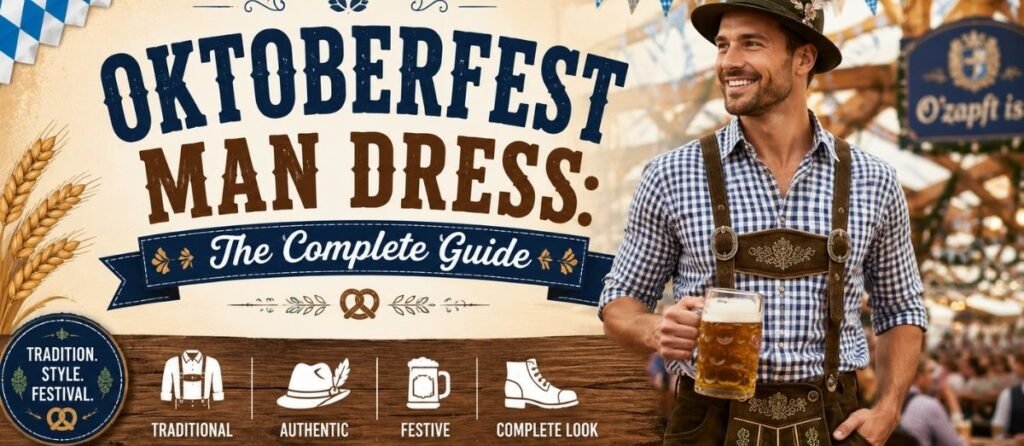
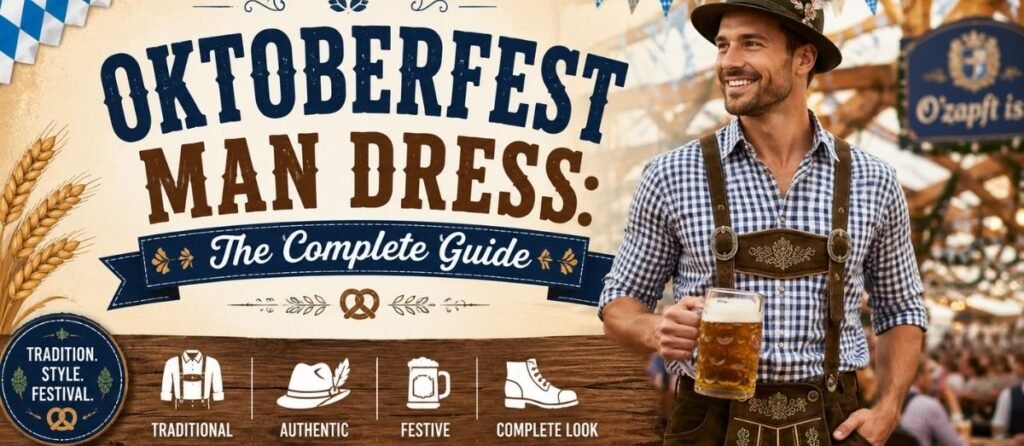
Oktoberfest Man Dress: The Complete Lederhosen Guide
From first-time festival goers to seasoned Oktoberfest veterans — everything men need to dress authentically, comfortably, and confidently in Munich.
There’s a moment every man experiences at Oktoberfest — usually within five minutes of walking into a tent — when he looks around and realizes that everyone who looks like they belong there is wearing the same thing. Lederhosen. A proper shirt. Good shoes. Knee socks pulled up. And they look absolutely right.
If you’re reading this, you’re smart enough to prepare before that moment happens to you. The Oktoberfest man dress — traditional Bavarian Tracht — is one of the most distinctive and rewarding things you can wear at any festival in the world. But getting it right takes more than grabbing the cheapest pair of leather shorts you can find online.
This guide covers everything. The different styles of lederhosen and when to wear each. The shirts, shoes, socks, jackets, and accessories that complete the look. How to tell real Tracht from a Halloween costume. What to budget. And where to buy gear that will actually last — because the best Oktoberfest man dress isn’t a one-season purchase. It’s something you’ll wear for years.
What Is the Traditional Oktoberfest Man Dress?
The traditional dress for men at Oktoberfest is called Tracht — a German word that refers to the folk costume of Alpine regions, particularly Bavaria in southern Germany and the neighboring areas of Austria and South Tyrol. When people talk about the Oktoberfest man dress specifically, they mean the full ensemble built around Lederhosen: traditional leather shorts or breeches that have been worn in the Bavarian Alps for over two centuries.
Tracht is not a theme party costume. In Bavaria, it is a living tradition — worn at festivals, church events, weddings, folk gatherings, and sometimes everyday occasions by people who have been dressing this way their entire lives. When you show up at Oktoberfest in genuine Tracht, you’re participating in something real. When you show up in a €20 polyester imitation, everyone can tell the difference immediately.
The good news is that authentic Tracht is genuinely accessible for visitors. You don’t need to be Bavarian to wear lederhosen well. You just need the right information — and that’s exactly what this guide provides.
A well-dressed man at Oktoberfest isn’t trying to look Bavarian. He’s wearing something made with genuine craft, chosen with real knowledge, and carrying it with the kind of ease that only comes from wearing the right thing.
The Three Styles of Lederhosen — And Which One to Choose
Not all lederhosen are the same. There are three distinct styles, each with its own tradition, occasion, and visual character. Knowing the difference is the first step to choosing the right Oktoberfest man dress for your needs.
Kurze Lederhosen (Short)
Falls mid-thigh. The most recognizable Oktoberfest style — practical, festive, and the go-to for beer tents. Ideal for warm weather and casual festival settings. Most first-time buyers choose Kurze.
Kniebundhosen (Knee-Length)
Falls just below the knee, fastening with a buckle or button at the side. More versatile than Kurze — works for both festivals and semi-formal events. Popular in Austria and South Tyrol. A sharper, slightly more formal look.
Bundhosen (Full Breeches)
Full-length breeches tucking into tall socks or boots. The most formal and traditional option — reserved for weddings, church festivals, and ceremonial occasions. Rarely seen at Oktoberfest but deeply respected in Tracht circles.
Which to Choose for Oktoberfest?
For a first-time visitor, Kurze Lederhosen is the right call. They’re the most practical for a full day in a warm tent, the most visually iconic, and the easiest to find in quality at every price point.
If you want versatility — something that works equally well at Oktoberfest and at a more formal Bavarian event in the future — Kniebundhosen are an excellent investment. They read as slightly more polished while still being completely appropriate for the festival setting.
What Makes Lederhosen Authentic? The Quality Guide
The market for Oktoberfest man dress has exploded globally over the past decade. That’s mostly good news — more choice, more accessibility, more awareness of the tradition. But it also means the market is flooded with cheap imitations that look fine in photos and fall apart in person. Here is exactly what to look for in a genuine pair of lederhosen.
The Leather Must Be Real
Authentic lederhosen are made from genuine animal hide — most commonly deer leather (Hirschleder), goat leather (Ziegenleder), or cowhide (Rindsleder). Each has a slightly different texture and weight. Deer leather is the softest and most premium — it molds to the body beautifully over time. Goat leather is firmer and more durable. Cowhide is the most economical of the three genuine options and still excellent quality.
What you want to avoid is split leather (the bottom layer of a hide, which is weak and rough) or — worse — faux leather, which is just polyester with a plastic coating. Real leather has a distinct smell when new, a natural texture that varies across the surface, and a warmth to the touch that synthetic materials simply cannot replicate.
The Embroidery Should Be Three-Dimensional
Traditional lederhosen feature embroidery on the bib and often on the side panels — typically floral motifs, Edelweiss flowers, deer, or geometric Alpine patterns. On authentic pieces, this embroidery is raised and three-dimensional, stitched through the leather with real thread. On costume versions, it’s flat — either printed directly onto the leather or ironed on as a patch. Run your finger over the embroidery. If it’s flush with the surface, it’s not genuine.
Hardware, Buttons, and Buckles
Check the hardware carefully. Authentic lederhosen use brass, bone, or horn for buttons, buckles, and clasps. They have weight and warmth to the touch. Costume versions use light plastic or chrome-effect metal that feels hollow and looks shiny in a way that natural materials never do. The suspenders (Hosenträger) on a genuine pair are thick leather or heavy woven fabric — not the thin elastic straps you find on costume sets.
The Break-In Factor
Here is the test that only real lederhosen pass: they improve with wear. A genuine pair starts slightly stiff and breaks in over time, molding to your body and becoming more comfortable with every outing. A cheap imitation starts uncomfortable and stays that way — or simply falls apart. If the seller can’t tell you what animal hide the leather comes from, that’s your answer.
Building the Complete Oktoberfest Man Dress: Every Piece Explained
Lederhosen are the foundation, but the complete Oktoberfest man dress is an ensemble. Each supporting piece matters — and getting them right is what separates a sharply dressed man from someone who clearly bought a set five minutes before the flight.
- The Trachtenhemd — Your Shirt This is the most visible piece after the lederhosen themselves. A classic Trachtenhemd is a checked linen or cotton shirt in traditional Bavarian colors — blue-white, red-white, or green-white check patterns are the most iconic. The collar should sit visibly above the bib of your lederhosen, and the fabric should be natural. Linen breathes exceptionally well in a warm tent — an important practical consideration for a full day at Oktoberfest. Avoid anything synthetic. A quality Trachtenhemd costs €30–€80 and makes an enormous difference to the overall look.
- Loferl or Kniestrümpfe — Your Socks Bare legs with lederhosen is the number one tourist tell at Oktoberfest. Traditional Bavarian men wear either Loferl — the distinctive separate calf warmers that leave the shin exposed and attach below the knee — or Kniestrümpfe, full knee-length socks in grey, cream, or green wool. Both are correct and traditional. Loferl are more casual and very popular at Oktoberfest. Full knee socks look slightly more formal. Either way, keep them pulled up. Saggy socks ruin an otherwise excellent outfit.
- Haferlschuhe — The Shoes The Haferlschuhe is the classic Bavarian shoe — a low-heeled leather shoe with a distinctive side seam running from the toe around the ankle. Usually in tan, mid-brown, or dark brown. They are sturdy enough for a full day of walking and standing, elegant enough to complete the traditional look, and comfortable enough that you won’t regret them by hour six. Polish them before you go. Scuffed Haferlschuhe undermine the rest of an otherwise good outfit.
- Trachtenjacke — The Jacket (Optional) Not essential for warm-weather Oktoberfest days, but transformative for cooler evenings or more formal tents. A proper Trachtenjacke in grey, forest green, or charcoal wool — with decorative bone or horn buttons, contrast piping, and a structured cut — elevates the entire ensemble significantly. If you’re attending a dinner event, a reserved tent, or any more formal Oktoberfest occasion, bring a jacket.
- Trachtenhut — The Hat (Optional) A felt or wool Trachten hat in green, grey, or dark navy — often adorned with a Gamsbart (a decorative chamois beard), feathers, or enamel hat pins. Not essential for Oktoberfest but genuinely impressive when worn well. If you go for a hat, commit to it. Half-heartedly wearing a novelty hat is worse than not wearing one at all.
Authentic vs. Costume: The Honest Comparison
Let’s put the numbers and differences side by side. This is the most important decision in building your Oktoberfest man dress, and the table below makes the choice clear.
| What to Check | Authentic Tracht | Costume Version |
|---|---|---|
| Leather type | Deer, goat, or cowhide — real animal hide | Faux leather, PU coated polyester, split leather |
| Embroidery | Raised, three-dimensional, stitched through leather | Flat printed or iron-on motifs |
| Buttons/buckles | Brass, bone, or horn — weighted, warm to touch | Plastic or chrome — light, shiny, cheap feel |
| Suspenders | Thick leather or heavy woven fabric straps | Thin elastic, often attached by clips |
| Comfort all day | Breathes, molds to body, improves with wear | Stiff, sweaty, uncomfortable by mid-afternoon |
| Durability | Lasts a decade or more with basic care | Often damaged or unwearable after one use |
| Price range | €90–€400+ depending on leather and maker | €15–€55 on marketplaces and costume shops |
| Cost per wear (3 years) | €15–€40 per Oktoberfest | Full cost — usually doesn’t survive to year two |
The math is straightforward. A €150 authentic pair worn four times costs €37.50 per Oktoberfest. A €40 costume pair that falls apart after one use costs €40 for a single outing — and leaves you embarrassed in the tent. Authentic Tracht is the better financial decision, not just the better cultural one.
How to Get the Fit Right
Fit is everything with lederhosen. A perfectly authentic pair that fits badly still looks wrong. And because leather behaves differently from fabric, there are some specific fit rules that don’t apply to regular trousers.
Waist Fit
Lederhosen should fit snugly at the natural waist without requiring a belt to hold them up. The suspenders (Hosenträger) do the structural work — the waistband should be close but not tight. When new, genuine leather lederhosen will feel slightly stiff and close-fitting. After two or three wears, they’ll break in and feel significantly more comfortable. Don’t size up to compensate for initial stiffness — you’ll end up with a pair that’s too loose once they’ve broken in.
Bib Fit
The bib should lie flat against your chest without pulling away or gaping at the sides. The top of the bib should sit at mid-chest — not so high it reaches the collarbone, not so low it disappears under a jacket. Your shirt collar should always be visible above the bib. If the bib swallows your collar, the lederhosen sit too high or the shirt is too short.
Length
For Kurze Lederhosen, the hem should fall roughly mid-thigh — not so short it’s uncomfortable, not so long it looks like knee-length breeches. For Kniebundhosen, the hem should end just below the kneecap, fastening cleanly on the outside of the leg.
Accessories That Complete the Oktoberfest Man Dress
The right accessories make the difference between a good Oktoberfest man dress and a great one. None of these are compulsory, but they’re the details that Bavarians notice — and that make photographs from the festival look genuinely impressive.
The Charivari
The Charivari is a decorative chain or collection of badges worn on the front of the lederhosen or attached to the jacket. Traditionally it featured coins, small antler pieces, crystals, edelweiss, or regional symbols — each with personal or cultural meaning. Today it ranges from simple single-piece decorations to elaborate collector’s chains. It’s the Bavarian equivalent of a pocket square — completely optional, deeply traditional, and impressive when done right.
The Gamsbart
A Gamsbart is a decorative brush made from chamois hair, worn on the hat. In traditional Bavarian culture, it was a hunting trophy — the larger and more impressive the Gamsbart, the more accomplished the hunter. Today it’s primarily decorative, but it remains a meaningful symbol of Alpine culture that carries genuine respect among Bavarians.
Hat Pins and Badges
Small enamel or metal pins worn on a Trachten hat are a popular and affordable way to personalize your Oktoberfest look. Many visitors collect one each year as a festival memento. Keep the number modest — two or three pins look curated, fifteen look chaotic.
Where to Buy Your Oktoberfest Man Dress
Quality sourcing is the final piece of the puzzle. Here are the best places to find a genuine, well-made Oktoberfest man dress — whether you’re shopping before you travel or looking for something once you arrive in Munich.
🛍️ Best Sources for Authentic Men’s Tracht
- DirndlsOnline.com: Our full collection of authentic Bavarian Tracht covers both men’s and women’s traditional dress — sourced from certified German and Austrian makers with natural fabrics and genuine construction throughout. Fast worldwide shipping, detailed size guides, and real customer support.
- Premium Lederhosen: For men’s lederhosen specifically, premiumlederhosen.com is one of the most respected specialist retailers available — a wide selection of genuine leather styles from trusted Bavarian makers, at every price point from entry-level to premium.
- Angermaier Munich: The most famous Tracht retailer in Munich, with multiple city-center locations. Excellent for trying pieces in person, with knowledgeable English-speaking staff who can help with sizing and regional style choices.
- Lodenfrey Munich: A Munich institution and one of Bavaria’s oldest and most respected Tracht houses. Premium range, exceptional quality, and a store that genuinely understands the tradition it sells.
- Local Bavarian tailors: For a special occasion — a wedding, a formal Trachtenverein event, or simply the best possible fit — a custom-tailored set from a Bavarian Schneider (tailor) is the ultimate investment. Expect to wait four to eight weeks and pay accordingly, but the result is a piece that fits perfectly and lasts a lifetime.
Also worth reading before you buy: our full guide to authentic Bavarian dress for men and women — covering fabric selection, regional style differences, and how to spot genuine quality across the full range of traditional Alpine Tracht.
And if you’re buying for a couple or group, our guide to buying authentic Bavarian outfits online walks through everything from sizing to shipping timelines — useful reading when you’re coordinating multiple purchases before the festival.
Common Mistakes Men Make at Oktoberfest (And How to Avoid Them)
These are the errors that stand out immediately in the tents — and that are easy to avoid with a little preparation.
Wearing the Shirt Outside the Bib
The Trachtenhemd should always be tucked in neatly, with the collar sitting cleanly above the bib. Wearing it loose or untucked makes the whole look fall apart immediately. This is the most common mistake first-time visitors make.
Skipping the Socks
Bare legs with short lederhosen look unfinished and immediately signal that you’ve missed a key element of the outfit. Loferl or knee socks are not optional — they’re a fundamental part of the traditional look. Buy them when you buy everything else.
Choosing the Wrong Shoes
Trainers with lederhosen, sandals with lederhosen, or smart leather Oxfords with lederhosen all look wrong in different ways. Haferlschuhe exist for a reason — they’re specifically designed for this outfit. If you can’t find Haferlschuhe, dark brown leather boots or sturdy leather shoes in a similar profile are acceptable alternatives.
Buying Too Late
Popular sizes sell out fast as Oktoberfest approaches, especially for mid-range lederhosen in sizes M and L. Order at least four to six weeks before you travel. Leaving it to the week before guarantees limited options and higher prices.
Frequently Asked Questions
What is the traditional man dress called at Oktoberfest?
The traditional Oktoberfest man dress is called Tracht, with Lederhosen as the centerpiece garment. The full ensemble includes leather shorts or breeches, a checked linen shirt (Trachtenhemd), knee socks or Loferl, and Haferlschuhe leather shoes. A wool jacket (Trachtenjacke) and felt hat (Trachtenhut) complete the more formal version.
Do men have to wear lederhosen at Oktoberfest?
There’s no official dress code — you won’t be turned away for wearing regular clothes. But inside the traditional tents, the overwhelming majority of Bavarian attendees wear Tracht, and making the effort to dress authentically is both more respectful and far more enjoyable. It makes you feel part of the experience rather than like an outside observer.
How much do genuine lederhosen cost?
A solid entry-level pair of genuine leather lederhosen starts at around €80–€120. Mid-range quality — full-grain leather with good embroidery and hardware — runs €150–€300. Premium pieces from established Bavarian makers start at €300 and can reach €600 or more for hand-stitched deer leather with regional craftsmanship. The sweet spot for most buyers is the €150–€250 range.
Can I wear lederhosen if I’m not German?
Absolutely. Bavarian Tracht culture is genuinely welcoming to visitors who make the effort to dress authentically. The key distinction is between genuine appreciation — investing in real pieces, wearing them correctly, and respecting the tradition — versus cheap costume versions that trivialize what the garment represents. Choose quality and wear it with knowledge, and you’ll be welcomed warmly.
When should I buy my Oktoberfest man dress?
At least four to six weeks before you travel, ideally longer if you’re ordering online from outside Germany. Popular sizes in quality mid-range lederhosen sell out consistently as Oktoberfest approaches. Early buyers get the best selection, the best prices, and enough time for exchanges if sizing isn’t perfect.
Final Thoughts
The Oktoberfest man dress — a genuine pair of lederhosen worn with the right shirt, proper socks, good shoes, and a few well-chosen accessories — is one of the most satisfying things to wear at any festival in the world. Not because it’s theatrical, but because it’s exactly right. It fits the occasion, the culture, and the history of the place you’re in.
Getting it right isn’t complicated once you know what to look for. Real leather. Real embroidery. Natural fabrics. The right fit. A trusted source. These five things separate a man who looks authentically dressed from one who looks like he bought his outfit from a costume website at midnight the night before his flight.
Invest in the real thing. Wear it correctly. And you’ll understand immediately why Bavarians have been dressing this way for generations — and why, once you’ve done it right, you’ll want to do it again every year.
Prost.
Build Your Oktoberfest Man Dress Today
Shop authentic Bavarian Tracht for men and women — genuine leather, natural fabrics, real craftsmanship. Worldwide shipping with plenty of time before the festival.
Shop DirndlsOnline.com →