
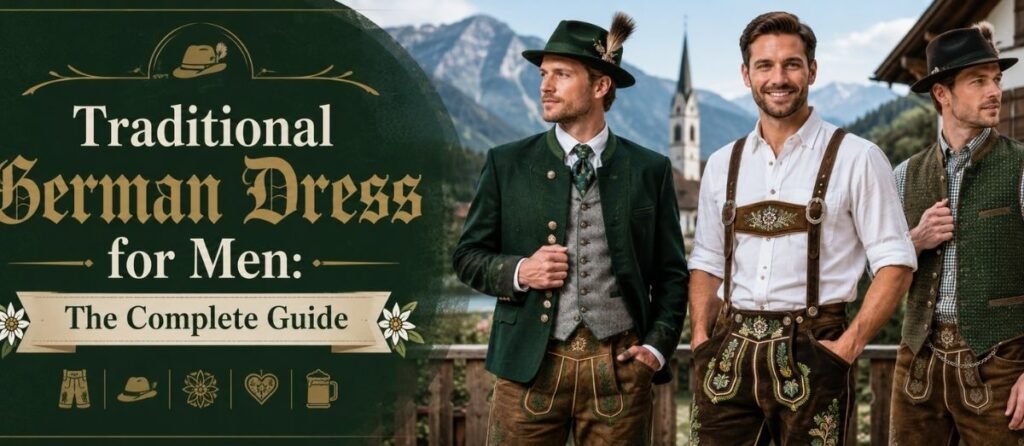
Traditional Bavarian Menswear · Complete Guide 2026
Traditional German Dress for Men: The Complete Guide
Everything you need to know about wearing authentic German menswear — with confidence, pride, and the right fit.
If you’ve ever stood in a Munich beer tent watching every man around you dressed sharply in lederhosen and a crisp linen shirt, you already know there’s something different about traditional German dress for men. It isn’t a costume. It’s a statement — one that carries centuries of Alpine identity, craftsmanship, and regional pride in every stitch.
Whether you’re heading to Oktoberfest, an Alpine wedding, a Bavarian folk festival, or simply want to understand the tradition better, this guide covers everything. What to wear, what each piece means, how to get the fit right, and where to buy the real thing — not the cheap imitation that falls apart by lunchtime on day one.
Let’s start from the beginning.
What Is Traditional German Dress for Men?
The umbrella term for traditional German dress — for both men and women — is Tracht. It refers to the regional folk costume of German-speaking Alpine areas, primarily Bavaria in southern Germany, Austria, and South Tyrol in northern Italy. When people talk about traditional German dress for men specifically, they are almost always referring to Lederhosen and the wider ensemble of garments that go with them.
Tracht is not a single uniform. It varies significantly by region, occasion, and season. What a farmer in the Bavarian countryside wore in 1870 is different from what a groom wears at a Salzburg wedding today — and both are different from what most visitors put on for Oktoberfest. Understanding these layers is the key to dressing well and dressing right.
At its core, traditional German men’s dress has four defining qualities: natural materials, precise tailoring, regional symbolism, and functional origins. These weren’t garments designed for fashion runways. They were made to last — through fieldwork, festivals, and everything in between.
Traditional German dress for men isn’t about looking like you’ve stepped out of a history book. It’s about wearing something that was built to last, crafted to fit, and designed to be worn with genuine pride.
The Core Pieces: What Makes Up a Complete Traditional German Look
A proper traditional German outfit for men isn’t just lederhosen and a hat. There are several key components, and each one matters. Here’s a breakdown of everything that makes up an authentic ensemble.
Lederhosen
The centerpiece. Leather shorts or breeches in various lengths — Kurze (short), Kniebund (knee-length), or Bundhosen (below the knee). Made from genuine deer, goat, or cowhide leather.
Trachtenhemd (Shirt)
A checked or plain linen or cotton shirt. Often in blue-white, red-white, or green-white patterns. The collar and cuffs may feature subtle embroidery or traditional buttons.
Loferl or Kniestrümpfe
Traditional calf socks worn with short lederhosen. Loferl are the distinctive separate calf-warmers; Kniestrümpfe are full knee-length socks, usually grey, cream, or green wool.
Haferlschuhe
The classic Bavarian shoe — a low-heeled leather shoe with a distinctive side seam. Usually brown or dark tan. Sturdy, elegant, and unmistakably Alpine in character.
Trachtenjacke (Jacket)
For cooler weather or more formal occasions, a Trachten jacket in grey, green, or charcoal wool — often with decorative buttons, piping, and lapel pins called Charivari.
Trachtenhut (Hat)
A felt or wool hat — often green, grey, or black — adorned with a Gamsbart (chamois beard), feathers, or hat pins. Worn at formal festivals and traditional ceremonies.
Each of these pieces has its own rules around quality, fit, and occasion. Getting all of them right together is what separates someone who looks authentically dressed from someone who clearly grabbed a set off a costume rack the night before.
Lederhosen: The Heart of German Men’s Traditional Dress
No discussion of traditional German dress for men is complete without giving lederhosen the full attention they deserve. These leather shorts or breeches are the defining garment of Bavarian Tracht — and there is an enormous difference between a genuine pair and the cheap imitations flooding the market every Oktoberfest season.
The Three Main Styles of Lederhosen
- Kurze Lederhosen (Short Lederhosen) The most recognizable style — shorts that fall roughly mid-thigh. These are what most people picture when they think of Oktoberfest. They’re suitable for casual festivals, beer tents, and warm-weather events. A genuine pair is made from thick leather — usually deer or goat — with hand-stitched embroidery on the bib and side panels.
- Kniebundhosen (Knee-Length Lederhosen) These fall just below the knee and fasten with a buckle or button at the side. More versatile than Kurze, they work for both festivals and semi-formal events. This style is particularly popular in Austria and South Tyrol and pairs beautifully with full knee socks and Haferlschuhe.
- Bundhosen (Full-Length Breeches) The most formal option — full breeches that tuck into the top of tall socks or boots. These are the traditional choice for weddings, church festivals, and formal Bavarian occasions. Rare in everyday contexts today, but deeply respected in traditional Tracht circles.
How to Spot Authentic Lederhosen
Genuine lederhosen share several qualities that cheap versions simply cannot replicate. The leather should feel thick, slightly stiff when new, and carry a natural smell — not plasticky or synthetic. The embroidery on the bib — typically featuring floral, deer, or Edelweiss motifs — should be raised and three-dimensional, not flat or printed. The hardware (buckles, buttons) should be brass or horn, not shiny chrome plastic.
Authentic lederhosen also break in over time. Like a good pair of leather shoes, they mold to your body and become more comfortable with wear. A cheap polyester imitation never improves — it just gets worse.
For a full range of premium lederhosen sets that meet all of these standards, it’s also worth browsing Premium Lederhosen — one of the most trusted specialist retailers for authentic German men’s Tracht, with an extensive selection of genuine leather styles for every occasion and budget.
The Trachtenhemd: Getting the Shirt Right
The shirt underneath the lederhosen matters far more than most first-time buyers realize. In traditional Bavarian dress, the Trachtenhemd is not just a base layer — it’s a key part of the visual identity of the whole outfit.
Classic Trachtenhemden come in two main styles. The checked shirt (Kariertes Hemd) features the traditional Alpine check pattern — usually in blue-white, red-white, or green-white combinations. These are the go-to choice for Oktoberfest and casual festivals. The plain or embroidered shirt (often white with subtle embroidery at the collar and placket) is more formal and better suited to weddings and church events.
Whatever style you choose, the fabric should be natural — linen or cotton. A good Trachtenhemd breathes. It won’t turn a summer festival into a sauna experience the way a synthetic blend will. The collar should sit cleanly above the bib of the lederhosen, and the sleeves should end just at the wrist — not baggy, not too short.
Trachten Jackets: When and How to Wear One
Not every occasion calls for a jacket, but when one is appropriate, a proper Trachtenjacke transforms the whole look from casual to genuinely impressive. These are structured wool or boiled-wool jackets — usually in grey, forest green, charcoal, or navy — with traditional detailing that sets them apart from any ordinary blazer.
Key features of a real Trachten jacket include decorative bone or horn buttons, contrast piping along the lapels and pockets, and sometimes subtle embroidery at the collar or cuffs. Many also have two small side pockets and a single chest pocket — all functional, not decorative.
For formal occasions — a Bavarian wedding, a Trachtenverein (folk costume association) event, or a high-end Oktoberfest dinner — the full ensemble of lederhosen, proper shirt, Trachten jacket, and hat is the expected standard. It signals that you take the tradition seriously. That matters to the people who have been wearing Tracht their whole lives.
Seasonal Considerations
Summer festivals call for short lederhosen, a linen shirt, and no jacket — or at most a lightweight waistcoat. Autumn and winter events — which still happen throughout Bavaria and Austria — bring out heavier wool lederhosen, thick Trachten jackets, and longer breeches. The tradition adapts to the season without losing its character.
Regional Variations: It’s Not All the Same
One of the most interesting things about traditional German dress for men is how much it varies by region. Bavaria and Austria share the broad Tracht tradition, but the details differ significantly — and those details carry real cultural weight.
Bavarian Tracht tends toward bolder colors, heavier leather, and broader embroidery patterns. The classic Oktoberfest look — short lederhosen with a bold checked shirt — is quintessentially Bavarian. Green and grey are dominant jacket colors, and the Gamsbart hat decoration is a proud symbol of Alpine hunting culture.
Austrian Tracht, particularly from the Tyrol and Salzburg regions, often features more restrained color palettes. Kniebundhosen are more common than Kurze, and the overall aesthetic tends slightly more toward formality. Embroidery patterns are finer, and the use of loden wool — a thick, water-resistant fabric — is particularly prominent in jacket construction.
South Tyrolean Tracht blends Bavarian and Austrian influences with distinct Italian Alpine flavors. Colors are often more muted, and the leather work is among the finest in the Alpine world — a reflection of the region’s long tradition of skilled craftsmen.
How to Style Traditional German Men’s Dress: Practical Tips
Knowing the individual pieces is one thing. Pulling them together into a cohesive, well-dressed look is another. Here are the practical guidelines that separate a sharp traditional outfit from one that just looks assembled.
Match the Formality to the Occasion
Kurze lederhosen and a checked shirt are perfect for a beer tent. They’re not appropriate for a traditional Bavarian church ceremony. Read the occasion, choose your pieces accordingly, and when in doubt, dress up rather than down. Tracht culture respects effort.
Get the Fit Right — This Is Non-Negotiable
Lederhosen should fit snugly at the waist without a belt pulling them in. The bib should lie flat against your chest. Knee socks should reach just below the knee, not bunch around the ankle. Shoes should be polished. A poorly fitted authentic outfit looks worse than a well-fitted simpler one.
Don’t Mix and Match Randomly
Authentic Tracht pieces are designed to work together within regional and stylistic traditions. Avoid mixing a formal Bundhosen with a casual checked shirt, or wearing a heavy winter jacket with summer short lederhosen. The combinations have rules — and following them is what makes the look coherent.
Accessories: Less Is More
A Charivari — the decorative chain or badge worn on the jacket or lederhosen — is a traditional and meaningful accessory. So are hat pins and Gamsbart decorations. But keep it measured. Authentic Tracht is dignified. Piling on novelty accessories turns a proud tradition into a parody.
Where to Buy Authentic Traditional German Dress for Men
This is where many buyers go wrong. The internet is full of “traditional German dress for men” listings that are nothing more than polyester costume sets with foam embroidery and plastic buckles. Spending a little more on the real thing pays off immediately — in comfort, appearance, and longevity.
🛍️ Where to Find Genuine Men’s Tracht
- DirndlsOnline.com: Our own collection includes authentic Bavarian outfits for both men and women, sourced from certified German and Austrian manufacturers with natural fabrics and traditional construction throughout.
- Specialist Tracht shops in Munich: Lodenfrey, Wallach, and Angermaier are the gold standard for in-store buying — staff who know the tradition inside-out and can help with regional sizing differences.
- Premium Lederhosen: For men’s lederhosen specifically, premiumlederhosen.com offers a wide selection of genuine leather styles from trusted Bavarian makers.
- Austrian Tracht boutiques: If you’re visiting Salzburg or Vienna, local Tracht boutiques carry Austrian-specific styles that you won’t easily find elsewhere — particularly finer wool jackets and Kniebundhosen with regional embroidery.
- Custom tailors: For special occasions like weddings or formal folk events, a custom-tailored set from a local Schneider (tailor) in Bavaria or Austria is the ultimate investment — one that will fit perfectly and last a lifetime.
If you’re also shopping for the women in your group, our authentic dirndl dresses collection covers every style from casual Oktoberfest to formal Alpine wedding — all made from genuine natural fabrics with the same commitment to quality that defines real Tracht.
Traditional German Dress for Men at Oktoberfest: A Special Note
Oktoberfest deserves its own mention because it represents the single largest occasion when traditional German dress for men becomes relevant for millions of people who don’t wear Tracht in their everyday lives. And it’s where the gap between authentic and imitation is most visible.
Inside the big Oktoberfest tents in Munich, the overwhelming majority of Bavarian locals are wearing genuine Tracht. Short lederhosen, proper linen shirts, good shoes, and quality knee socks. Visitors who turn up in cheap Halloween-style lederhosen — stiff, shiny, printed rather than embroidered — are immediately identifiable. That’s not snobbery; it’s just the reality of a living tradition that people genuinely care about.
If you’re going to Oktoberfest even once, it’s worth investing in a proper set. A good pair of short lederhosen, a quality checked shirt, and a pair of Loferl or knee socks will cost more than a costume set — but you’ll look right, you’ll feel comfortable all day, and you’ll be able to use them again for years.
For a broader overview of what to expect and how to dress correctly, our guide to buying authentic traditional Bavarian wear online covers both men’s and women’s considerations in detail.
Frequently Asked Questions
What is the traditional German dress for men called?
The traditional German dress for men is called Tracht, with Lederhosen being the most recognized garment. Tracht refers to the full ensemble — lederhosen, shirt, jacket, hat, and shoes — rooted in Bavarian and Alpine folk tradition.
Are lederhosen only for Oktoberfest?
No. Lederhosen are worn year-round in Bavaria and Austria for festivals, weddings, church events, and folk gatherings. Oktoberfest made them globally famous, but in their home regions they are a living everyday tradition, not a seasonal costume.
How should lederhosen fit?
Lederhosen should fit snugly at the waist without requiring a belt to hold them up. The bib should sit flat and close to the chest. They will feel slightly stiff when new — genuine leather stretches and molds to your body over time, improving with every wear.
What shoes do you wear with traditional German men’s dress?
Haferlschuhe are the traditional choice — low-heeled leather shoes with a distinctive side seam, usually in brown or dark tan. They pair perfectly with knee socks or Loferl and are made to be walked in all day without discomfort.
Can non-Germans wear traditional German dress?
Absolutely. Tracht culture broadly welcomes visitors who make the effort to dress authentically. The key distinction is between genuine appreciation — investing in real pieces worn with respect — and cheap costume versions that trivialize the tradition. Choose authenticity and you’ll be welcomed warmly.
Final Thoughts
Traditional German dress for men is one of the most distinctive and enduring folk fashion traditions in the world. From the thick leather of genuine lederhosen to the crisp linen of a well-chosen Trachtenhemd, every piece carries history, craftsmanship, and regional identity in ways that no mass-produced imitation can replicate.
The good news is that getting it right doesn’t have to be complicated. Understand the pieces, choose natural materials, get the fit right, and buy from sources that take the tradition seriously. Do those things and you won’t just look the part — you’ll wear it with the kind of quiet confidence that the tradition deserves.
Whether you’re preparing for your first Oktoberfest, attending a Bavarian wedding, or simply building a wardrobe that honors one of Europe’s great folk traditions, traditional German menswear is a investment worth making — in quality, in craftsmanship, and in the story behind every stitch.
Shop Authentic Bavarian Tracht
Browse our full collection of genuine dirndls and traditional Bavarian wear — sourced from certified German and Austrian makers, shipped worldwide.
Shop DirndlsOnline.com →