Modern Dirndl Dresses
Modern Dirndl Dresses vs Traditional Dirndl Dresses: Which Style Is Right for You?
Few garments carry as much history, charm and personality as the dirndl. It began as the practical dress of Alpine farm workers and is now worn everywhere, from beer tents in Munich to Christmas markets in Vienna and costume parties in Chicago. But if you have started shopping, you have probably noticed that two very different styles compete for your attention: the classic, heritage-inspired look and the newer fashion-forward version.
So what is the real difference between modern dirndl dresses vs traditional dirndl dresses, and which one should you buy? This guide covers the history, fabrics, cuts, colors, price points, occasions and styling tips for both, so you can choose with confidence. It also answers the questions shoppers ask most often, including how to tie your apron bow correctly and how to avoid a costume-shop look.
Modern Dirndl Dresses vs Traditional Dirndl Dresses: The Quick Answer
If you want the short version, here it is:
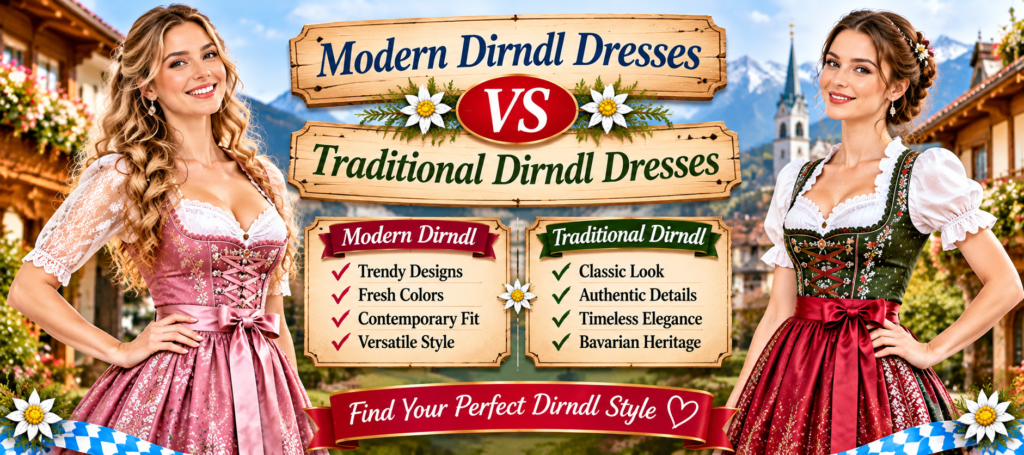
- Traditional dirndl dresses follow regional Alpine customs. They usually have a longer hemline, richer and more muted colors, heavier fabrics, detailed embroidery or trim, and a modest neckline paired with a classic blouse.
- Modern dirndl dresses keep the same basic structure (bodice, blouse, skirt and apron) but update it with shorter hemlines, bolder colors, lighter or stretchier fabrics, lower necklines and trend-led details.
- Choose traditional if you value authenticity, plan to wear it for years, or are attending a formal or cultural event.
- Choose modern if you want something playful, easy to move in and photogenic, especially for a festival or party.
Neither is “better.” The right dirndl depends on your occasion, your personality and how you want to feel in it. If you want to browse both styles while you read, explore the full dirndl dress collection at Dirndls Online.
A Short History of the Dirndl
To understand the debate, it helps to know where the dirndl came from. The word “dirndl” comes from a German dialect term for “young girl” or “maid.” In the 19th century, rural women and household servants in Bavaria and Austria wore simple, durable dresses made of cotton or linen, with a fitted bodice, a full skirt and an apron to protect the clothes underneath.
Around the late 1800s, wealthy city dwellers and aristocrats began vacationing in the Alps and adopted the look as a fashionable summer outfit. Designers upgraded the fabrics to silk and brocade and added decorative details. By the 20th century, the dirndl had become a symbol of Alpine and Bavarian identity.
Today it is both cultural heritage and a fashion statement. That dual identity explains why two parallel styles exist. One honors the past, and the other reinvents it for new generations.
What Is a Traditional Dirndl Dress?
A traditional dirndl respects the customs of the Alpine regions. While there is no single official rulebook, most traditional dirndls share a recognizable set of features.
Traditional Dirndl Hemlines
Classic dirndls are typically midi to long length. Common hems fall at or below the knee, often between mid-calf and ankle. This length reflects the garment’s working-class origins and Alpine modesty. In many regions, a longer hem is still considered the most respectful choice for church events, weddings, folk festivals and formal gatherings.
Traditional Dirndl Fabrics
Authentic dirndls favor natural, structured materials such as:
- Cotton and linen for everyday and summer wear
- Brocade and jacquard for richer, more formal styles
- Wool blends and loden for colder weather
- Silk and taffeta for special occasions
These fabrics hold their shape, drape beautifully and age gracefully. They also tend to be heavier, which gives the dress a more substantial feel.
Traditional Dirndl Colors and Patterns
Expect deep, earthy and jewel-toned shades: forest green, burgundy, navy, mustard, brown and rich red. Patterns lean toward florals, small checks, stripes, edelweiss motifs and subtle damask designs. The overall impression is rich but restrained.
Traditional Dirndl Necklines and Blouses
The traditional silhouette uses a modest, square or slightly rounded neckline. It is usually worn with a classic dirndl blouse that has puffed or short sleeves, lace edging, ruffles or embroidered detail. The blouse is considered part of the outfit rather than an optional extra, and it covers more than modern styles do.
Traditional Apron Details
The apron is generally made from a coordinating fabric such as silk, cotton or jacquard, often with a contrasting or tonal pattern. It tends to be fuller and may include delicate trim along the hem.
Who Should Choose a Traditional Dirndl?
A traditional dirndl suits you if you:
- Want a timeless piece you can wear for many years
- Are attending a wedding, folk festival or formal cultural event
- Prefer a modest, elegant silhouette
- Care about authenticity and craftsmanship
- Want an outfit that looks appropriate in Bavaria, Austria or South Tyrol
What Is a Modern Dirndl Dress?
A modern dirndl keeps the core structure (fitted bodice, skirt, apron, blouse) but treats it as a canvas for contemporary fashion. Modern designers play with proportions, color and materials, which creates a younger and more versatile look.
Modern Dirndl Hemlines
Modern styles commonly sit above the knee or at mini to knee length. Shorter hemlines give you more freedom to walk, dance and sit comfortably in crowded beer halls. They also show off shoes and legs, which many wearers love for a party atmosphere.
Modern Dirndl Fabrics
Modern dirndls often use lighter, more flexible fabrics such as:
- Stretch cotton for comfort and a flattering fit
- Satin and polyester blends for a glossy, festive look
- Lace and tulle overlays for a romantic effect
- Easy-care blends that resist wrinkles and wash well
These materials are generally more affordable and lighter to wear, which matters if you will be dancing in a warm tent for hours.
Modern Dirndl Colors and Patterns
This is where modern dirndls really stand out. Think pastels, neon accents, metallic shimmer, ombré effects, bold prints, glitter details and unexpected color pairings. Some designers introduce animal prints, geometric patterns or fashion-inspired themes. The result is a look that photographs well and expresses individual personality.
Modern Dirndl Necklines and Silhouettes
Modern dirndls often feature lower, sweetheart or plunging necklines, corset-style lacing, off-the-shoulder blouse options and sculpted bodices. The cut tends to be more fitted and body-conscious than classic versions.
Modern Apron Details
Aprons may be shorter, sheer, metallic, printed or contrasted boldly with the dress. Some come with pockets, glitter or lace trim.
Who Should Choose a Modern Dirndl?
A modern dirndl suits you if you:
- Are going to Oktoberfest, a themed party or a festival
- Want a comfortable, easy-care outfit
- Love bold colors and trend-led details
- Are shopping on a smaller budget
- Prefer a playful, fashion-forward look
Key Differences Between Modern and Traditional Dirndl Dresses
Here is a side-by-side comparison to make the choice easier.
| Feature | Traditional Dirndl | Modern Dirndl |
|---|---|---|
| Length | Midi to long | Mini to knee |
| Fabrics | Cotton, linen, brocade, silk, wool | Stretch cotton, satin, lace, polyester blends |
| Colors | Deep, earthy, muted jewel tones | Bright, pastel, metallic, bold |
| Neckline | Modest, square or rounded | Lower, sweetheart or plunging |
| Blouse | Classic, covered, puffed sleeves | Cropped, off-shoulder, minimal, lace |
| Apron | Full, tonal, detailed trim | Shorter, bold, sheer or decorative |
| Fit | Structured, traditional | Fitted, flattering, flexible |
| Price | Mid to high | Budget to mid |
| Best for | Formal, cultural, long-term wear | Parties, festivals, fashion looks |
| Longevity | Many years | Depends on trends and quality |
Style and Silhouette
A traditional dirndl emphasizes a rounded, graceful silhouette. The bodice supports the bust without emphasizing it dramatically, and the full skirt creates a soft A-line shape. Modern dirndls often push the silhouette toward a more fitted, hourglass look, with deeper necklines and shorter skirts.
Quality and Craftsmanship
Traditional dirndls often use more labor-intensive construction, such as hand-finished trim, lined bodices and heavier fabrics. Modern dirndls can also be well made, but the price range is much wider, so it pays to check fabric content, stitching and lining. A good modern dirndl is a joy to wear. A poorly made one can look flimsy and uncomfortable.
Comfort
Comfort depends more on fit and fabric than on style. Traditional dresses can feel warm in heated beer tents because of heavier fabrics. Modern dresses with stretch and lighter materials are usually easier to wear for long days. However, a traditional cotton dirndl that fits well can be perfectly comfortable.
Price
Traditional dirndls generally cost more, especially those made from silk or brocade. Modern dirndls often cost less and give you a trend-led look without a heirloom price. If you are buying your first dirndl and unsure how often you will wear it, a mid-priced modern option can be a smart starting point.
Cultural Perception
In Bavaria and Austria, locals tend to value a respectful, well-fitted look. A very short, costume-style dirndl may be seen as a party outfit, while a traditional one is usually accepted anywhere. Many locals wear modern dirndls too, especially younger people, so there is no need to be anxious. The key is to choose quality and wear it with confidence.
Which Dirndl Should You Wear for Each Occasion?
Oktoberfest and Beer Festivals
Both styles work well. Many visitors choose a modern or mid-length dirndl for comfort and photos. If you want to blend in with locals, choose a knee-length or longer dress in a classic color and pair it with a traditional-style blouse. Browse festival-ready styles in our Oktoberfest dirndl collection.
Weddings and Formal Events
A traditional or semi-traditional dirndl in silk, brocade or jacquard is the elegant choice. Choose a longer hemline, a modest neckline and refined accessories.
Christmas Markets and Winter Events
Traditional fabrics like wool blends, velvet and heavy cotton keep you warm and look beautifully seasonal. A deep green or burgundy dirndl with a cozy cardigan is a classic winter combination. You can also read our guide to Christmas event dirndls for more seasonal ideas.
Parties and Themed Events
A modern dirndl is the natural pick. Shorter hems, bold colors and sparkle details suit a lively evening and look great in photos.
Photoshoots and Social Media
Modern dirndls often win here thanks to bold colors and eye-catching details. That said, a traditional dirndl in a scenic setting, such as a meadow, mountain view or old town street, can look stunning and timeless.
Everyday and Casual Wear
A cotton or linen dirndl in a simple pattern, whether traditional or modern, works well for casual gatherings, summer garden parties and local festivals.
How to Style Modern and Traditional Dirndl Dresses
Choosing the Right Blouse
The blouse changes the whole look. Traditional dirndls pair well with classic white or cream blouses with puffed sleeves, lace or embroidery. Modern dirndls work with cropped, off-the-shoulder, short-sleeved or minimalist blouses. Make sure the blouse length ends at the bodice and does not bunch under the dress. You can find matching styles in our dirndl blouses range.
Selecting the Right Apron
Choose an apron that either contrasts or tones with the dress. Silk and satin aprons give a polished look. Sheer or printed aprons add personality. The apron length should usually fall slightly shorter than the skirt, leaving a small border of skirt visible.
What the Apron Bow Means
The apron bow is one of the most famous parts of dirndl culture. Traditionally, where you tie it signals your relationship status:
- Bow on the left: single and available
- Bow on the right: in a relationship, engaged or married
- Bow in the center front: traditionally signals a young girl or someone not looking
- Bow at the back: traditionally associated with widows or waitstaff
Many visitors tie it purely for style, but locals still notice, so choose deliberately. Always tie it with the bow ends pointing down and neat.
Shoes
Traditional dirndls look great with closed-toe pumps, Mary Janes, ballerina flats or leather ankle boots. Modern dirndls can handle block heels, platform shoes or white sneakers for comfort. If you will be on your feet all day, prioritize comfort. Cobblestones and beer tent floors are not kind to stiletto heels.
Hair
Braids, crowns, half-up styles and low buns suit both styles. Traditional looks often use braided updos, while modern ones may use waves, ponytails or bold hair accessories.
Jewelry and Accessories
Classic accessories include charivari necklaces, velvet chokers, silver brooches, hair flowers and small embroidered bags. Modern looks may add statement earrings, glitter accessories or bold belts. Explore matching dirndl accessories to finish your outfit.
Layering for Cooler Weather
A knitted Trachten cardigan, a wool shawl or a loden jacket adds warmth without ruining the silhouette. These pieces suit both traditional and modern styles.
How to Choose the Right Size and Fit
A great dirndl depends on fit more than anything else.
- Measure your bust, waist and hips and compare them with the size chart. Dirndl sizing can differ from standard dress sizing.
- Check bodice fit. It should feel snug and supportive without pinching. If you can barely breathe, go up a size.
- Check skirt length. Traditional length should fall around mid-calf or knee. Modern length is usually above the knee.
- Consider the blouse. A blouse with puffed sleeves needs a little extra room in the bodice armholes.
- Allow for movement. You will sit, dance and eat, so test the dress for comfort.
- Think about alterations. Hooks, laces and hem adjustments are easy for a tailor to handle.
If you are between sizes, choose the larger size, because it is easier to take a dirndl in than let it out.
How to Care for Your Dirndl
Proper care keeps your dress looking fresh for years.
- Read the care label. Silk, brocade and wool blends usually need dry cleaning or gentle hand washing.
- Wash cotton and polyester blends on a cool, gentle cycle, preferably inside a garment bag.
- Remove the apron and wash it separately, since it often has different fabric.
- Air dry and avoid direct sunlight, which can fade rich colors.
- Steam rather than iron delicate fabrics to avoid shine marks.
- Store on a padded hanger or folded with acid-free tissue, away from damp.
- Spot clean spills quickly, especially beer and food, before they set.
Dirndl Buying Checklist
Before you buy, run through this list:
- Do I know the occasion and dress code?
- Does the hem length feel right for my comfort and the event?
- Is the fabric breathable and suitable for the season?
- Does the bodice fit well and lace or hook securely?
- Is the apron included, and does it match the dress?
- Do I have a blouse that works with the neckline?
- Can I wear this dress more than once?
- Is the price fair for the quality?
Dirndls are usually sold as a set, but check whether the blouse and apron are included. A complete dirndl set saves time and makes sure everything coordinates.
Can You Mix Modern and Traditional Elements?
Absolutely. Many of today’s best outfits blend the two. You might wear a traditional-length dirndl in a modern color, pair a classic dress with a trendy blouse, or choose a shorter dress with traditional jewelry and a heritage apron. This hybrid approach gives you the best of both worlds and often looks the most individual.
The only rule of thumb is balance. If the dress is very bold, keep accessories simple. If the dress is classic, a single modern accent can freshen it up.
Common Mistakes to Avoid
- Choosing a costume-quality dress. Thin fabric and poor stitching look cheap and feel uncomfortable.
- Ignoring sizing. A bodice that is too tight or too loose spoils the whole silhouette.
- Tying the bow incorrectly. Check what your bow position says before you head out.
- Wearing the wrong shoes. Comfort matters on long festival days.
- Overaccessorizing. Pick two or three statement accessories at most.
- Forgetting the weather. Pack a cardigan or shawl for cool evenings.
Modern vs Traditional Dirndl: Which Is Better for First-Time Buyers?
If you are buying your first dirndl, consider your most likely use. If it is a single Oktoberfest trip, a good modern dirndl at a fair price is sensible. If you expect to wear it to weddings, festivals and winter events for years, a traditional or semi-traditional dress offers better long-term value.
A middle path also works well: a knee-length dirndl in a classic color with quality fabric. It is flexible enough for different occasions and looks right in both casual and formal settings.
Frequently Asked Questions
What is the main difference between modern and traditional dirndl dresses?
Traditional dirndls follow Alpine customs, with longer hems, richer fabrics, muted colors and modest necklines. Modern dirndls use shorter hems, lighter fabrics, bolder colors and more fashion-forward details, while keeping the same basic structure of bodice, skirt, apron and blouse.
Which dirndl is better for Oktoberfest?
Both work. Modern dirndls are popular for comfort and photos, while traditional or knee-length styles help you blend in with locals. Choose based on how you want to feel and what you plan to do.
How long should a traditional dirndl be?
Traditional dirndls typically fall at the knee or longer, often to mid-calf. Modern versions are commonly shorter, around mid-thigh to knee.
Can I wear a modern dirndl to a wedding?
You can, but choose a modest length, refined fabric and subtle colors. Many guests prefer a traditional or semi-traditional dirndl for weddings because it looks more formal.
Are traditional dirndls more expensive?
Often yes, because they use richer fabrics and more detailed craftsmanship. Modern dirndls cover a wider price range, from affordable to premium.
What does the dirndl apron bow mean?
A bow on the left traditionally means single, on the right means taken, in the center means young or unavailable, and at the back means widowed or waitstaff.
Do I need to wear a blouse with a dirndl?
Yes. The blouse is part of the traditional outfit, and it completes the look. Choose a style that suits the neckline and the occasion.
How should I choose between modern and traditional?
Think about the occasion, comfort, budget and personality. Choose traditional for authenticity and longevity, modern for fun and flexibility, or mix elements for a personal look.
How do I wash a dirndl?
Follow the care label. Cotton blends can usually be washed gently, while silk and brocade often need dry cleaning. Always air dry and wash the apron separately.
Final Thoughts: Choose the Dirndl That Feels Like You
The debate between modern dirndl dresses vs traditional dirndl dresses is not really about right or wrong. It is about what you value. Traditional dirndls give you heritage, elegance and long-term wear. Modern dirndls give you comfort, color and creative freedom. The best choice reflects your occasion, your budget and your personal style.
Whatever you pick, focus on fit, fabric quality and confidence. A well-fitted dirndl worn with pride will always look better than the most expensive dress worn uncomfortably.
Ready to find yours? Explore our full range of dirndl dresses, complete the look with blouses and accessories, and start planning your next celebration in style.