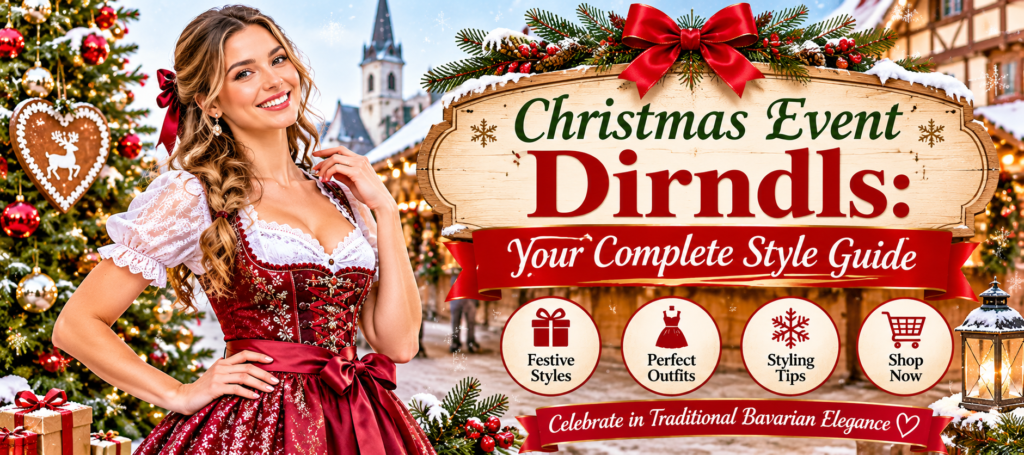
Christmas Event Dirndls
Every December, German and Austrian towns glow with fairy lights, wooden market stalls and the smell of roasted almonds and mulled wine. Walk through any Christkindlmarkt and you will notice that plenty of locals dress up in traditional clothing. If you want to join them, Christmas event dirndls are the most charming way to do it. A dirndl turns an ordinary evening into a festive occasion, and it looks beautiful against twinkling lights and fresh snow.
But dirndls are often linked with Oktoberfest, so many people wonder whether the style works in winter. It absolutely does. In this guide you will learn how to choose Christmas event dirndls for markets, parties, family dinners and concerts, which colors and fabrics suit the season, how to stay warm without hiding your outfit, and how to wear every part of the dirndl correctly. Whether you are buying your first dirndl or adding a winter piece to your collection, you can browse the full range at Dirndls Online while you read.
Key Takeaways
- Christmas event dirndls work best in rich seasonal colors such as deep green, burgundy, navy, and wine red, or in elegant metallic and velvet-style fabrics.
- A dirndl has four parts: the dress, the blouse, the apron, and the accessories. Each one can be adjusted for winter.
- Layering is the secret to comfort. Think cardigans, capes, tights, and warm boots.
- Midi and long lengths feel the most festive and the warmest for outdoor markets.
- The apron bow position has a traditional meaning, so tie it on purpose.
- A correct fit matters more than any trend. Always check bust, waist, and length measurements before you order.
What Are Christmas Event Dirndls?
A dirndl is a traditional dress from Alpine regions of Germany, Austria, and parts of Switzerland and northern Italy. It traditionally consists of a fitted bodice, a gathered skirt, a blouse worn underneath, and an apron tied at the front. Originally it was everyday clothing for farm workers and servants, but over time it became a symbol of regional pride and festive dressing.
When we talk about Christmas event dirndls, we mean dirndls chosen and styled for the holiday season. There is no strict rulebook, but these dresses usually share a few features. They lean toward warmer, deeper colors. They often use heavier or more textured fabrics. They pair with long-sleeved blouses or cozy layers. And they are styled with accessories that suit the season, such as velvet ribbons, wool wraps, and small details in gold or silver.
In other words, a Christmas dirndl is not a separate category of clothing. It is the same classic garment, simply adapted to winter light, winter weather, and winter celebrations. You can explore a wide selection of dirndl dresses and then use the tips below to turn any of them into a holiday outfit.
Why Dirndls Are Perfect for the Holiday Season
There are plenty of reasons to choose a dirndl for Christmas, and they go beyond looking pretty.
They Match the Festive Atmosphere
Christmas markets are rooted in Alpine tradition. Wooden huts, handmade ornaments, gingerbread hearts, and brass bands all come from the same cultural world as the dirndl. When you wear one, you fit into the scene naturally, and you also give your photos a storybook quality.
They Flatter Most Body Shapes
The fitted bodice defines the waist, the gathered skirt skims over the hips, and the neckline creates a balanced shape. Because dirndls come in many cuts, you can usually find one that feels comfortable and confident, even after a big holiday dinner.
They Are Easy to Restyle
The same dress can look cozy at a family lunch, polished at a company party, and playful at a late-night market. Changing the blouse, the apron, and the accessories is enough to shift the mood completely. That makes Christmas event dirndls a smart wardrobe investment rather than a one-night costume.
They Make Great Gifts and Memories
Many people receive their first dirndl as a gift or buy one for a special trip to Europe. A dirndl bought for one Christmas season can be worn again at spring festivals, weddings, and autumn celebrations, so you get far more use out of it than a standard party dress.
Christmas Events Where You Can Wear a Dirndl
Choosing the right dirndl starts with the event. Here are the most popular occasions and how to dress for each one.
Christmas Markets
This is the classic setting for Christmas event dirndls. Markets are usually outdoors, so prioritize warmth and comfort. Choose a midi or long dirndl in a heavier fabric, wear a long-sleeved blouse, add thick tights, and finish with waterproof boots. A wool cape or a long coat that fits over the bodice keeps you warm while still showing the apron and skirt. Because you will be walking on cobblestones and in crowds, comfortable shoes matter more than height.
Family Christmas Dinner
For a dinner at home or in a restaurant, you can go a little softer and more elegant. A dirndl in burgundy, forest green, or deep blue with a silk-look apron feels celebratory without being over the top. Pick a blouse with delicate lace or embroidery, and keep accessories simple. If you will be sitting for a long time, check that the bodice laces or zips comfortably.
Office and Company Parties
A dirndl can be a fun, memorable choice for a workplace celebration, especially in companies with a German or Austrian connection. Choose a knee-length or midi style with a more subtle color palette, a modest neckline, and a classic apron. Keep the styling polished rather than costume-like, and you will look festive and professional at the same time.
Church Services and Christmas Concerts
In many parts of Bavaria and Austria, wearing a dirndl or Tracht to church on Christmas Eve is a long-standing custom. Choose a longer length, a high-neck or demure blouse, and a quiet color such as navy, dark green, or gray. Add a shawl or wrap that you can drape over your shoulders.
Winter Parties and Themed Nights
If you are attending an Oktoberfest-style winter party, a Gluhwein night, or an ugly sweater event with a German twist, you have more room to play. Bright reds, playful prints, and short skirts all work. This is a good time to experiment with fun aprons and statement jewelry.
New Year’s Eve
A dirndl in dark velvet-style fabric or with metallic details can be a surprising and elegant way to welcome the new year. Pair it with a sparkly necklace or hair clip and you have an outfit nobody else will be wearing.
Best Colors for Christmas Event Dirndls
Color sets the mood of your whole outfit, so it deserves some thought. The good news is that the traditional Christmas palette fits dirndl design beautifully.
Deep Green
Forest and emerald green are natural choices. They echo evergreen trees and look rich in candlelight. A green dirndl pairs well with a cream blouse and a red or gold apron for an unmistakable Christmas look.
Burgundy and Wine Red
These shades feel luxurious and warm. A burgundy dirndl works for every event on this list, and it flatters many skin tones. Pair it with a white or ivory blouse and a darker apron for depth, or a lighter apron for contrast.
Classic Red
If you want the most festive option, red is the answer. A bright red dirndl with a white apron is playful and eye-catching at markets and parties. For a softer result, choose a berry or cranberry tone.
Navy and Midnight Blue
Dark blue is elegant and slightly unexpected for Christmas. It pairs beautifully with silver jewelry and creates a winter-night feeling. It is also an excellent choice for churchgoers and formal dinners.
Gray, Charcoal, and Neutral Tones
For a modern, understated approach, try a gray or charcoal dirndl with a colorful apron. The calm base lets one bright detail stand out, such as a red bow or a green apron.
Gold and Metallic Accents
Subtle gold or silver details on the apron, ribbon, or buttons add sparkle without overwhelming the traditional style. These accents catch the light at evening events and give your outfit a celebratory finish.
Color Combinations That Work
If you are not sure where to begin, try one of these reliable pairings:
- Forest green dress, cream blouse, burgundy apron
- Burgundy dress, ivory blouse, gold-toned apron
- Navy dress, white blouse, silver or light blue apron
- Charcoal dress, white blouse, bright red apron
- Red dress, white blouse, dark green apron
You can mix and match with ready-made dirndl aprons to build a different look from one dress.
Choosing the Right Fabric for Winter
Fabric changes how a dirndl looks, how it feels, and how warm you will be. Since Christmas events often happen in cold weather, this is one of the most important decisions.
Cotton Blends
Cotton blends are breathable, durable, and easy to care for. They suit indoor events and layered outdoor outfits. Many everyday and festive dirndls use cotton, which makes it a reliable choice for first-time buyers.
Velvet and Velvet-Look Fabrics
Velvet is soft, rich, and perfect for winter evenings. It reflects light beautifully and gives a luxurious feel to the bodice or the entire dress. Keep in mind that velvet can be warm indoors, so choose it for markets and evening parties rather than a crowded, heated hall.
Jacquard and Brocade
These woven fabrics have raised patterns such as flowers, leaves, or hearts. They look traditional and special without needing extra decoration. A jacquard dirndl is an excellent candidate for family dinners and formal events.
Satin and Silk-Look Aprons
The apron is where many people add shine. A satin or silk-look apron catches candlelight and string lights, and it contrasts nicely with a matte dress fabric.
Wool and Wool Blends
If you expect real cold, a dirndl or a jacket in wool or a wool blend adds serious warmth. Traditional Alpine costume jackets and cardigans are often made from boiled wool, and they look wonderful over a festive dirndl.
How to Stay Warm Without Hiding Your Dirndl
The trick is layering. Start with a long-sleeved cotton blouse, add warm tights or fleece-lined leggings under a longer skirt, and wear a cardigan, cape, or short jacket that leaves the apron visible. A scarf and hat in a matching tone finish the outfit and keep you comfortable.
Length and Style: Mini, Midi, or Long?
Dirndl length changes the personality of the outfit. Here is how to choose.
Mini Dirndls
Mini dirndls sit well above the knee and are popular at lively parties and Oktoberfest-style events. For Christmas, they can still work indoors or with thick tights and tall boots. They are fun and youthful, but they are the least practical option for cold outdoor markets.
Midi Dirndls
Midi dirndls fall around the knee or just below. This is the most versatile length for Christmas event dirndls. It looks traditional, feels comfortable, and offers more coverage in cold weather. If you can only buy one dirndl for the season, a midi is usually the safest choice.
Long Dirndls
Long dirndls reach the calf or ankle. They look elegant and formal, and they are an excellent pick for church services, concerts, and formal dinners. They also keep you warmer, though you will need to be careful with muddy or wet market paths.
Neckline and Bodice Styles
Necklines range from modest and high to open and square. For winter, many people choose a slightly higher neckline with a blouse that has a stand-up collar or lace trim. Bodices may be laced, buttoned, or zipped. If you need to put the dress on without help, a hidden zipper or front closure is convenient.
The Blouse, the Apron, and the Bow
A dirndl is more than a dress. Each part adds character, and knowing how they work together helps you create a believable and attractive outfit.
The Dirndl Blouse
The blouse sits under the bodice and defines the upper half of your look. For Christmas, choose long sleeves in cotton or a soft blend. White and ivory are timeless, but you can also try a blouse in a soft pastel or a color that echoes your apron. Lace, embroidery, and puffed sleeves add a festive touch. A high neckline keeps you warmer, while a lower neckline is better for indoor events.
You can find matching dirndl blouses in a variety of cuts and sleeve lengths to complete the outfit.
The Apron
The apron is the easiest way to personalize a dirndl. Because aprons are separate pieces, you can wear the same dress with a different apron for each event. At Christmas, try:
- A deep red apron over a green dress for a classic holiday look
- A white or cream lace apron over a dark dress for contrast
- A gold or champagne apron for New Year’s Eve
- A patterned apron with stars, hearts, or snowflakes for a playful market outing
The apron should be roughly the same length as the skirt, or just slightly shorter, so that it looks balanced.
What Your Apron Bow Says
Traditionally, the position of the apron bow communicates relationship status. This is a lighthearted custom, but many people still enjoy following it, especially at festive events.
- Bow on the left: you are single and open to meeting someone.
- Bow on the right: you are taken, engaged, or married.
- Bow in the center front: traditionally means a young girl or a person who is not yet of marrying age.
- Bow at the back: traditionally used for widows or for service staff.
If you want to avoid mixed signals at a crowded Christmas market, think about where you place that bow.
Accessories and Winter Layering
Accessories can transform a good outfit into a memorable one. For Christmas event dirndls, focus on pieces that add warmth, texture, and a little sparkle.
Outerwear
Traditional options include the Trachten jacket, a wool cardigan, or a poncho-style cape. These items are designed to work with dirndls and keep the silhouette neat. A long wool coat also works, as long as it is not too bulky around the shoulders. Avoid very short puffer jackets that cut across the waist, because they hide the shape of the bodice.
Hosiery and Footwear
Opaque tights or knee-high socks are the most practical choice. Cream, gray, black, and dark red are all good options. For shoes, choose lace-up boots, ankle boots, or Mary Jane-style flats with a sturdy sole. If you will be on your feet at a market for hours, comfort matters more than height.
Hair and Hats
Braids, crowns, and low buns are classic with a dirndl. For winter, add a knitted hat, a velvet headband, or a felt Trachten hat. A festive ribbon in red or green tied around a braid is a small touch that photographs well.
Jewelry
The traditional pieces are a charivari, which is a decorative chain, and a choker, often made of velvet or with a small pendant. You can also wear small earrings and a brooch that fastens a shawl or cardigan. Keep the jewelry in proportion so it does not compete with the embroidery or the apron.
Bags and Extras
A small crossbody bag or a basket-style purse suits the look and keeps your hands free for mulled wine and gingerbread. Gloves, a cozy scarf, and a thermos of something warm are practical extras that improve any market visit.
How to Choose the Right Size and Fit
Even the most beautiful dirndl will disappoint if it does not fit. Because the bodice is structured, getting the measurements right is essential.
Measure Yourself First
Use a soft tape and measure your bust, waist, and hips. Measure the length from your shoulder or waist to where you want the hem to fall. Take measurements over lightweight clothing, and keep the tape snug but not tight.
Compare With the Size Chart
Check the size chart for the specific dress you like, because sizes differ between brands and cuts. If your measurements fall between two sizes, consider which area matters most. The bodice should feel supportive and not squeeze, so many people choose the size that fits the bust best and then adjust the waist.
Allow for Layers
If you plan to wear a thick blouse or a thermal layer underneath, leave a little room in the bodice. Winter clothing adds bulk, and a dress that only fits perfectly over nothing may feel tight on the day.
Check the Hem Length
Stand up straight in the shoes you plan to wear and check where the hem falls. Midi and long dirndls look best when they are even all around. If a hem is too long, a tailor can shorten it, and many dirndls have enough fabric to make small adjustments.
When in Doubt, Ask
If you are unsure about sizing, contact the shop before you order. A short message can save you the time and effort of returns. You can reach the team through the Dirndls Online contact page for guidance.
Caring for Your Dirndl Through the Holiday Season
Christmas markets mean mulled wine, sticky treats, and crowds, so a little care goes a long way.
- Spot clean quickly. Blot spills with a clean cloth and cold water. Do not rub hard.
- Read the care label. Many dirndls need gentle hand washing or dry cleaning. Aprons and blouses are often easier to wash than the dress itself.
- Air it out. After wearing, hang the dress in a ventilated space so that moisture and smells can disappear naturally.
- Store it properly. Use a padded hanger and a breathable garment bag. Avoid plastic covers that trap moisture.
- Iron with care. Use low heat and a pressing cloth, especially on velvet, satin, and embroidery.
Taking care of your dirndl keeps the colors bright and the fabric fresh, so you can wear it again next season and beyond.
Planning Your Christmas Dirndl Budget
The cost of a dirndl varies with fabric, brand, and detail. Instead of focusing on one price, think about cost per wear. A dirndl in a classic color and a flattering cut can be worn at Christmas, at spring festivals, at weddings, and at autumn events. If you want to stretch your budget, consider the following approach:
- Choose one well-made dirndl in a versatile color such as green, navy, or burgundy.
- Add two or three aprons in different colors for variety.
- Buy one or two blouses that work for both cold and warm weather.
- Build up accessories over time, starting with the pieces you will use most.
This method gives you several outfits from a single dress and avoids spending on items you will only wear once.
Where to Buy Christmas Event Dirndls
When you shop online, look for a store that shows clear photos, detailed size charts, fabric information, and an easy way to ask questions. Dirndls Online offers a range of dresses, blouses, and aprons so that you can put together a complete outfit in one place. Start with the dirndl collection, then add a blouse and an apron to match your event.
It also helps to order early. Christmas is one of the busiest times for festive clothing, and popular sizes and colors can sell out. Ordering a few weeks before your event leaves room for delivery, fitting, and any small alterations.
Quick Styling Ideas for Every Christmas Event
If you want fast inspiration, use this cheat sheet.
- Christmas market: midi green dirndl, long-sleeved cream blouse, red apron, wool cape, thick tights, lace-up boots.
- Family dinner: burgundy jacquard dirndl, lace blouse, gold-toned apron, velvet choker.
- Office party: knee-length navy dirndl, white blouse with a modest neckline, silver-gray apron.
- Church or concert: long charcoal dirndl, high-neck blouse, shawl, small pearl earrings.
- Winter party: short red dirndl, white blouse, patterned apron, knee socks, braids with ribbons.
- New Year’s Eve: dark velvet-look dirndl, champagne apron, sparkly hair accessory.
Frequently Asked Questions About Christmas Event Dirndls
Can you wear a dirndl at Christmas?
Yes. Dirndls are traditional Alpine clothing, and many people in Germany and Austria wear them to Christmas markets, family gatherings, and church services. Choosing warm colors and fabrics, and layering with cardigans and tights, makes a dirndl comfortable in winter.
What color dirndl is best for Christmas?
Deep green, burgundy, classic red, and navy are the most popular colors for Christmas event dirndls. These shades suit the season, look rich in evening light, and combine well with white or cream blouses and festive aprons.
Is a dirndl warm enough for a Christmas market?
A dirndl on its own is not very warm, but it is easy to layer. A long-sleeved blouse, thick tights, a wool cape or jacket, boots, a scarf, and gloves will keep you comfortable at an outdoor market. A midi or long length also helps.
What should I wear under a dirndl in winter?
Wear a long-sleeved cotton blouse as the base layer. You can add a thin thermal top under the blouse if you need more warmth, and fleece-lined tights or leggings under the skirt. Make sure the bodice still fits comfortably with these extra layers.
Which dirndl length is best for winter?
Midi and long dirndls are the best choices for winter because they cover more of your legs and feel more formal. Mini dirndls can work indoors or with tall boots and thick tights.
Does the apron bow really matter?
It is a traditional signal, and many people still follow it for fun. A bow on the left means single, on the right means taken, in the center means not yet of marrying age, and at the back traditionally means widowed or staff. At a social event, it is worth tying it deliberately.
Can I wear the same dirndl for other occasions?
Yes. A dirndl in a classic color can be worn at spring festivals, weddings, summer events, and autumn celebrations. By changing the blouse, apron, and accessories you can create a very different look each time.
How far in advance should I order a Christmas dirndl?
Order at least three to four weeks before your event if possible. This gives you time for shipping, trying on, and making any alterations, and it reduces the risk that your size or color will sell out.
Final Thoughts
There is a reason dirndls appear in every holiday postcard from the Alps. They are warm in spirit, flattering in shape, and flexible enough to suit almost any celebration. By choosing rich seasonal colors, comfortable fabrics, the right length, and smart layers, you can wear Christmas event dirndls with confidence at markets, dinners, parties, and concerts.
Start with the event, pick a color and length that suit it, check your measurements carefully, and then build the outfit with a blouse, an apron, and a few well-chosen accessories. When you are ready to shop, visit Dirndls Online to explore dresses, blouses, and aprons that make your holiday look complete. Happy styling, and have a wonderful Christmas season.