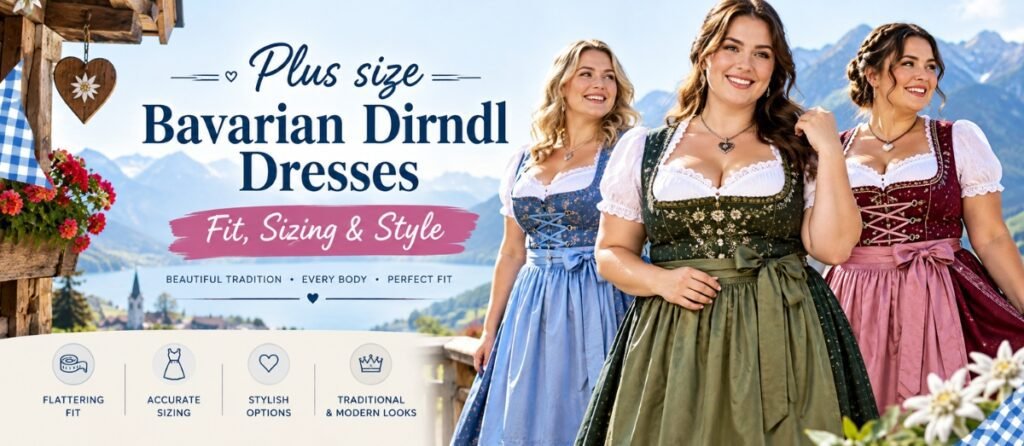
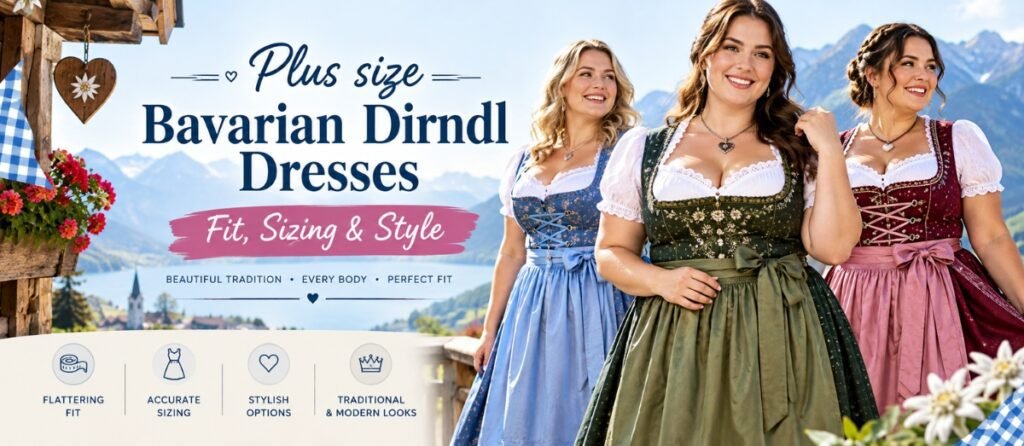
Plus Size Bavarian Dirndl Dresses
A dirndl is a structured outfit, and it follows different sizing rules from everyday clothes. Plus size Bavarian dirndl dresses are traditional dirndls cut for fuller busts, wider waists and hips, and bodies that need more room to sit, walk and dance. Bavarian tradition comes with the dress. The extra room is what makes it work on you.
Fit matters more here than in most clothing. A good dirndl feels supportive but never restrictive. It looks balanced from the shoulders to the hem, and it lets you lift a glass, climb a staircase or spend an afternoon on a festival bench without tugging at anything.
This guide covers how the dress is built, how to measure yourself, which lengths and colors to consider, and what to check before you order online.
What Makes a Bavarian Dirndl Different?
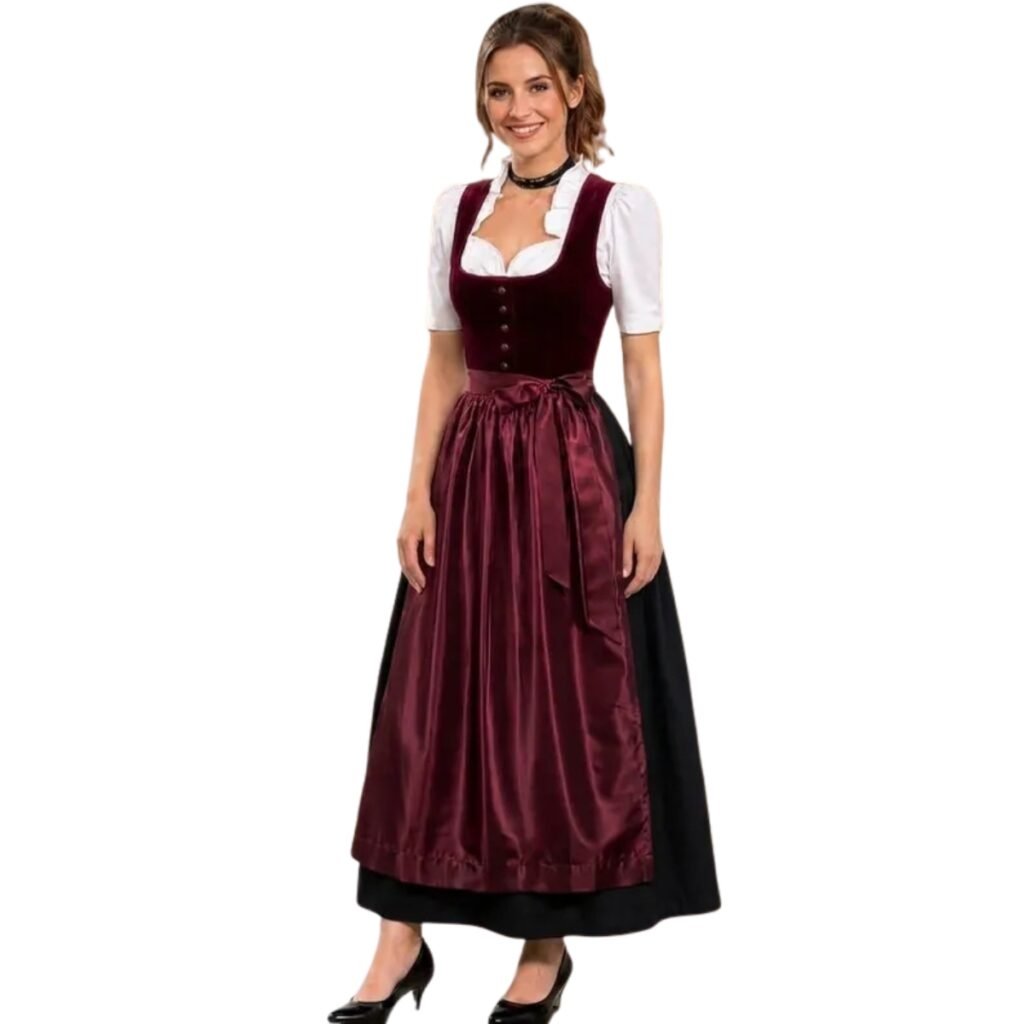
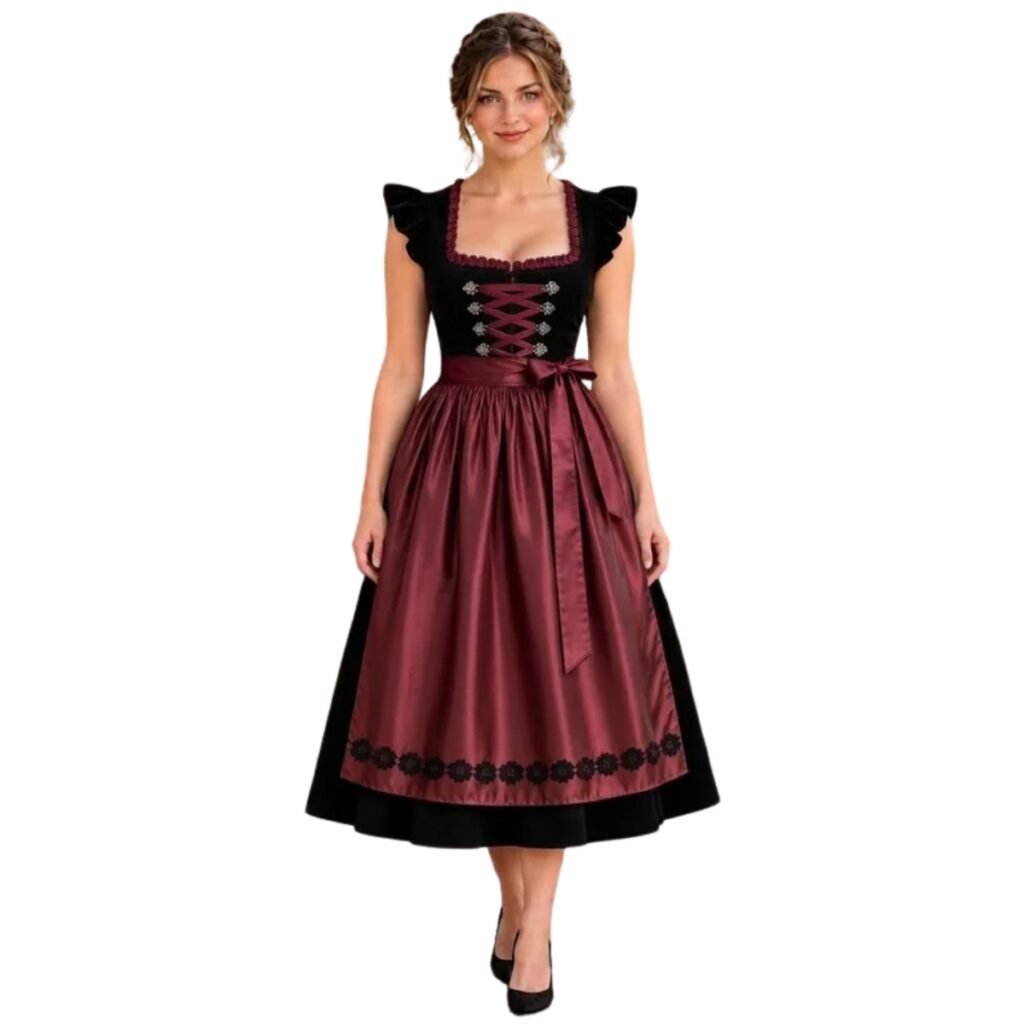
A traditional dirndl is really four pieces worn together. Each one does a job.
- The bodice is the fitted top with lacing, hooks or buttons. It shapes the upper body and sets the neckline.
- The blouse is worn underneath. It is usually white or cream, and its sleeves and neckline frame the bodice.
- The skirt is attached to the bodice on most modern dirndls. It gives the dress its shape and movement.
- The apron ties at the waist. It adds color and detail, and its bow carries a traditional meaning.
The bodice is the piece that decides whether the dress fits. The skirt can be forgiving, and the apron is easy to adjust. A bodice that is too tight will bother you all day, and one that is too loose loses its shape.
How to Choose Plus Size Bavarian Dirndl Dresses
Start with measurements, not the size on the label. A “large” in one shop can be quite different from a “large” in another, and German and European sizing systems don’t match standard US or UK sizes. A dirndl also sits differently on the body than a stretchy jersey dress, so your usual size is only a rough starting point.
Here is what to look at:
- Bust measurement. This usually drives the bodice size. If you have a fuller bust, put it first. A bodice that is too small will squeeze the chest, while one that is too large will gape and slip.
- Waist measurement. This should match the skirt waistband and the point where the bodice ends.
- Hip measurement. Check that the skirt has enough room to move over your hips and to sit down comfortably.
- Skirt length. Pick a length you will feel good in. More on this in a later section.
- Blouse fit. Check the upper arm and shoulder measurements if they are listed.
- Apron fit. It should tie comfortably and not pull across the front.
- Fabric. Cotton and cotton blends breathe well. Heavier fabrics look rich but feel warm indoors.
- Adjustability. Lacing, hooks and adjustable straps give you a little room if your measurements change during the day or the season.
If you are between sizes, look at the bust and waist first. Then read the product’s own size chart before you decide. A plus size dirndl dress page with a full chart will save you far more trouble than guessing.
How Should a Plus Size Dirndl Fit?
Here is a quick guide to each area:
- Bust: The cups of the bodice should hold the bust without pushing it up sharply or leaving gaps. You should be able to take a full breath.
- Waist: The bodice should follow your waist gently. You should be able to slide a finger or two under the lacing.
- Shoulders and straps: Straps should stay in place without cutting in. If they slide off, the bodice may be too big.
- Skirt: It should hang smoothly, with room to sit.
- Apron: It should sit flat and tie without strain.
- Blouse: The sleeves should let you raise your arms. The neckline should stay put under the bodice.
There is an important difference between a fitted dirndl and one that is too tight. A fitted dirndl feels snug and supported. A too-tight dirndl leaves marks, makes it hard to sit and gives you a red, uncomfortable feeling by mid-afternoon.
Don’t buy a smaller size just because it looks more shaped in the photos. Comfort shows in how you carry yourself. If you can’t sit or breathe easily, the dress will feel worse by the hour.
How to Measure Yourself for a Plus Size Dirndl
You need a soft tape measure and a few minutes. Wear the bra you plan to wear with the dirndl, and stand relaxed. Keep the tape level and snug, but don’t pull it tight.
- Bust: Measure around the fullest part of your chest, keeping the tape parallel to the floor.
- Underbust (if relevant): Measure just under the bust. Some size charts list it, and it helps if your bust is much fuller than your ribcage.
- Waist: Measure at your natural waist, the narrowest part of your torso.
- Hips: Measure around the fullest part of your hips and seat.
- Height: Stand against a wall without shoes and note your height. This helps you judge where the skirt will fall.
Write each number down. Measure twice if a result surprises you, and try to measure with someone’s help so the tape stays level at the back.
Once you have your numbers, compare them to the specific product’s size chart. Every brand sizes differently, so a chart from another shop won’t give you accurate results. For a longer walk-through, see this dirndl sizing guide on our site.
Best Dirndl Lengths for Plus Size Figures
No single length suits everyone. Height, event type and how comfortable you feel all play a part.
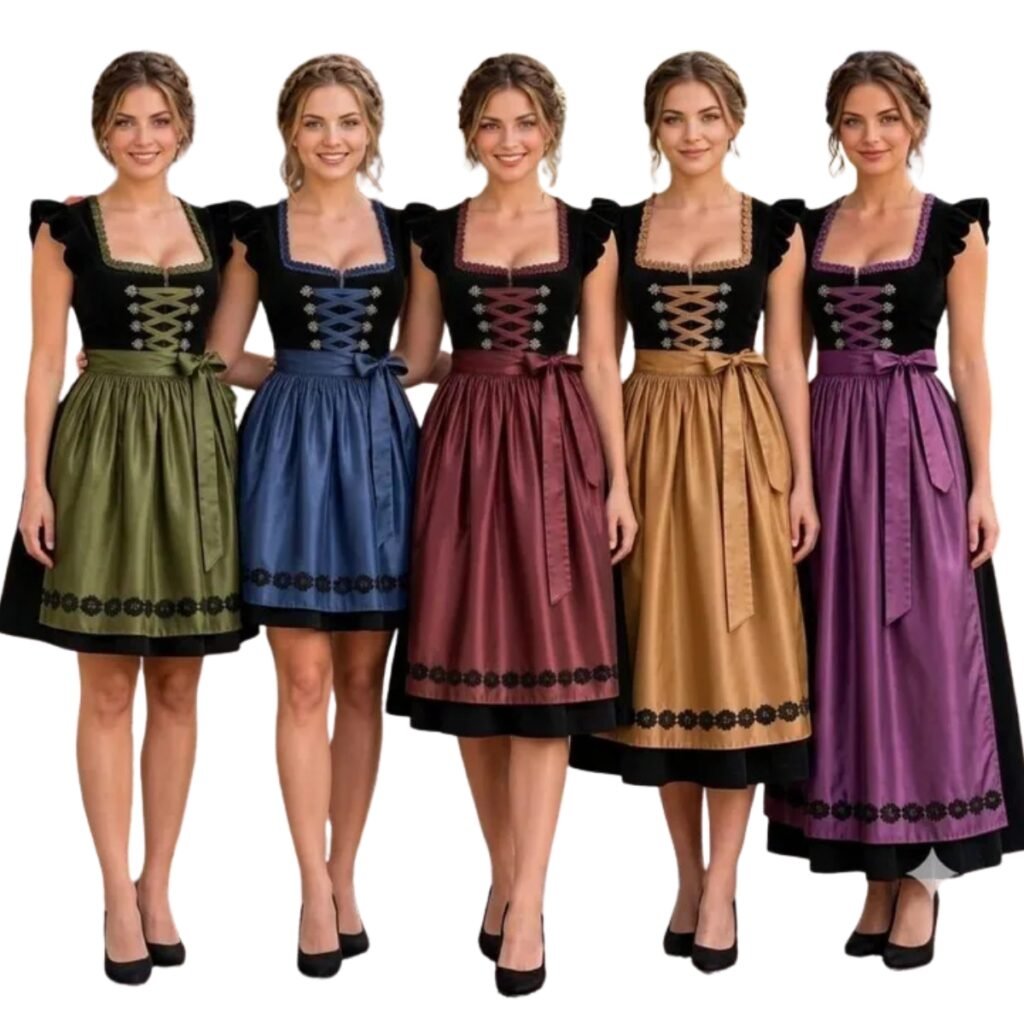
- Mini dirndl: The skirt sits above the knee. It is playful and easy to dance in, and it is common at lively festivals. Some traditional events prefer longer lengths.
- Midi dirndl: The hem falls around the knee to mid-calf. It is the most common length and works for most occasions.
- Long dirndl: The skirt reaches the ankle or floor. It suits weddings, balls and formal events, though you will need sensible shoes for uneven ground.
Height changes how a hem looks. A midi on a taller person may sit closer to the knee, while on a shorter person it can reach the calf. Try a few lengths if you can. If you can’t, check the skirt length in centimeters or inches on the product page and hold a tape measure against your leg.
Which Colors Work Well for Plus Size Bavarian Dirndl Dresses?
Color is personal, and no color is right for every body. Here is how the popular choices tend to come across:
- Black: Classic and simple. It pairs easily with colorful aprons.
- Dark green: A traditional Bavarian shade that works with cream and white blouses.
- Navy: A softer alternative to black.
- Burgundy: Rich and warm, and it looks good in autumn.
- Royal blue: Bright but still traditional.
- Pink: Playful, and it comes in soft to bold shades.
- Cream: Lovely for weddings and lighter events.
The whole outfit shapes the look, not just the dress color. A contrasting apron draws the eye to the waist. Bodice trim, ribbon and embroidery add detail. A patterned blouse against a patterned dress can look busy, so plain white or cream blouses are the safer choice. Traditional combinations, such as dark green with a cream blouse or blue with a white apron, are hard to get wrong.
Plus Size Dirndl Blouse and Sleeve Ideas
The blouse changes the whole feel of the dress. Here are the common styles:
- Puff sleeves: The classic choice. Make sure the gathered sleeve doesn’t feel tight around the upper arm.
- Short sleeves: Cool and practical for warm days.
- Elbow-length sleeves: A good middle option if you prefer more coverage.
- Fitted sleeves: These give a cleaner line, but check the arm measurements.
- White cotton blouses: Breathable and easy to wear all day.
For necklines, a lower cut shows off a necklace and lengthens the neck. A higher cut gives more coverage. Ask yourself whether you can lift your arms and hold a stein without pulling at anything.
How to Style a Plus Size Bavarian Dirndl
Keep the styling simple and practical:
- Shoes: Comfortable block heels, flats or traditional shoes. Festival grounds involve a lot of walking and standing.
- Jewelry: A small piece is enough. Traditional costume isn’t the place for a lot of statement jewelry.
- Necklaces: A short chain or choker sits well against the neckline.
- Apron: Choose one that complements the dress and ties without strain. The bow position has a traditional meaning: left often means single, right taken.
- Hairstyles: Braids, pinned-up styles and half-up looks are all common and keep hair off your neck.
- Handbags: A small crossbody bag keeps your hands free.
- Cardigans or jackets: Bring a wrap or cardigan for cool evenings.
These ideas suit Oktoberfest, Bavarian festivals, weddings and other traditional events.
Where Can You Wear a Plus Size Bavarian Dirndl?
A dirndl isn’t only for Oktoberfest. You can wear one to:
- Oktoberfest and other autumn beer festivals
- Bavarian and German cultural events
- Folk festivals
- Weddings and formal celebrations
- Theme parties
- Cultural or heritage celebrations
Different events suit different styles. A longer, quieter dress fits a formal event, while a shorter, brighter one suits a lively festival.
Plus Size Dirndl for Oktoberfest
If you are choosing a dirndl for Oktoberfest, think about the full day. The 191st Oktoberfest takes place at Munich’s Theresienwiese from September 19 to October 4, 2026. If you are planning ahead, the 2027 festival is listed for 18 September to 3 October. The Wikipedia page on Oktoberfest gives a good overview of the festival’s history and traditions, including its costume parade. MunichMunich Oktoberfest
Points to consider:
- Comfort for walking and sitting: You will spend hours on your feet and on benches. Choose a bodice that lets you breathe.
- Dancing: A skirt with a little fullness gives you room to move.
- Weather: September can be mild or cool. Layers help.
- Fabric: Breathable cotton is a good choice for warm tents.
- Length: Midi is the most practical for crowds.
- Shoes and apron: Comfortable shoes, and an apron you won’t mind getting a small spill on.
How to Buy Plus Size Bavarian Dirndl Dresses Online
Shopping online works well if you check the details first:
- Check the size chart. Compare your own bust, waist and hip numbers to the product’s chart. On Dirndlsonline.com, each product page carries its own size information.
- Measure yourself. Don’t rely only on S, M, L or XL.
- Check the photos. Look at the bodice shape and skirt length.
- Check the fabric. Look for information about material and lining.
- Check the blouse. See whether one is included and what it looks like.
- Check the apron. Some listings include one and some don’t.
- Check shipping and returns. Read the terms before you order, especially if you need it by a date.
- Read the product description. Details about length and closure matter.
You can also browse a wider selection of German dirndl dresses online, and read our tips on buying perfect fit dirndl dresses online.
Common Mistakes When Buying a Plus Size Dirndl
- Choosing by normal clothing size. Dirndl sizing follows its own logic.
- Ignoring the bust measurement. It usually decides the bodice size.
- Ignoring the waist measurement. A tight waistband is uncomfortable fast.
- Choosing an uncomfortable bodice. If it hurts in the fitting, it will hurt at the festival.
- Ignoring skirt length. Check it against your height.
- Not checking whether the blouse is included. You may need to buy one separately.
- Not checking the size chart. Every brand differs.
- Buying only because of the color. Fit comes first.
- Waiting until the last minute. Order early so you have time to check the fit and, if needed, exchange it.
Frequently Asked Questions
How should a plus size Bavarian dirndl fit?
The bodice should be snug and supportive without pinching. You should be able to sit, breathe and lift your arms comfortably. The skirt should hang smoothly and the apron should tie without strain.
What measurements do I need when buying a plus size dirndl?
Bust, waist and hips are the essentials. Underbust and height are useful too. Compare all of them to the product’s own size chart.
What length of dirndl is best for a plus size figure?
There isn’t one best length. Mini, midi and long all work. Choose based on your height, the event and what feels comfortable.
Can I wear a plus size dirndl to Oktoberfest?
Yes. Dirndls are standard festival wear at Oktoberfest, and plus size styles are designed for the same comfort and tradition.
What should I wear with a plus size Bavarian dirndl?
A blouse, an apron and comfortable shoes are the basics. Tights and a cardigan help in cool weather.
Can I buy plus size Bavarian dirndl dresses online?
Yes, and many people do. Measure yourself, compare with the size chart, and read the shipping and returns information first. Our FAQ page covers common questions.
Do I need to buy a dirndl in a smaller size for a fitted look?
No. A smaller size that pinches will look and feel worse. Choose the size that fits your measurements.
Conclusion
The best plus size Bavarian Dirndl Dresses fit your bust and waist comfortably, suit your height and match the event you are dressing for. Measure carefully, compare with the size chart, choose a length and color you enjoy, and keep the styling simple. If you are looking for a place to start, you can browse the range at Dirndlsonline.com, which also carries lederhosen.