Best Dirndl and Lederhosen for Oktoberfest 2026: What to Wear and Buy
Oktoberfest 2026 begins in late September, and if you haven’t sorted your outfit yet, September is exactly the right time to do it. Not because of artificial urgency — but because finding something you genuinely feel good wearing takes more thought than most people expect.
There are real decisions involved: the right style, a size that actually fits the way you want it to, the blouse and apron that complete the dirndl, the shirt and socks that finish the lederhosen, and enough time for delivery before the festival arrives. For anyone attending a Wiesn event in Munich, a local Oktoberfest celebration, a themed party, or simply wanting to celebrate Bavarian culture properly — getting the outfit right makes a difference to how the day feels.
This guide covers the best dirndl dresses and lederhosen for Oktoberfest 2026 in detail: which styles work for different body types and occasions, how to choose the right fit, how to put together a complete outfit, and what to think about when ordering online. Whether you’re buying for the first time or upgrading your look for this year’s festival, this is designed to help you make a confident decision.
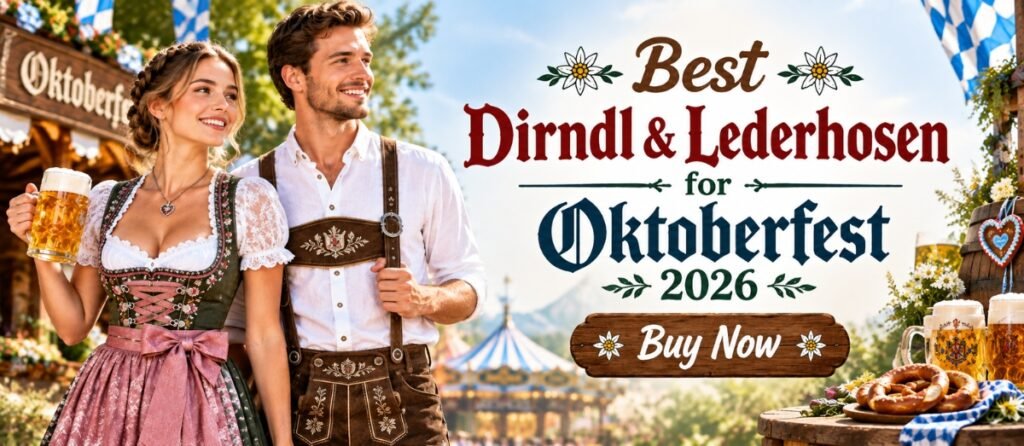
What Should You Wear to Oktoberfest 2026?
Oktoberfest has a dress code — not enforced at the entrance, but strongly felt inside the tents. Visitors in traditional Bavarian clothing are welcomed differently from those in casual clothes, and in recent years the trend toward authentic traditional dress has only grown stronger.
For women, the traditional choice is the dirndl — a dress consisting of a fitted bodice, full skirt, blouse worn underneath, and an apron tied at the front. The side on which the bow is tied carries a traditional meaning: left means single, right means taken, front means working, back means widowed or undecided. It’s a charming piece of folklore that adds a layer of fun to wearing the outfit.
For men, lederhosen — leather shorts or breeches traditionally worn with braces, a check or linen shirt, and sturdy shoes — remain the standard. Long lederhosen reaching the knee or just below are also popular and tend to be more comfortable for a full festival day.
Both styles come in wide ranges today: from deeply traditional, countryside-inspired designs in muted earthy tones to more modern interpretations in bold colours with contemporary cuts. Neither approach is wrong. What matters is that the outfit feels intentional and is put together properly, rather than thrown on as an afterthought.
Best Dirndl Styles for Oktoberfest 2026
Choosing a dirndl starts with understanding the different styles available — because what suits a summer afternoon event in a beer garden is different from what works for an evening inside a festival tent.
Traditional Dirndl
The classic Bavarian dirndl features a structured bodice, a skirt that falls to midi or full length, and is made in durable fabrics such as cotton, linen, or a blend of the two. Traditional dirndls often feature decorative details like edelweiss embroidery, ribbon trim, or contrast colour bodices and skirts.
Who it suits: Anyone who wants to look authentically Bavarian — this style is universally flattering and appropriate for any Oktoberfest setting. Works well with: A white or cream cotton blouse with puffed sleeves, a complementary apron in a contrasting shade, and simple pearl or silver jewellery.
Explore traditional dirndl dresses if you want a look that fits naturally into a festival tent without second-guessing yourself.
Velvet Dirndl
Velvet dirndls have a rich, slightly formal quality that makes them ideal for evening events or cooler September weather. The fabric holds deep colours particularly well — burgundy, forest green, and midnight navy all look striking in velvet.
Who it suits: Women who want a more elegant or statement-making look, or those attending evening celebrations. Works well with: A silk or fine cotton blouse in ivory or soft gold, a satin apron, and pearl or gemstone jewellery. What to consider: Velvet is warmer than cotton or linen, which may matter if the tent gets crowded.
Cotton Dirndl
Cotton dirndls are a reliable, practical choice — breathable enough for a long day at a warm festival, easy to care for, and available in the widest range of colours and prints.
Who it suits: First-time buyers, anyone attending daytime events, and those who want comfort as a priority. Works well with: A simple cotton blouse and a neat apron. Cotton dirndls are very forgiving and easy to style. What to consider: Look for a good quality cotton weight — lightweight summer cotton can look less structured than a heavier weave.
Linen or Linen Blend Dirndl
Linen dirndls have a natural, slightly textural quality that reads as both traditional and effortless. Linen-cotton blends offer the look of linen with slightly less creasing.
Who it suits: Women who prefer a more relaxed, country-inspired look rather than highly polished styling. Works well with: A cotton voile blouse, a natural linen apron, and simple wooden or antler-style accessories.
Midi Dirndl
A midi dirndl — typically falling just below the knee — is one of the most popular lengths today. It’s practical for walking around a festival site, avoids the length concerns of a full-length skirt, and remains clearly traditional in appearance.
Who it suits: Most body types. The midi length is a safe, flattering choice for a wide range of heights. Works well with: Almost any blouse and apron combination. A clean pair of Bavarian walking shoes or Mary Janes completes the look.
Modern Fitted Dirndl
Some contemporary dirndl styles adapt the traditional silhouette with a closer fit through the bodice and a slightly shorter or more sculpted skirt. These versions often appear in brighter colours or with more contemporary detailing.
Who it suits: Women who want to wear traditional clothing but with a slightly more modern edge. Works well with: A fitted blouse with less volume in the sleeves, and a sleek, simply tied apron. What to consider: Sizing can be more critical with close-fitting styles — check measurements carefully before ordering.
Elegant Dirndl for Evening Events
For a formal Oktoberfest celebration — a gala dinner, a hotel ballroom event, or a private party — a floor-length or near-floor-length dirndl in a rich fabric makes a genuinely elegant impression. This is traditional dressing at its most sophisticated.
Who it suits: Anyone attending formal evening events who wants to honour the tradition without resorting to a party dress. Works well with: A fine blouse, a delicate apron, and understated jewellery. Hair worn up completes the look.
Browse the full range of Oktoberfest dirndl styles to see what’s currently available before the festival season peaks.
Best Lederhosen Styles for Oktoberfest 2026
A good pair of lederhosen is, in some ways, a more involved purchase than a dirndl — the leather needs to feel right, the fit needs to be correct, and the full outfit requires more separate pieces.
Short Lederhosen
Short lederhosen — the classic Bavarian style ending above or at the knee — are the most recognisable and widely worn. They’re practical, they work with a wide range of shirts, and they hold their shape well through a long festival day.
Key features to look for:
- Genuine leather or high-quality leather blend construction
- Decorative embroidery on the front flap and thighs (traditional motifs such as oak leaves, stag heads, or edelweiss)
- Adjustable braces (suspenders) included or available separately
- A front bib with working buttons
Longer Lederhosen
Knee-length or just-below-the-knee lederhosen are increasingly popular, particularly for men who prefer more coverage or find them more comfortable. They read as slightly more formal and work particularly well in cooler weather.
Leather Types
Most lederhosen are made from deer leather, cowhide, or chamois leather. Deer leather tends to be the softest and most comfortable; cowhide is more structured and durable. Over time, leather lederhosen develop a patina and mould slightly to the wearer’s shape — a quality that improves with wear rather than diminishing.
What to look for: Consistent stitching, secure button attachments, and clear information from the seller about the leather type used.
Completing the Lederhosen Outfit
Lederhosen alone aren’t an outfit. A complete men’s Oktoberfest look requires:
- Traditional shirt: A checked Bavarian shirt (Trachtenhemd) in red, blue, green, or grey checks is the standard choice. A plain linen shirt is also appropriate.
- Braces/Suspenders: Most lederhosen come with braces, but ensure they are properly attached and adjusted for your height.
- Socks: Traditional Bavarian socks (Loferl) — short calf-length socks with a decorative turnover — are the authentic choice. White knee socks are a simpler alternative.
- Shoes: Haferlschuh (Bavarian slip-ons) are the traditional shoe. A clean pair of sturdy leather shoes works if you don’t have them.
- Optional extras: A Bavarian felt hat (Trachtenhut) or a vest (Trachtenweste) adds polish to the look.
Browse lederhosen for men and the full Oktoberfest lederhosen collection to find the right style and sizing before availability thins out.
How to Choose the Right Dirndl
Choosing a dirndl size is not the same as choosing a regular dress size — and this is where many online shoppers run into problems.
Measurements to take:
- Bust: Measure around the fullest part of your bust. Dirndl bodices are often sized primarily by bust measurement.
- Waist: Measure at the narrowest point of your waist.
- Hip: Some styles with more volume at the hip will include a hip measurement in the size guide.
- Length: Your height matters. If you’re petite, a standard midi length may fall longer on you than expected. Conversely, if you’re tall, a midi dirndl may sit higher than intended.
Other considerations:
- Blouse fit: The blouse should be comfortable under the bodice without bunching. If you have a larger bust, size the blouse generously — it can be taken in more easily than let out.
- Apron: The apron should be long enough to reach at least the hem of the skirt and tie comfortably around the waist. Most aprons are adjustable, but check the tie length if you have a fuller waist.
- Fabric: A cotton or linen dirndl with a small amount of stretch is more forgiving on sizing than a stiff structured bodice.
- Personal style: Choose a colour and silhouette that genuinely appeals to you — you’ll wear it more confidently and comfortably.
Always check the seller’s size guide before ordering. At Dirndls Online, a dirndl size guide is available to help you match your measurements to the right size accurately.
How Should Lederhosen Fit?
Lederhosen fit is often described as slightly snug when new and relaxing over time — but there’s a meaningful difference between “will ease in” and “too small.”
Waist: The lederhosen should sit securely at your natural waist without pinching. You should be able to fit two fingers inside the waistband comfortably.
Thigh: There should be enough room to sit comfortably. Leather has limited stretch, so if the thighs are tight when standing, they will be uncomfortable when seated — which matters a great deal in a festival tent.
Length: Short lederhosen should end above the knee by a comfortable margin, not mid-thigh. Longer lederhosen should fall just at or below the knee.
Suspenders: Braces should be adjusted so they hold the lederhosen at the correct height without pulling — the waistband should sit at your natural waist, not pulled up toward the chest.
Shirt: The shirt should have enough room to tuck comfortably without bunching, and the sleeves should be the right length to show slightly below the shirt cuffs when the vest or jacket is worn.
Check the lederhosen size guide to match your measurements before placing an order.
Best Dirndl Colors for Oktoberfest 2026
Oktoberfest dressing doesn’t require any particular colour, but some shades have become strongly associated with the festival’s aesthetic and remain perennially popular for good reason.
Green: Forest green, sage, and hunter green are quintessentially Bavarian. Green dirndls in cotton or velvet work with white blouses and cream or contrast aprons. Green flatters a wide range of complexions and reads as genuinely traditional.
Red: A classic choice — bright red dirndls are eye-catching without being unconventional, and pair well with a white blouse and black or white apron. Darker shades like burgundy or wine red have a more sophisticated feel.
Blue: Cornflower blue and navy are popular in traditional Bavarian embroidered designs, and lighter blue cotton dirndls are a fresh, approachable choice for daytime events.
Black: A black dirndl can be dressed up or down depending on the blouse and apron combination. Black with a white blouse and bright-coloured apron is a clean, universally flattering combination.
Pink: Dusty rose and deeper pinks have become increasingly popular and offer a softer alternative to the classic palette. Pink dirndls work particularly well at indoor events and look warm in photographs.
Pastels and soft tones: Lavender, soft yellow, and muted teal all work beautifully in lighter cotton or linen — ideal for daytime events and summer-adjacent September weather.
Choosing by occasion: For evening events, deeper saturated colours — navy, burgundy, forest green, black — tend to look more appropriate. For afternoon garden events, lighter cottons in pastel or mid-tones are a natural fit.
How to Style a Complete Oktoberfest Dirndl Outfit
A dirndl is only partly about the dress itself — it’s the complete look that makes it work.
The essentials:
- Dirndl dress: The foundation — bodice, skirt, and attached or separate apron.
- Dirndl blouse: Worn underneath the bodice. Traditional blouses have puffed short sleeves and a slightly low neckline. White or ivory is the classic choice; ecru and soft champagne also work well.
- Apron: Tied in a bow at the front. The side on which the bow sits carries traditional meaning — left for single, right for taken. Choose a colour that complements rather than exactly matches the dirndl.
- Shoes: Low-heeled Bavarian shoes (Haferlschuhe for women), Mary Janes, or ballet flats. Flat shoes are practical for a long festival day. Avoid heels unless you’re certain you won’t be standing for hours.
The extras that elevate the look:
- Jewellery: Simple pearl earrings, a delicate necklace, or a Bavarian-style brooch on the bodice. Less is more.
- Bag: A small Bavarian-style handbag (Dirndltasche) or a simple cross-body bag in a complementary colour.
- Hair: Traditional Oktoberfest hair is worn in braids, a bun, or half-up. A simple ribbon or floral hair clip in a matching colour adds a finishing touch.
- Stockings or socks: White knee socks or fine tights depending on the weather and formality of the occasion.
How to Style a Complete Oktoberfest Lederhosen Outfit
A complete lederhosen outfit requires more components than many people realise — but when it all comes together, the effect is genuinely impressive.
The essentials:
- Lederhosen: The right style and fit (see sizing section above).
- Traditional shirt: A Bavarian checked shirt (Trachtenhemd) in a classic check pattern — red and white, blue and white, or green and white are the most popular combinations.
- Suspenders/Braces: Properly adjusted and attached. Traditional braces feature Bavarian embroidery.
- Socks: Loferl (short calf socks with a folded top) or white knee socks are both traditional. Avoid plain sports socks.
- Shoes: Haferlschuh (the traditional Bavarian shoe) is ideal. A clean leather shoe or a sturdy loafer works as an alternative.
The extras:
- Vest (Trachtenweste): A knitted or felt vest worn over the shirt adds warmth and a more polished look.
- Hat: A Bavarian felt hat with a small feather or edelweiss decoration is traditional. Not essential, but a strong finishing touch.
- Belt: A traditional Bavarian belt in leather, often with a decorative buckle, adds detail to the waist.
Matching Oktoberfest Outfits for Couples
Couples at Oktoberfest often choose to coordinate their outfits — and the good news is that traditional Bavarian clothing makes this very easy without looking like you’re wearing a costume.
The key is coordination, not matching:
Choosing the same colour family rather than identical colours creates a cohesive look without being overly self-conscious. A woman in a forest green dirndl alongside a man in lederhosen with a forest green checked shirt is a classic, attractive pairing.
Example combinations:
- Green theme: Green dirndl with a white blouse and green apron; lederhosen with a green-check shirt and natural leather braces.
- Red and white: A red dirndl with a white blouse and contrast apron; lederhosen with a red-check shirt.
- Blue and cream: A blue dirndl with a cream blouse and blue apron; dark lederhosen with a blue-check shirt.
- Black and gold: A black velvet dirndl with a gold or ivory apron; dark lederhosen with an ivory or cream shirt and embroidered braces.
- Burgundy and grey: A wine-red dirndl with a grey apron; grey or brown lederhosen with a checked shirt that picks up both tones.
The dirndl apron colour is one of the easiest ways to bridge the two outfits — choosing an apron that picks up a colour in the shirt creates an instant link.
What to Look for When Buying Dirndl Dresses and Lederhosen Online
Shopping for traditional German clothing online is convenient, but it does require a little more care than buying casual clothes.
Before you place an order:
- Size information: The seller should provide a clear, detailed size chart with actual measurements — not just generic S/M/L labels. If the size information seems unclear or incomplete, contact customer service before ordering.
- Product photographs: Look for images that show the garment from multiple angles, on a real model, in the actual colour listed. Detailed close-ups of embroidery, fabric, and fastenings are a sign of a trustworthy listing.
- Fabric information: The product listing should clearly state the fabric composition. This affects how the garment fits, how it feels, and how it should be cared for.
- Delivery time: In September, delivery windows are critical. Check the estimated delivery date for your address and confirm it leaves you enough time before your event.
- Return policy: Understand the return and exchange process before ordering, particularly for sized items. A flexible exchange policy gives you confidence if the size isn’t quite right.
- Customer support: A seller who is responsive to questions before the sale is a reliable indicator of how they’ll handle any issues after.
At Dirndls Online, full product details, accurate sizing information, and clear photography are standard across the range. You can browse dirndl dresses and Oktoberfest lederhosen with confidence that what you see is what you’ll receive.
September 2026 Oktoberfest Shopping Guide
Oktoberfest 2026 runs from late September through the first weekend of October, which means September is your window — and the useful part of that window is shorter than it feels.
A practical timeline for September shoppers:
As soon as possible:
- Confirm your measurements (bust, waist, hip for women; waist, thigh, inseam for men).
- Browse the available styles and shortlist your preferred dirndl or lederhosen.
- Check what’s currently in stock — popular styles and sizes sell out as the festival approaches.
Within the first two weeks of September:
- Place your order to allow for standard shipping and any potential exchange if the size isn’t right.
- Order accessories at the same time (blouse, apron, socks, shoes) rather than separately — it’s easier to get everything in one delivery window.
After ordering:
- Try the complete outfit as soon as it arrives — bodice, blouse, apron, shoes — so you know how it fits together before the event.
- If anything needs adjustment or exchange, the earlier you identify it, the more options you have.
If you’re ordering late:
- Focus on styles that are confirmed in stock.
- Contact the seller directly to confirm available delivery windows for your address.
- Have a clear plan for what you’ll do if the delivery is delayed — a secondary outfit option if possible.
Delivery timing for international orders varies. Within Europe, delivery is typically faster; for customers in North America, Australia, or further afield, allow additional time.
Dirndl vs Lederhosen: Which Should You Choose?
The straightforward answer: dirndls are the traditional choice for women, lederhosen for men.
Dirndl — a fitted bodice, full skirt, blouse, and apron — is the traditional women’s Bavarian dress and the single most recognisable Oktoberfest garment for women. It comes in enough styles and colours to suit every occasion and personal preference, from deeply traditional to pleasingly modern.
Lederhosen — leather shorts or breeches with braces, worn with a traditional shirt — is the traditional men’s Bavarian outfit. Durable, practical, and deeply associated with Bavarian identity, a good pair of lederhosen worn properly always looks intentional.
Modern Oktoberfest fashion has loosened some of these associations, and you’ll occasionally see women in lederhosen or couples who choose to experiment with the tradition. But for a first Oktoberfest outfit, the traditional gender associations remain the clearest and easiest guide — and both look excellent when well chosen.
Oktoberfest Outfit Mistakes to Avoid
Choosing the wrong size: This is the single most common problem with online dirndl and lederhosen orders. Always measure yourself and compare to the seller’s size chart, rather than guessing based on your usual dress size.
Ignoring comfort: A beautiful dirndl that’s too tight in the bodice will be genuinely unpleasant to wear for eight hours at a festival. Comfort and style are not in opposition — but you need to think about both when choosing.
Forgetting the blouse: A dirndl without a proper blouse underneath looks incomplete and can read as a fancy dress costume rather than traditional dress. The blouse is essential, not optional.
Skipping the accessories: Socks for lederhosen, shoes for both, and the small details that finish the look — these matter. Completing the outfit properly makes the difference.
Choosing uncomfortable shoes: Cobblestones, beer tent flooring, and hours of walking and standing demand comfortable footwear. Save the beautiful but impractical shoes for another occasion.
Ordering too late: Leaving the purchase until the week before Oktoberfest dramatically limits your options — both in terms of available styles and reliable delivery windows.
Not reading the shipping information: Check the estimated delivery date to your country and address before placing an order, not after.
Buying only based on appearance: A dirndl that looks stunning in a product photograph but is made from very thin fabric with poor construction won’t hold up to a long festival day. Look at the full product listing, not just the hero image.
Frequently Asked Questions
What should I wear to Oktoberfest 2026?
Women traditionally wear a dirndl — a fitted bodice dress with a blouse and apron. Men traditionally wear lederhosen with a Bavarian shirt, braces, and traditional shoes. Both are appropriate for the tents at the Munich Wiesn and at Oktoberfest parties worldwide.
Where can I buy a dirndl online?
You can shop dirndl dresses online at Dirndls Online, with a full range of styles from traditional to modern. Check size information carefully before ordering and review the delivery options for your country.
What should men wear to Oktoberfest?
Lederhosen with a traditional Bavarian check shirt, braces, Loferl socks, and leather shoes. A felt hat and a vest are optional extras that elevate the look. Browse the men’s lederhosen collection to find the right style and fit.
How should a dirndl fit?
The bodice should be snug but not restrictive — you should be able to breathe comfortably and raise your arms without the fabric pulling. The skirt should sit at the natural waist and fall to the length stated in the product listing. The blouse should have a small amount of room for comfort.
How should lederhosen fit?
Snug but not tight — leather does ease slightly with wear, but lederhosen that are too tight when new will be uncomfortable all day. You should be able to sit comfortably without the thighs pulling. The waistband should sit at your natural waist with the braces correctly adjusted.
What length dirndl should I choose?
Midi length (just below the knee) is the most practical and universally flattering choice for Oktoberfest. Floor-length dirndls are beautiful for formal evening events. Mini or very short dirndls are less traditional but remain popular. Your height matters when checking the listed length against the product description.
Can I wear a dirndl outside Oktoberfest?
Yes. Dirndl dresses are appropriate for any traditional German or Austrian cultural event, Christmas markets, folk festivals, and as formalwear for events where traditional dress is invited. Many women also wear dirndls as smart summer dresses outside any formal occasion.
What accessories do I need with a dirndl?
The essentials: a traditional blouse underneath the bodice, an apron tied at the front, and appropriate shoes (flat, comfortable, and either traditionally styled or neutral). Optional extras: jewellery, a small bag, a hair ribbon or floral clip, and white knee socks or fine tights depending on the weather.
When should I order my Oktoberfest outfit?
For Oktoberfest 2026, order as early in September as possible. This gives you enough time to receive the order, try the complete outfit, and arrange an exchange if the sizing isn’t right. Orders placed in the final week or two of September carry real delivery risk for international customers.
Can couples wear matching Oktoberfest outfits?
Yes, and it tends to look great when done through coordinated colours rather than identical outfits. Choosing the same colour family — a shared shade in the dirndl apron and the lederhosen shirt, for example — creates a connected look without being overly uniform.
Final Buying Guide
The perfect Oktoberfest outfit isn’t complicated, but it does require a small amount of planning — particularly when ordering online. The most important things to get right are the fit, the completeness of the outfit (the blouse, the accessories, the shoes), and the timing of your order.
For women, a well-chosen dirndl dress in a colour and length that suits your body and the occasion, paired with a proper blouse and apron, is everything you need. For men, a solid pair of lederhosen in the right fit, worn with a traditional shirt, braces, and the right socks and shoes, always looks excellent.
If you’re coordinating with a partner, focus on shared colours rather than identical outfits.
If you’re buying for the first time, keep it simple: a classic style, a reliable fit, and a complete outfit. You can add details and experiment with future Oktoberfest seasons.
Oktoberfest 2026 is close. Browse the full range of traditional German clothing at Dirndls Online, check your measurements against the size guide, and give yourself enough time to receive your order and make any adjustments before the festival arrives.