
German Female Outfits: A Tapestry of Heritage, Identity, and Contemporary Innovation
When the world imagines German fashion, the vibrant Dirndl often takes center stage—a symbol of Alpine folklore and festive revelry. Yet German women’s clothing is a far richer narrative, interweaving centuries-old craftsmanship, regional identities, and a forward-thinking embrace of functionality and sustainability.

This sartorial journey transcends the stereotypical; it reveals how garments became vessels of cultural pride, social signaling, and artistic expression. From the misty coasts of the North Sea to the bustling streets of Berlin, German fashion mirrors the nation’s soul: deeply rooted yet dynamically modern.
Whether you’re a traveler seeking authenticity, a fashion student studying cultural evolution, or simply curious about European aesthetics, this exploration uncovers the layers behind Germany’s iconic looks and their enduring global appeal.
Part 1: The Dirndl – Beyond Oktoberfest Kitsch
Historical Roots and Societal Transformation: German Female Outfits
The Dirndl, often misperceived as mere costume, began as pragmatic 18th-century Alpine workwear. Peasant women in Bavaria and Austria wore simple, durable dresses: a snug bodice for back support during labor, a full skirt allowing movement, and an apron protecting against dirt. The 19th-century Romantic Movement, however, revolutionized its status.
Urban intellectuals, enamored with rural idealism, elevated the Dirndl into a symbol of pastoral purity and national identity. By the 1930s, it was strategically popularized as “authentic German dress” during a period of cultural nationalism. Post-WWII, it shed political connotations, re-emerging as a joyful emblem of regional heritage. Today, high-fashion designers like Vivienne Westwood and Dolce & Gabbana reinterpret its silhouette, proving its timeless adaptability.
The Subtle Language of Aprons and Accessories: German Female Outfits
A Dirndl’s magic lies in its coded details. The apron knot’s position—a tradition dating to pre-telecommunication eras—silently communicated a woman’s relationship status at village gatherings. Unmarried women signaled availability with a left-side bow; a right-side bow declared marriage or commitment. A centered front knot indicated youth or virginity, while a back knot denoted widowhood or service roles.
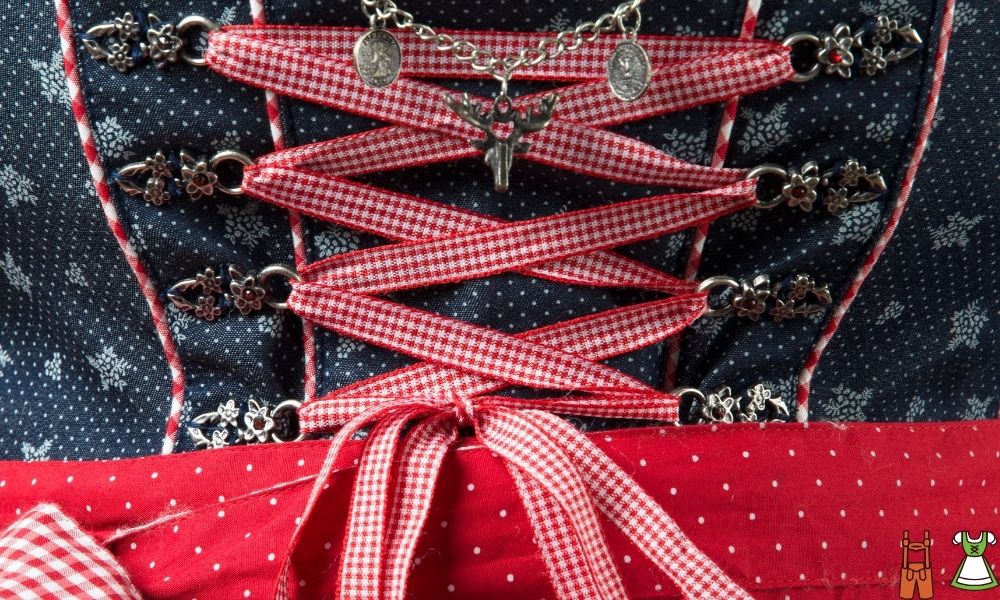
Beyond the apron, accessories carried meaning: a Dirndl blouse with puffed sleeves evoked innocence, while a deeply cut neckline suggested confidence. Silver charivari chains (originally holding tools) became decorative heirlooms, and embroidered edelweiss flowers symbolized Alpine resilience. These nuances transformed clothing into a social dialogue, a practice still honored at festivals like Munich’s Frühlingsfest.
Craftsmanship and Modern Reinventions:German Female Outfits
Authentic Dirndls demand meticulous craftsmanship. Traditional makers hand-stitch bodices with internal boning for structure, using wool or linen for colder regions, cotton for summer. Skirts require 3-5 meters of fabric to achieve the signature swirl. Modern iterations, however, prioritize versatility: knee-length “city Dirndls” in jersey for office wear, sustainable lines using organic cotton, or avant-garde versions with asymmetrical aprons by labels like Lola Paltinger. The global “Dirndl trend” has sparked debates about cultural appropriation versus appreciation—German cultural foundations now emphasize wearing it with informed respect, not as frivolous parody.
Part 2: Germany’s Regional Mosaic – Fashion as Cultural Identity
Northern Germany: Maritime Pragmatism: German Female Outfits
In Friesland and along the North Sea, harsh climates shaped utilitarian elegance. Women wore thick woolen skirts in navy or black, layered with starched white aprons striped in cobalt or crimson—colors derived from natural dyes. A Goldhaube (gold-embroidered cap) signified marital status, while ornate fibulae (brooches) clasped shawls against coastal winds.
The Friesennerz (rubber raincoat) epitomizes this region’s modern legacy: functional, unisex, and eternally practical. Hamburg’s urban style echoes this heritage with nautical stripes, waxed jackets, and durable rubber boots, blending seafaring history with metropolitan minimalism.
Central and Eastern Traditions: Sorbian Splendor: German Female Outfits
Germany’s Slavic minority, the Sorbs in Lusatia, preserves Europe’s most vibrant folk art. Women’s attire varies by village, occasion, and season. Spring Easter Riding processions feature young girls in crimson skirts with zigzag embroidery (symbolizing fertility), lace shawls, and beaded Schperkasten headdresses weighing up to 3kg.
Winter brings indigo-dyed linen dresses with white cross-stitch snowflakes. Each motif narrates stories: oak leaves for strength, periwinkle flowers for memory. Post-reunification, Sorbian collectives like Wutrobenka revived these techniques, collaborating with ethical brands to sustain ancestral artistry.
Southwestern Germany: The Black Forest’s Fairytale Aesthetic
The Bollenhut, with its dramatic red wool pom-poms, defines the Black Forest. Created in the 1750s, unmarried women wore red “bollen” (symbolizing passion), married women wore black. The hat’s straw base, weighing 500g, was waterproofed with ox blood—a practice replaced by synthetic seals today. Regional variations abound: in Hesse, women donned silver crown-like Kappen for festivals; in Swabia, checkered aprons signaled marital status. These styles inspired haute couture; Alexander McQueen’s 2007 collection referenced Bollenhut silhouettes, showcasing folkloric impact on global runways.
Part 3: Modern German Fashion – Where Function Meets Philosophy
Minimalism, Sustainability, and the “Berliner Chic” Ethos
Contemporary German style champions less noise, more nuance. Brands like Jil Sander and Aeyde embody “quiet luxury”: clean lines, monochromatic palettes, and investment-grade materials. This philosophy extends to sustainability—Germany leads Europe’s eco-fashion revolution. Labels such as Alphorn (organic linen Dirndls) and Armedangels (fair-trade basics) prioritize circular production.
Cities manifest distinct identities: Berlin’s “poor but sexy” ethos thrives on thrifted trench coats, gender-fluid silhouettes, and clunky Birkenstock sandals. Munich counters with polished tailoring, luxe athleisure, and Loden wool coats from traditional mills like Hirmer. Frankfurt’s finance-driven style merges sharp blazers with sustainable sneakers by Adidas or Veja.
The Revolution of Slow Fashion and Policy Advocacy: German Female Outfits
Germany’s government actively supports ethical fashion. The Grüner Knopf (Green Button) certification sets stringent eco-social standards, while cities host “clothing libraries” reducing waste. Consumers embrace Kleiderei (rental services) for occasion wear and repair cafés to extend garment life. This mindset permeates everyday dressing:
- Workwear: Wool-blend trousers, unisex blazers, breathable Tencel blouses.
- Weekend Wear: Functional parkas, organic cotton hoodies, waterproof backpacks.
- Footwear: Orthopedic-friendly Ara boots, recycled rubber Jack Wolfskin hiking shoes.
Part 4: Styling German Fashion – Authentic Integration
Traditional Elements in Modern Contexts
Integrate folk motifs respectfully:
- Pair a puffed-sleeve blouse with high-waisted jeans for “Dirndl-lite” casualness.
- Use an embroidered Sorbian clutch as a statement accessory.
- Tie a minimalist apron over a slip dress for garden parties.
Mastering German Minimalism
- The Capsule Wardrobe: 20 versatile pieces in black, cream, navy.
- Texture > Trends: Merino wool, organic cotton, Tencel.
- Functional Accents: A leather Satteltasche (saddle bag), mechanical watch, wool beret.
Part 5: Cultural Immersion – Where to Experience German Fashion
- Festivals: Oktoberfest (Munich), Carnival (Cologne’s Funkemariechen dancers).
- Museums: Hamburg’s Textilmuseum, Nuremberg’s Germanisches Nationalmuseum.
- Markets: Dresden’s Striezelmarkt for hand-knit woollens.
- Design Hubs: Berlin’s Kaufhaus des Westens (KaDeWe) for avant-garde boutiques.
Conclusion German Female Outfits: Fashion as Living Heritage
German Female Outfits embody a profound duality: reverence for the past and zeal for innovation. The Dirndl’s evolution from fieldwear to high art, the Sorbian struggle to preserve embroidery against assimilation, and Berlin’s thrift-shop sustainability—all reflect a culture negotiating identity through cloth. As designer Wolfgang Joop noted:
“German fashion isn’t about flamboyance; it’s about integrity.”
Whether donning a hand-stitched Bollenhut or a recycled polyester sneaker, German style celebrates thoughtful intentionality. It invites global citizens not to costume themselves in stereotypes, but to engage with the stories stitched into every seam.